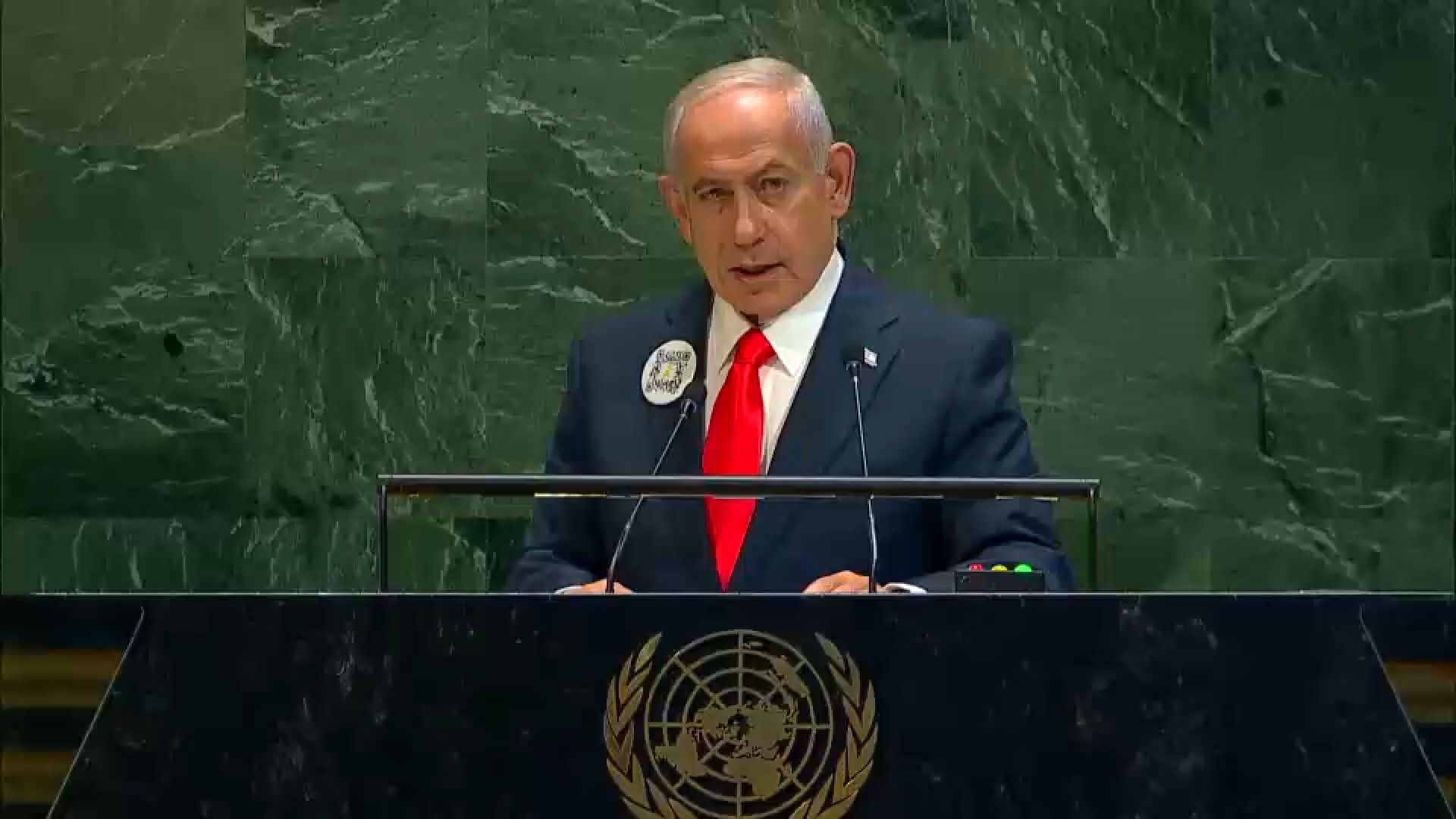
Israeli Prime Minister Benjamin Netanyahu is due to address the UN General Assembly in New York on Thursday, where he is expected to respond publicly to the mayor of the city, Zoharan Mamdani. The speech will take place on the eve of Israel’s general election, against a backdrop of criticism of the war in Gaza, the country’s diplomatic isolation and the absence of a scheduled meeting with US President Donald Trump.
Briefly about the main points
- Netanyahu plans to respond to the Mayor of New York, Zoharan Mamdani, from the UN rostrum.
- Former Ambassador Michael Oren described the forthcoming speech as an election campaign speech.
- The visit to the US will last one day, following the afternoon speech.
- Netanyahu is not expected to meet with Donald Trump in New York.
- Israel is facing increasing diplomatic pressure over the war in Gaza.
The dispute with the Mayor of New York is taking centre stage on the international stage
In this week’s video message Netanyahu stated that he was travelling to New York to «tell the truth» about the Israeli military and about himself Mamdani. The Israeli Prime Minister has groundlessly accused the mayor of supporting militants HAMAS. Mamdani has called Netanyahu a war criminal, and this week described him as the «architect of a horrific genocide against the Palestinians». Netanyahu denies the allegations of war crimes.
During the election campaign, Mamdani promised to seek the arrest of the Israeli Prime Minister should he visit the largest city in the US, citing allegations of war crimes. He later said he had no legal authority to take such a step. This will be Netanyahu’s first visit to New York since Mamdani took office in January; opponents of Israel’s right-wing government are organising protests in the city.
Former Israeli Ambassador to the US Michael Oren believes that the head of government will, in fact, be addressing not the UN but the Israeli electorate. In his view, the attacks on Mamdani and Iran may be aimed at those wavering between Netanyahu and his main rival, the former Chief of the General Staff Gadi Eizenkot. Opinion polls suggest that the 27 October election could bring an end to Netanyahu’s long tenure in power.
A brief visit without a meeting with Trump
Netanyahu is due to arrive in the US early on Thursday morning, will address the audience in the afternoon, and plans to fly back to Israel the same day. His office has announced meetings with the presidents of Argentina, Bolivia, Paraguay, Panama and Ethiopia, the vice-president of Colombia, and the prime ministers of Greece, Slovenia and Papua New Guinea.
The Prime Minister’s Office did not announce any meetings with US officials. Two Israeli officials had previously stated, on condition of anonymity, that the Prime Minister’s team had discussed possible contacts with senior US officials, including the Secretary of State Marco Rubio, but no specific agreements were reached.
A meeting between Netanyahu and Trump is also not expected. The leaders jointly launched a war against Iran on 28 February, but subsequently disagreed over an interim ceasefire between Washington and Tehran, which the Israeli Prime Minister opposed. Nimrod Goren, president of the Israeli think tank Mitvim, believes that a lack of contact with the US president a month before the election will send a negative signal for Netanyahu’s campaign.
A speech against a backdrop of mounting international pressure
At previous UN sessions, Netanyahu turned his speeches into visual presentations: he used diagrams, charts and props to warn about Iran’s nuclear programme. Tehran insists that this programme is for civilian purposes. Last year, some delegations walked out of the chamber as the Israeli Prime Minister made his way to the podium, whilst his supporters in the visitors’ gallery applauded.
According to Goren’s assessment, this time Netanyahu is likely to be defended by Israel’s actions, will respond to his critics, speak of the threat posed by Iran and highlight his own achievements and ties with the US. Israel is facing ever-deepening diplomatic isolation following the outbreak of the war in Gaza in response to the Hamas-led attack almost three years ago.
The International Criminal Court’s arrest warrant for Netanyahu, his defence minister and the leader of Hamas was issued in 2024 and restricted the prime minister’s ability to visit many countries. Earlier this month, the UK, France and Canada announced sanctions against Israeli settlements in the West Bank; Washington responded with restraint.