A series of statements have been made by the Russian authorities, indicating that Moscow is maintaining a hardline stance on the war against Ukraine. Viktor Sobolev, a member of the Russian State Duma’s Defence Committee, stated that Russia must bring the war to an end by 2030. At the same time, the Kremlin has rejected the idea of a buffer zone in Donbas proposed by Ukraine, the US and European partners. Moscow continues to demand territorial concessions, Ukraine’s neutrality, restrictions on the Ukrainian Armed Forces and an end to Western military aid.
Briefly about the main points
- There has been talk in the Russian State Duma of a war lasting until 2030.
- The Kremlin has rejected the idea of a buffer zone.
- Moscow has not backed down from its demands on Ukraine.
There has been talk in the State Duma of the war continuing until 2030
A member of the Russian State Duma’s Defence Committee and former commander of the 58th Army Viktor Sobolev stated that Russia must bring the so-called «special military operation» to an end» by 2030.
According to him, Moscow allegedly has until such time as Poland and other NATO states are ready for a possible military confrontation with Russia to do so. Sobolev also echoed Russian claims that European states are seeking to inflict a «strategic defeat» on the Russian Federation.
At the same time, this a deadline for the end of the war that has not been officially announced by the Kremlin, and a statement by an individual member of the State Duma’s Defence Committee. The very fact that the year 2030 has been cited as a possible timeframe for the war is telling, given the Russian leadership’s statements about their alleged readiness for negotiations.
The Kremlin has rejected the proposed buffer zone in the Donbas
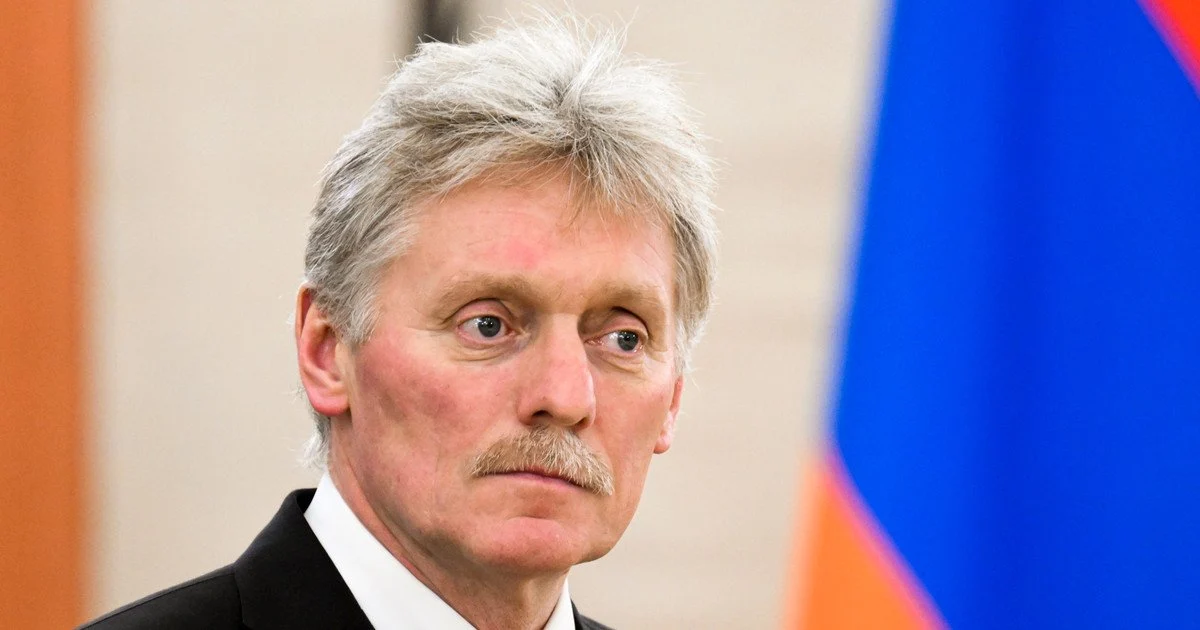
On 25 August, the press secretary Dmitry Peskov, Vladimir Putin’s spokesperson commented on the new framework for negotiations that Ukraine had been discussing with the US and its European partners.
One of its possible components is the mutual withdrawal of Ukrainian and Russian troops and the establishment of a buffer economic zone under the administration of a third party.
Peskov effectively ruled out that possibility.
«The Donbas is part of the Russian Federation… And it is unlikely that any third party could be involved in the administration of regions of the Russian Federation,» he said.
A Kremlin spokesperson also said that Russia will continue the war, unless it sees a diplomatic solution that is acceptable to it.
Ukraine and the overwhelming majority of the international community do not recognise Russia’s claims to the Donetsk and Luhansk regions. The UN General Assembly has reaffirmed Ukraine’s territorial integrity within its internationally recognised borders and demanded that Russia withdraw its troops.
Moscow continues to demand territory and that Ukraine renounce NATO
The Kremlin’s current stance is not new. At the end of June 2026, Peskov stated that Russia’s conditions for a peace agreement have not changed compared with the demands set out by Putin in 2024.
These include the withdrawal of Ukrainian troops from the entire territory of the Donetsk, Luhansk, Zaporizhzhia and Kherson regions, including towns and districts that Russia has never controlled, as well as Ukraine’s refusal to join NATO.
Moscow provided the Ukrainian delegation with an even more detailed list in its memorandum on a possible settlement.
What Russia is demanding from Ukraine to end the war
The Russian memorandum effectively imposes a range of political, territorial and military restrictions on Ukraine.
Moscow’s main demands include:
- international recognition of Crimea, the Donetsk, Luhansk, Zaporizhzhia and Kherson regions as part of the Russian Federation;
- reinforcement Ukraine’s neutral status and the renunciation of membership of military alliances;
- a ban on the stationing of foreign troops, bases and military infrastructure in Ukraine;
- setting a limit the strength of the Armed Forces of Ukraine and the number of weapons;
- the cessation of supplies of Western weapons to Ukraine;
- the suspension of the transfer of Western intelligence data;
- granting the Russian language official status and providing additional safeguards for Russian speakers;
- the parties’ waiver of mutual claims for war-related damages, which would in effect mean waiving claims for Russian reparations;
- repeal sanctions against the Russian Federation and a refusal to enter into new ones;
- the gradual restoration of diplomatic and economic relations with Russia.
Moscow had set even tougher preconditions for the ceasefire itself. One of the Russian proposals envisaged the complete withdrawal of the Ukrainian Armed Forces from four regions, which the Russian Federation has claimed as its own. The other is a halt to mobilisation, the start of demobilisation, a cessation of Western arms supplies and a ban on the redeployment of Ukrainian troops.
In Russia, they continue to justify the invasion by citing the notion of a «pre-emptive strike»
At the same time, Russian officials continue to repeat the claims with which Moscow is attempting to justify the launch of a full-scale invasion on 24 February 2022.
Putin's adviser Anton Kobyakov He had previously claimed that, prior to the invasion, Ukraine had allegedly carried out attacks on Russian territory and that it was these attacks that triggered the so-called «special military operation». In September 2025, he claimed that Ukrainian attacks on the Rostov Region had taken place on 19 and 21 February 2022.
A separate Russian narrative regarding an alleged plan for 8 March 2022: Ukraine’s offensive in the Donbas and Crimea Moscow has been spreading this narrative since the very first weeks of the invasion. In March 2022, this claim was made by the head of the occupation administration in Donetsk Denis Pushilin.
Moscow has not presented any independent evidence that Ukraine was planning to invade Russia on 8 March. The UN General Assembly, on the contrary, characterised the Russian Federation’s actions as aggression against Ukraine and on 2 March 2022, by a vote of 141, demanded that Russia immediately and unconditionally withdraw its troops.
Russia is not showing any willingness to agree to an unconditional ceasefire
The latest statements by Peskov and State Duma representatives came at precisely the time when Ukraine and its partners are discussing a new proposal to end the war.
On 24 August, more than 50 UN member states once again expressed their support for Ukraine’s sovereignty and called for an immediate and unconditional ceasefire. Moscow, however, continues to link the cessation of hostilities to the fulfilment of its own territorial and military-political demands. Consequently, the positions of the parties remain fundamentally different at present: Ukraine insists on a ceasefire and security guarantees, whilst Russia demands preliminary concessions that directly concern Ukraine’s territory, armed forces and foreign policy course.