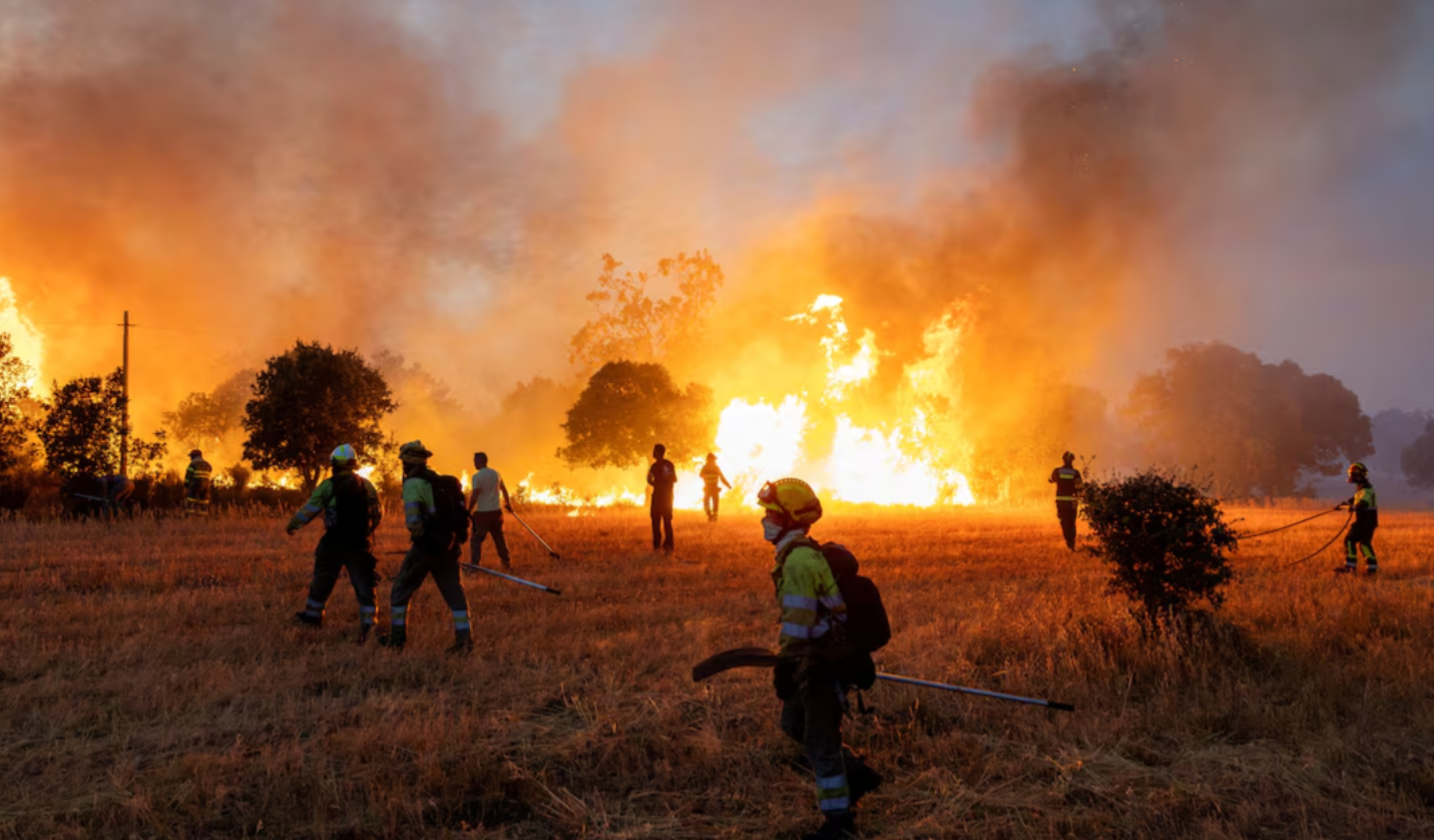
On 12 August, Spain will launch a large-scale security operation ahead of the total solar eclipse, which coincides with temperatures of up to 40°C and a high risk of wildfires. Regions along the path of the eclipse have designated more than 660 official viewing sites for the expected 6 million people, whilst around 35,000 law enforcement officers will be on hand to maintain order in rural areas.
Briefly about the main points
- More than 660 official viewing areas and parking zones have been designated for observers.
- There may be around 1.5 million people on the roads leading to rural areas.
- Fires since the start of the year have burnt around 200,000 hectares.
- Tres Cantos has cancelled its events due to the risk of fire.
- Demand for campervan trips and hire has risen sharply, despite the warnings.
People will be directed to designated areas
Regional governments are setting up car parks and camping sites near viewing points to limit the uncontrolled build-up of vehicles in natural areas. Around 1.5 million people are expected to spend the day travelling to rural areas in the north-west and centre of the country, which lie within the total eclipse path.
Back in June, the DGT Road Authority incorporated traffic restrictions into its special summer traffic management plan. The authorities are allowing restrictions on certain roads and the use of special parking areas. After a brief period of peak traffic, visitors can begin leaving from various locations at the same time as dusk falls.
According to the Spanish National Geographic Institute, the path of totality will cross the country from west to east — from Galicia to the Balearic Islands. The Sun will be low on the western horizon, so trees, mountains or buildings may obstruct the view.
The fire situation increases the risks associated with large gatherings
Aemet has issued a warning for several regions on the day of the eclipse due to the heat and high or very high risk of forest fires. On the evening of 10 August, major fires were still raging in the provinces of Huelva, Segovia and Huesca.
Since the start of the year, fires have scorched around 200,000 hectares, which is six times the figure for the same date in 2025, according to the Ministry of the Environment. Raúl de la Calie, Secretary-General of the Association of Forestry Engineers, described this week as statistically the period with the highest number of fires in the country.
A meteorological fire danger alert is in force in Castile and León from 11 to 13 August. As of 12 August, almost the entire autonomous community has been classified as «very high–extreme»; lighting fires and using barbecues is prohibited in forests, open spaces, and recreational and camping areas.
Communities are calling for restrictions on access to forests
National and local authorities are urging visitors not to park outside designated areas, not to litter, not to use barbecues and not to enter areas at risk of fire. Virginiya Barkones, Chief Secretary for Civil Protection and Emergency Situations at the Ministry of the Interior, told Reuters that any activity capable of producing a spark should be restricted.
In the town of Buitrago de Losoya, home to around two thousand people, the Monte en Pie group protested against events being held near the forests. Its leader, Ana Hernández, said that as visitor numbers rise, so does the danger to the extremely arid area. In neighbouring Tres Cantos, all events scheduled for the day of the eclipse have been cancelled; however, around three thousand people, including officials from the Madrid region, are still expected at the viewing point near Buitrago.
The Spanish government delegation in Madrid has called on the regional authorities to urgently restrict pedestrian and vehicle access to the Sierra de Guadarrama, the Cuenca Alta del Manzanares Park and state-owned forests, except at authorised entry points. This is a request, not a confirmed decision to impose restrictions.
Astrotourists are not deterred by warnings
The total phase on the evening of 12 August will only be visible from Spain and Iceland. This is the first total solar eclipse visible from the Iberian Peninsula in over a century; the next such event in Spain is predicted for 2027.
According to Booking.com, international searches for trips to the inland cities of Burgos and Soria have more than tripled. Data from Amadeus shows that bookings to the northern region of Asturias have increased by 2,92% year-on-year.
The ASEICAR Association has reported that around 70% Spanish rental motorhomes, campervans and caravans – approximately 500,000 vehicles – have already been booked for the duration of the eclipse.