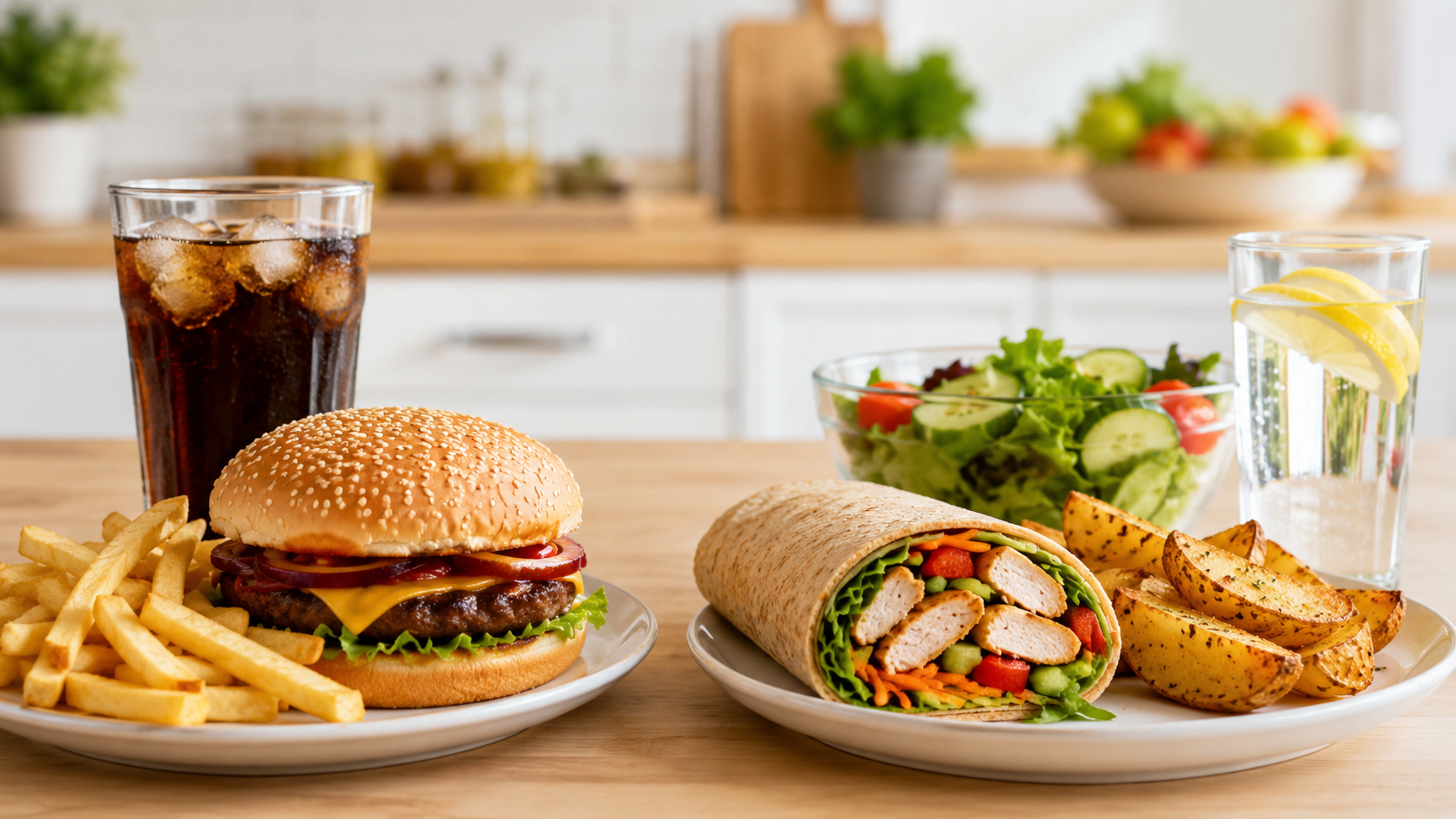
Fast food appeals because it’s quick, affordable and full of flavour. However, typical burgers, chips, nuggets, pizza and sugary drinks often contain a lot of salt, added sugar and saturated fats, but little fibre or vegetables. You don’t have to give up your favourite foods for good — you just need to know what to replace fast food with in your daily diet.
- You don’t necessarily have to cut out fast food altogether — what matters is how often you eat it and the portion size.
- Burgers can be replaced with homemade sandwiches containing meat, vegetables and yoghurt sauce.
- Instead of chips, it’s better to choose baked potatoes or vegetables.
- Sweet drinks should be replaced with water, unsweetened tea or homemade lemonade without sugar.
- A balanced diet should include vegetables, protein and complex carbohydrates.
- Gradual changes to one’s diet are usually more effective than strict restrictions.
What can you replace fast food with in your daily diet?
The problem isn’t just the high calorie content. Many fast-food meals combine a large portion, deep-frying, a salty sauce and a sweet drink. It’s easy to make such a meal more nutritious without giving up the familiar format.
Burger
Instead of a big burger with a greasy patty and loads of sauces, why not make your own at home:
- wholemeal bun;
- baked chicken fillet or a bean patty;
- tomato, cucumber, lettuce and onion;
- plain yoghurt with mustard instead of mayonnaise.
French fries
You can slice the potatoes, add a little oil and roast them with spices. Another option is to roast carrots, cauliflower or courgette. This way, the dish will contain less fat than if it were deep-fried.
Pizza
You can make a quick homemade pizza using a wholemeal tortilla or thin lavash. Tomatoes, mushrooms, chicken, sweet peppers and a small amount of cheese make a good topping. It’s worth checking the salt and sugar content of ready-made sauces.
Nuggets
Instead of fried nuggets, try baking chicken fillet pieces coated in oat or breadcrumb batter in the oven. Baked tofu pieces make a plant-based alternative.
Shawarma
A homemade shawarma can make a full meal. Wrap some chicken, turkey, an egg or hummus in pita bread, and add plenty of vegetables and yoghurt sauce.
Crisps and savoury snacks
Alternatives include unsalted nuts, roasted chickpeas, vegetable sticks or homemade popcorn without too much salt or oil. That said, nuts are quite high in calories, so it’s best to stick to a small portion.
Sweet drinks
Sugary fizzy drinks can be replaced with plain or mineral water, unsweetened tea, or water with lemon, mint and berries. Juices also contain free sugars, so whole fruit is usually the better choice.
Why eating fast food frequently can be harmful
Not every fast-food meal is equally unhealthy. What matters is its composition, portion size and how often it is eaten. Problems arise when fast food systematically replaces vegetables, fruit, pulses, whole grains and good sources of protein in one’s diet.
As recommended World Health Organisation, a healthy diet should be based on a variety of minimally processed foods that are low in salt, free sugars and unhealthy fats.
The WHO advises adults to consume less than 5 grams of salt per day and to limit the amount of free sugars to less than 10% of the daily energy intake. People aged 10 and over are advised to eat at least 400 grams of fruit and vegetables every day.
An excess of salt, sugar and fat in the diet is one of the dietary risk factors for non-communicable diseases. At the same time, health does not depend on any single food, but on dietary habits, physical activity, sleep, heredity and other factors.
How to choose the best option at a restaurant
If you’re unable to cook at home, here are a few tips to help you make a more balanced order:
- choose baked or grilled options instead of deep-fried ones;
- please ask for the sauce on the side;
- swap the chips for a salad, if possible;
- order water or unsweetened tea;
- Don’t increase your portion size just because the price is good;
- add the vegetables;
- Avoid combining a large main course, snacks, a dessert and a sweet drink in a single order.
Before buying ready-made products, it is a good idea to check the ingredients and nutritional value. Labels such as «fitness», «natural» or «fat-free» do not guarantee that the product is low in sugar or salt.
A quick home-cooked lunch recipe
To avoid having to order fast food If you’re short of time, you can use a simple formula:
vegetables + protein + complex carbohydrates + a small amount of healthy fat.
For example:
- vegetable salad, eggs and wholemeal bread;
- buckwheat, chicken and frozen vegetables;
- lavash with hummus and vegetables;
- oatmeal, natural yoghurt, berries and nuts;
- beans, rice and a vegetable salad;
- baked potatoes, fish and fresh vegetables.
Frozen vegetables, tinned beans with no added salt, eggs, grains and natural yoghurt help you prepare this dish in 10–15 minutes.
Should we give up fast food altogether?
For most people, a complete ban isn’t necessary. A burger, pizza or chips can still form part of your diet from time to time. The main thing is that they don’t become the mainstay of your daily diet.
Gradual changes are usually easier to stick to: start by swapping a sugary drink for water, then reduce the portion of chips, add some vegetables, and cook simple meals at home more often. This approach helps to improve your diet without strict restrictions or feelings of guilt.
People with diabetes, kidney disease, cardiovascular or gastrointestinal conditions should discuss their individual diet with their doctor or a qualified dietitian.