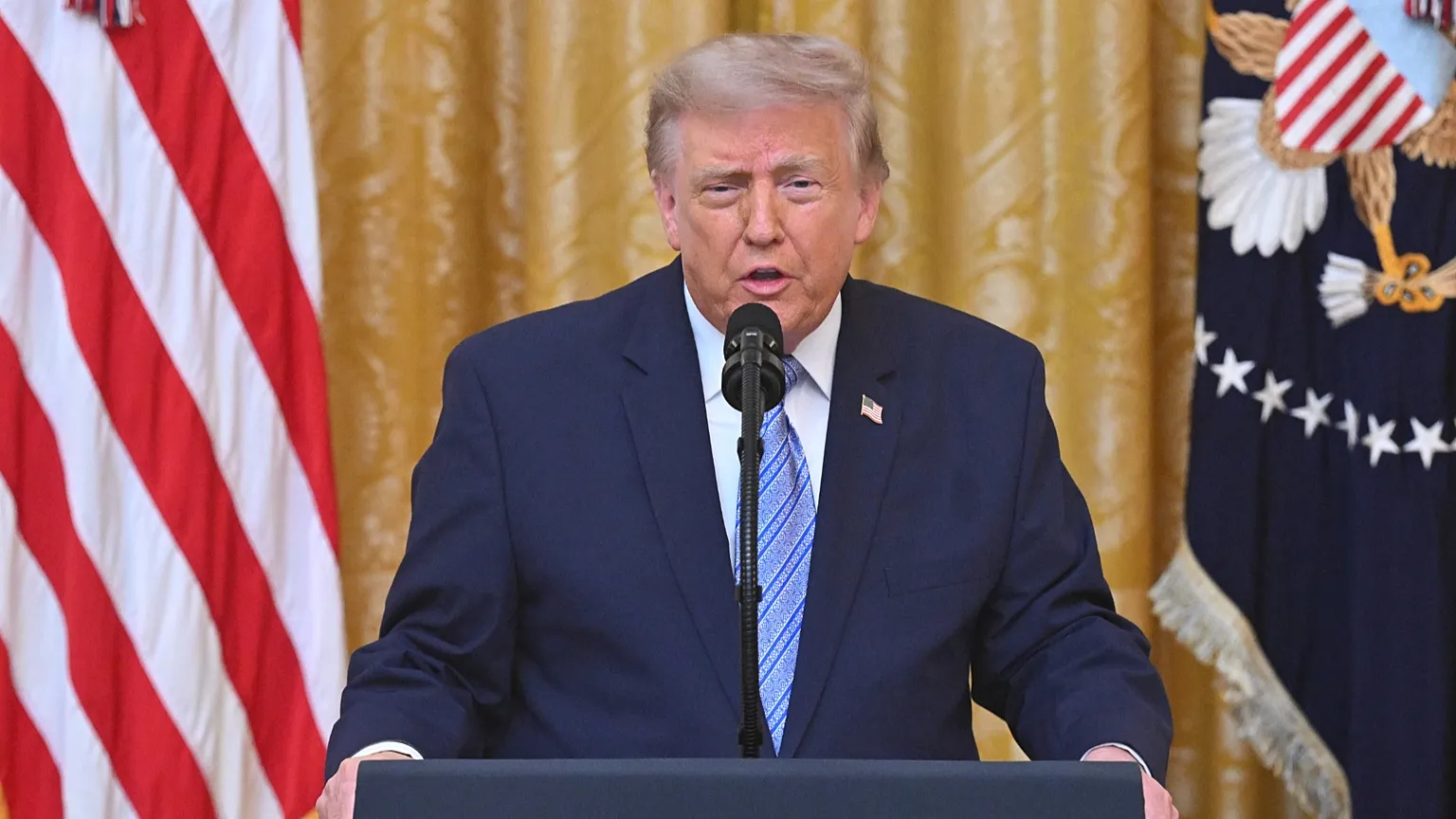
US President Donald Trump has threatened the European Union with a «very high price» over fines totalling around €900 million imposed on American technology companies, including Google, Apple, Meta and Amazon. He stated that Washington would launch an investigation into the EU’s actions and could impose significant tariffs on the bloc in the near future.
Briefly about the main points
- Trump linked potential US tariffs to the EU’s fines on technology companies.
- Washington, he said, will launch an investigation into the European Union’s actions.
- The European Commission has fined Google €890 million in relation to two breaches of the Digital Markets Act.
- Google must remedy the infringement within 60 days.
- The details of the potential US tariffs have not yet been announced.
The EU’s concerns regarding technology platforms
The EU accuses US tech companies of breaching competition rules and digital legislation. The European Commission’s most recent decision concerns Google: on 23 July, the company was fined a total of €890 million for breaching the Digital Markets Act (DMA).
The €460 million fine relates to the fact that Google., according to the Commission’s findings, gave its own services higher visibility in search results than third-party offerings. This relates, in particular, to results for shopping, hotels, transport and sport. A further €430 million relates to restrictions on Google Play which prevented developers from informing users about alternative purchasing methods and from concluding transactions outside the Play ecosystem.
What the European Commission is demanding of Google
The decision is not limited to a fine. The European Commission has ordered Google to remedy the identified infringements within 60 days. Should Google fail to comply, the Commission may impose periodic penalty payments of up to 5% of the company’s total worldwide turnover.
Google, through its spokesperson José Castaneda, stated that it had made efforts to comply with the DMA and expressed concern about the implications of the Commission’s decision. This is the company’s position, whilst the European Commission considers the infringements to have been established.
Fines under the DMA are not the same as those in previous antitrust cases
The DMA imposes pre-defined obligations on large platforms that the EU classifies as «gatekeepers». The current decision regarding Google was adopted specifically under this regulation, rather than as part of traditional antitrust proceedings.
Separately, on 2 July, the Court of Justice of the European Union upheld a fine of approximately €4.1 billion in the Google Android case. It concerned practices relating to Android and the pre-installation of Google apps. These amounts and cases should not be confused: the decision under the DMA is a separate proceeding.
The trade dispute could extend beyond the technology sector
Trump described the fines as a pretext for an investigation into the EU’s actions; however, the exact details of this procedure, the possible tariff rates, the list of goods, the timeframes and the exemptions have not yet been made public. The specific scope of potential US measures is therefore unknown.
The EU fine is directed at specific companies and their practices in the European market. Tariffs, should Washington impose them, could apply to imports of goods from the European Union and affect a wider range of manufacturers and US importers. Given that trade in goods and services between the EU and the US exceeded €1.7 trillion in 2025, this could intensify pressure in negotiations on market access and non-tariff barriers. However, this is an editorial conclusion: the parameters of the new tariffs have not yet been announced.