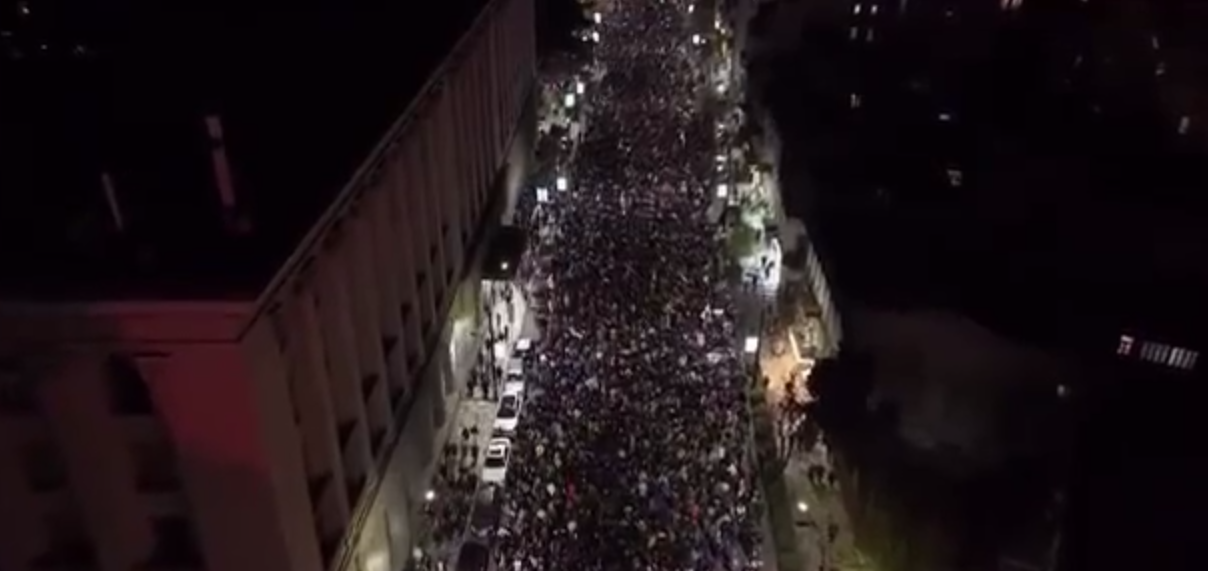
On 28 November, mass protests are taking place in Tbilisi, the capital of Georgia, to mark the second anniversary of the government’s decision to suspend negotiations on the country’s accession to the European Union. According to local media reports, the city’s central streets have been filled with tens of thousands of people marching in several columns. The marchers are once again demanding that the country return to the path of European integration, that new parliamentary elections be held, and that activists previously detained be released.
Briefly about the main points
- On 28 November 2026, mass protests are taking place in Tbilisi to mark the second anniversary of the suspension of negotiations on EU membership.
- According to local media reports, tens of thousands of demonstrators took to the capital’s main streets.
- The participants gathered at several locations across the city and set off in three processions towards Freedom Square and Rustaveli Avenue.
- The protest movement in the country has been ongoing since 28 November 2024, when Prime Minister Irakli Kobakhidze announced that talks with Brussels would be postponed until 2028.
What are the protests like in the Georgian capital?
According to Georgian media reports, the evening marches on 28 November were scheduled to begin at 19:00 local time (17:00 Kyiv time). The protesters formed three columns simultaneously — near the Avlabari metro station, Tbilisi State University and Orbeliani Square — before heading towards Freedom Square.
As can be seen from footage posted online, a dense crowd completely filled the carriageway and pavements of the city centre. Civil society movements and united opposition forces joined the protests under the slogan «Georgia is Europe»; in recent months, they had already been holding preparatory rallies under the slogan «Georgia without Ivanishvili».
The context of the two-year standoff and the positions of the parties
Exactly two years ago, on 28 November 2024, the Prime Minister of Georgia Irakli Kobakhidze announced that the government was postponing the start of negotiations on accession to the European Union until 2028. Since then, residents of the capital have been gathering outside the parliament building on Rustaveli Avenue every evening for more than 730 consecutive days.
The positions of the parties in the country remain diametrically opposed:
The opposition and protesters describe the actions of the ruling «Georgian Dream» party as a departure from the course enshrined in the Constitution and are demanding new elections and the release of all detained demonstrators;
The government, for its part, had previously attributed the pause in negotiations to a reluctance to be subject to external pressure; it had also increased fines for unauthorised gatherings and brought a case before the Constitutional Court seeking to ban the five largest opposition parties.
According to estimates by the monitoring organisation ACLED, in the two years following the suspension of EU accession talks, protest activity in Georgia increased by almost 2.5 times — between November 2024 and November 2026, 1,371 demonstrations were recorded, the vast majority of which were peaceful.