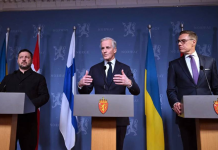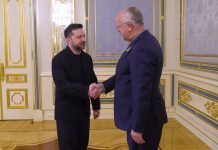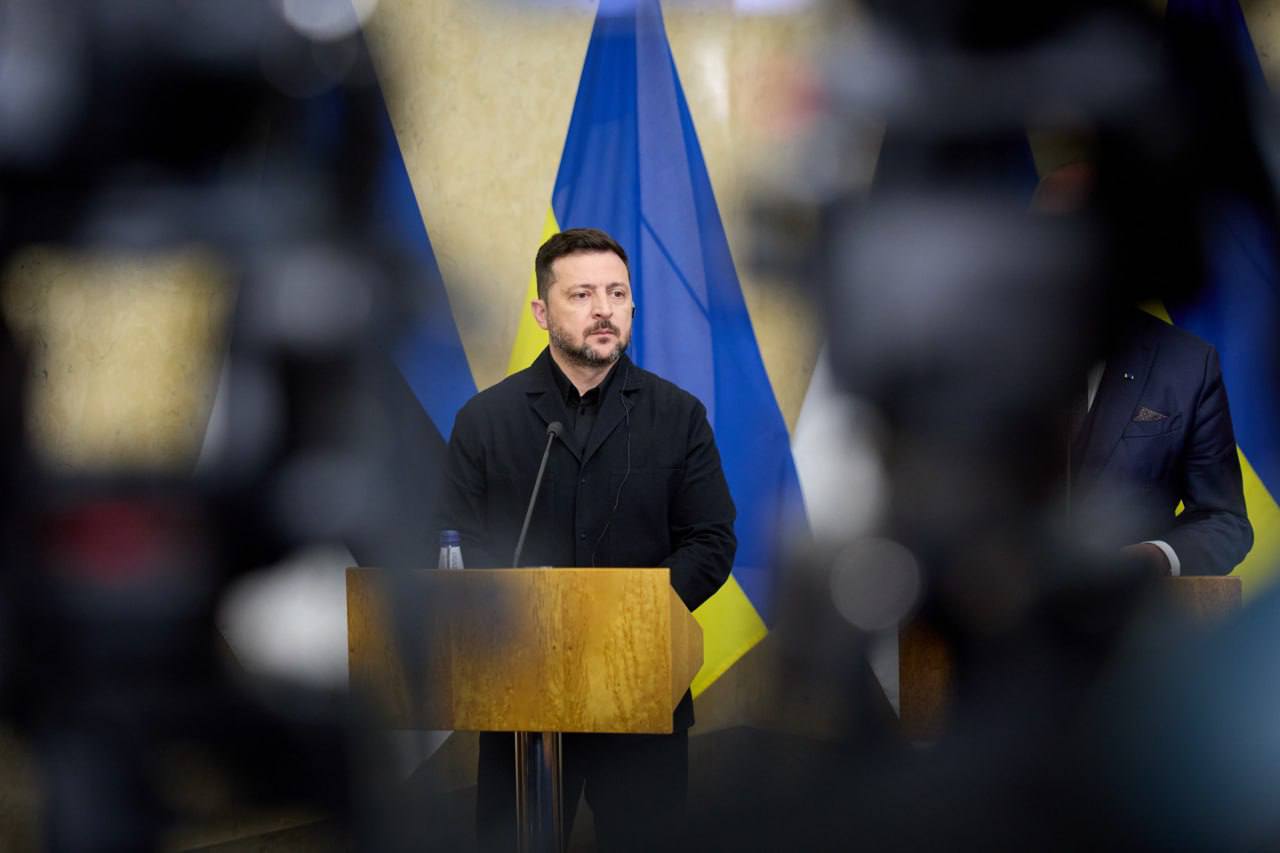
During his visit to Tallinn, Volodymyr Zelenskyy said that Ukraine would continue long-range strikes on Russian targets, despite cases of drones being diverted into Baltic airspace. Kyiv is ready to provide expert assistance to the countries of the region to counteract «lost» drones that appear as a result of Russian electronic warfare systems. The President also expressed his position on the terms of the ceasefire, stressing the need for international guarantees and control.
- Ukraine will not stop striking Russian targets, particularly on the Baltic coast.
- Russia uses electronic warfare to change the course of Ukrainian drones entering Baltic airspace.
- Kyiv is ready to provide expert assistance to the Baltic states in the fight against «lost» drones.
Ukraine's strategy for striking and defending the Baltic
Volodymyr Zelenskyy during a working visit to Tallinn confirmed that Ukraine will not stop attacks on Russian facilities, In particular, on the Baltic coast of the Russian Federation. He explained that the cases when Ukrainian drones appear in the airspace of Latvia and Estonia are caused by interference from Russian electronic warfare systems that change the course of the drones. This causes some UAVs to lose their orientation and end up in neighbouring countries.
The President stressed that Ukraine is ready to promptly send expert groups to the Baltic States to share its experience in countering such «roving» drones. This practice has already been applied by Ukraine in the Middle East, where it proved to be effective.
Electronic warfare and challenges for Europe
Zelenskyy noted that Russia deliberately seeks to provoke tension within the European Union by using electronic warfare systems to interfere with the operation of Ukrainian drones. President of Estonia Alar Karis added that shooting down drones with NATO fighter jets is too expensive, so European partners are interested in access to Ukrainian technological solutions and expertise that can be more efficient and cost-effective.
This cooperation is especially important against the backdrop of growing security threats in the region and the need for more flexible methods of countering new military challenges.
Ceasefire conditions and negotiation format
The President of Ukraine called a full and unconditional ceasefire the first step towards lasting peace, but stressed the existence of serious security risks. According to him, without proper international guarantees, Russia could use the ceasefire to regroup and move closer to Ukrainian positions in the so-called kill zones.
To ensure security, Zelenskyy insists on the introduction of strict controls, monitoring missions and guarantees. To reach such agreements, he proposes a direct dialogue in a quadripartite format involving Ukraine, Russia, Europe and the United States.
The President stressed that Ukraine has the political will for peace and security on the continent, unlike the Russian Federation, which remains the main source of threats.
The importance of cooperation with the Baltic States
Ukraine's cooperation with the Baltic states in countering «lost» drones demonstrates the importance of regional security and mutual support in the face of hybrid threats. Estonia has already expressed interest in Ukraine's experience, which demonstrates the readiness of the Baltic states to implement more effective and cost-efficient means of defence.
This area of cooperation could become one of the key elements of the region's security architecture, especially given Russia's activity in information and electronic warfare.
Prospects for peace and security in Europe
Zelenskyy stressed that Ukraine is in Europe and must fight for a secure future on the continent. He emphasised that it is through joint guarantees and direct negotiations that sustainable peace can be ensured. Russia's refusal to engage in a constructive dialogue remains the main obstacle on this path.
Thus, Ukraine continues its active military strategy and at the same time offers the international community clear conditions for ending the conflict with control and monitoring.