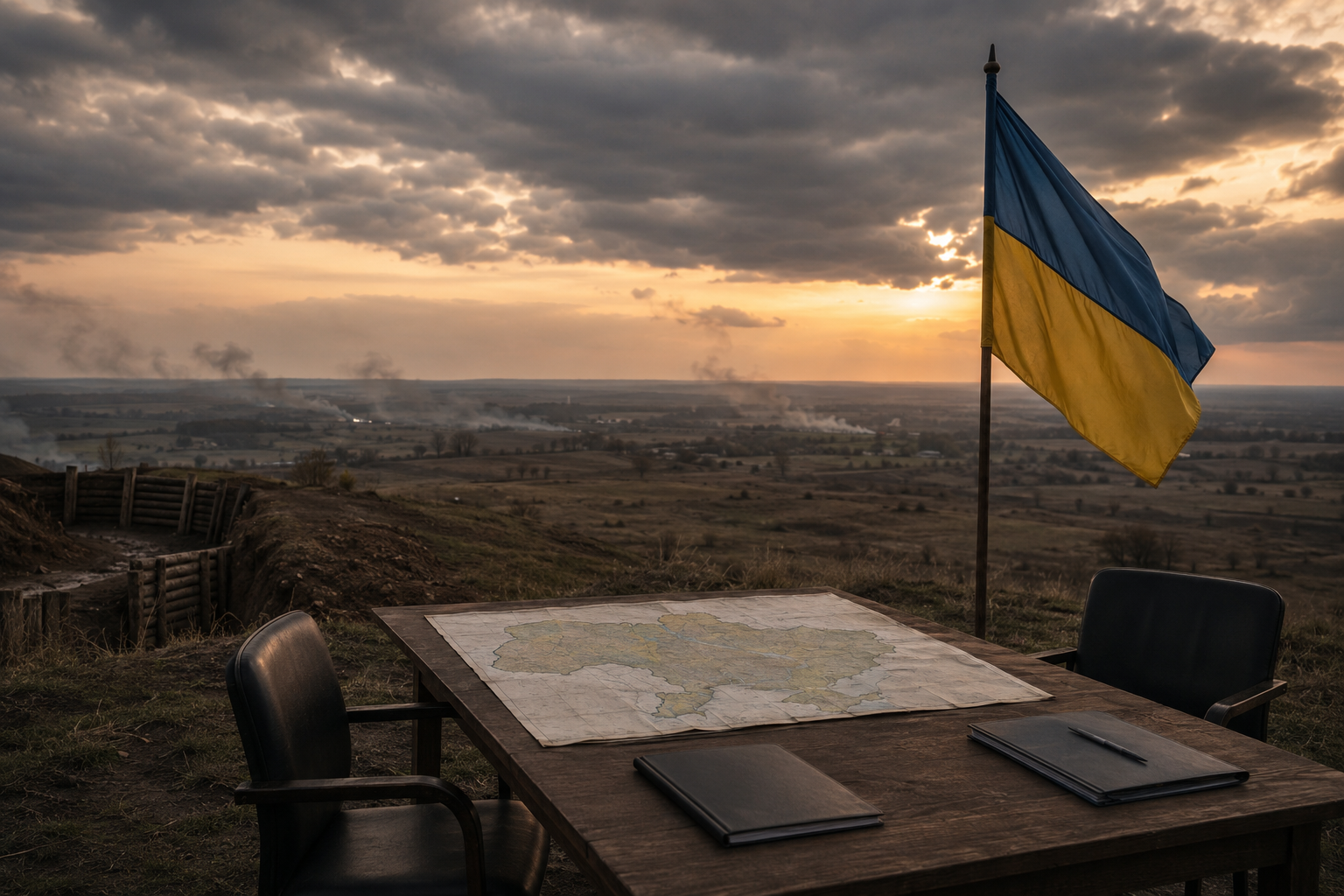
Russia’s full-scale war against Ukraine has been ongoing for over four years, yet neither side has gained a decisive advantage. Russian forces have failed to achieve a strategic breakthrough, whilst Ukraine is facing a shortage of personnel, anti-missile systems and some Western-supplied weaponry.
At the same time, the nature of the war is changing. Ukraine is increasingly shifting the pressure into the Russian rear, attacking oil refineries, logistics networks, military facilities and energy hubs. The US is attempting to restart the peace talks, whilst Europe is building up a financial reserve to support Kyiv until at least the end of 2027.
None of this suggests that peace is imminent, but it does lay the groundwork for a ceasefire. In our view, the most realistic timeframe for an end to intense fighting is — from the start until autumn 2027. A comprehensive peace treaty that would finally resolve the issues of territory and security may not be reached for some time.
Briefly about the main points
- A precarious balance has emerged on the front line, with neither side holding a decisive advantage.
- Russia has not yet shown any willingness to abandon its maximalist demands.
- Ukraine agrees to a ceasefire, but requires effective security guarantees.
- The next intermediate step could be to halt the air strikes.
- The most likely timeframe for a broader ceasefire is the first half of 2027 or the summer of 2027.
- The legal conclusion of the war may take years after hostilities have ceased.
What is happening on the front line at the moment
The situation on the battlefield is more akin to a gruelling stalemate than to one side preparing for a swift victory. Russia continues to launch attacks on several fronts, but the pace of its territorial advance remains slow compared with the scale of its losses and the resources deployed.
According to Russia Matters’ calculations, based on cartographic data, over the course of a year — from July 2025 to July 2026 — Russia seized territory amounting to approximately 0.5% of Ukraine’s total area. The Institute for the Study of War also noted that Russia’s spring–summer offensive of 2026 failed to yield any operationally significant results. At certain points in July, Russian troops even lost positions they had previously held.
This is an important indicator: Moscow retains the capacity to launch attacks, but does not yet have a sufficient advantage to swiftly capture major cities or cause the Ukrainian defences to collapse. At the same time, the absence of a Russian breakthrough does not mean that Ukraine has already gained a strategic advantage.
New Commander-in-Chief ARMED FORCES OF UKRAINE Mikhail Drapaty He has been tasked with stepping up counter-offensive operations, operations behind Russian lines and the reform of the army. Key challenges include a shortage of infantry, mobilisation, the quality of command and control, and the speed of adaptation to changes in drone warfare.
Therefore, the current balance is not yet stable. It depends on the supply of ammunition, the functioning of the Ukrainian mobilisation system, the availability of air defence systems, and Russia’s ability to replace its losses.
Ukraine has changed the way it exerts pressure on Russia
Kyiv is increasingly less reliant on the prospect of defeating Russia through frontal operations alone. Ukraine’s strategy is becoming asymmetric: rather than engaging in a direct contest of manpower and equipment, the Defence Forces are seeking to raise the economic and military cost of continuing the war for Moscow.
The main targets were Russian oil refineries, fuel depots, ports, logistics centres, military production facilities, air defence systems and energy hubs in the occupied territories. Ukrainian specialists began striking not just the premises of these facilities, but the technological components that are difficult and costly to replace, as reported by Financial Times.
The consequences are already evident. According to Reuters, in July, Russian petrol production covered approximately 65% of seasonal demand. Moscow was forced to restrict exports of petrol, diesel and aviation fuel and to seek additional supplies from abroad. In some regions, queues formed and restrictions were imposed on fuel sales.
But even such losses are not enough to automatically bring the war to an end. Russia has substantial financial reserves, export revenues and the ability to reallocate resources. In July, its oil and gas revenues may, in fact, have risen against the backdrop of high global prices. Therefore, strikes on oil refineries create cumulative pressure, but do not guarantee a rapid economic collapse.
Their main significance lies elsewhere: the Kremlin is gradually losing its sense of a secure rear, and the continuation of the war is beginning to have a direct impact on Russian transport, business, regional budgets and people’s daily lives.
Can Russia continue the war for a few more years?
The Russian economy is under pressure, but has not yet come close to collapse. The Bank of Russia has lowered its economic growth forecast for 2026 to 0–1%, whilst the key rate remains extremely high at 14%. Official inflation in June stood at 6% against a target of 4%, according to data from the Bank of Russia.
High interest rates, labour shortages, military spending and fuel shortages are weighing on the civilian sectors. The Russian government has already been preparing to cut some «non-essential» budget expenditure. At the same time, military production, salaries for contract soldiers and funding for the security forces remain priorities.
This means that Russia may continue the war in 2027, but the cost will rise. The Kremlin will be forced to choose between funding the war, supporting the regions, keeping inflation in check and maintaining living standards.
Economic problems will only serve as an argument in favour of negotiations if Putin decides that the future costs outweigh any potential territorial or political gains. As of the end of July 2026, there is still no sign of such a decision in the Kremlin.
Why have the negotiations still not produced any results?
The main obstacle lies not in the lack of diplomatic contacts, but in the incompatibility of the underlying positions.
Ukraine has officially agreed to a complete ceasefire for the duration of the negotiations. In an open letter dated 4 June, Zelenskyy proposed direct dialogue with Russia, with the participation of the US and Europe, and emphasised that the ceasefire must remain in place throughout the entire negotiation process. This position was supported by Ukraine’s European allies.
Russia is abandoning the unconditional truce, claiming that it would allegedly give Ukraine the opportunity to regroup. The Kremlin insists on a «final settlement», but by this it means the fulfilment of a significant portion of its own demands even before hostilities cease.
Territory remains just one of the issues. The parties have also failed to agree on:
- the future status of the occupied territories;
- the format of Western security guarantees;
- the strength and armament of the Ukrainian army;
- the possibility of foreign military personnel being present;
- the procedure for lifting sanctions against Russia;
- a mechanism for monitoring the ceasefire;
- liability for breaching agreements.
In July, the US President Donald Trump had stated that a settlement was «getting closer». However, on 27 July, the Kremlin announced that it had not received any specific new proposals. Earlier, Reuters sources close to the Russian leadership had stated that Putin at the moment, he is leaning towards the continuation of the war.
That is precisely why politicians’ optimistic statements should not be taken as proof that an agreement is inevitable. The diplomatic process is resuming, but no decision on a compromise has yet been taken in Moscow.
Putting an end to the air strikes could be the first step
The most realistic interim option appears to be not a full ceasefire, but a halt to, or a significant reduction in, air strikes. The US and Ukraine have already discussed a proposal for a «silence in the skies», which could be put to Russia during the next round of diplomatic talks.
Such an agreement could potentially cover strikes by long-range drones, cruise missiles and ballistic missiles against cities, energy infrastructure and industrial facilities. For Ukraine, it could reduce civilian casualties and the risk of damage to the power grid. For Russia, it could minimise losses resulting from attacks on oil refineries, logistics facilities and military enterprises.
It is precisely this mutual vulnerability that forms the basis for a limited agreement. However, it is necessary to agree on the means of monitoring, the geographical scope, the list of prohibited targets and the consequences of breaches. Without technical verification, a «ceasefire» will quickly descend into mutual recriminations.
If such an agreement is reached in 2026 and holds for at least a few months, it could form the basis for a broader ceasefire.
Will the US be able to force the Kremlin to compromise?
Washington remains the only external player that wields sufficient influence over Kyiv, Moscow and European partners at the same time. The meeting between Zelenskyy and Trump on 28 July showed that the US is once again attempting to combine military support for Ukraine with the diplomatic process.
One possible lever could be sanctions bill named after Lindsay Graham. The Senate voted 86 to 12 in favour of its further consideration. The bill provides for sanctions against Russian officials, banks, energy projects and the «shadow fleet», as well as the possibility of imposing tariffs on major buyers of Russian energy resources.
The law has not yet been finally adopted, and some of its provisions will depend on the President’s decisions. However, the threat of secondary sanctions against buyers of Russian oil could affect the Kremlin’s calculations far more significantly than yet another round of personal restrictions.
A combination of three factors will prove most effective in negotiations:
- Increased economic pressure on the Russian energy sector.
- Guaranteed supplies of air defence systems, drones and ammunition to Ukraine.
- A specific diplomatic proposal that would bring about a ceasefire without legally recognising the occupation.
If the US were to exert only diplomatic pressure on Ukraine, Moscow might see this as an opportunity to secure concessions without changing its own position.
Europe is preparing to support Ukraine until at least 2027
European support reduces the risk that Ukraine will be forced to accept an unfavourable deal due to a sudden halt in funding. The EU has agreed a €90 billion loan programme for 2026–2027. In June and July, Ukraine had already received €4.9 billion to purchase drones, according to the Council of the EU.
This does not solve all the problems. Ukraine remains dependent on American anti-missile systems, intelligence and certain types of weaponry. However, European funding gives Kyiv time to ramp up its own production.
For the Kremlin, this is a sign that the strategy of «waiting out the West» may not work in the short term. If Russia is unable to achieve a decisive result in 2026, and Ukraine secures funding for the following year, Moscow’s interest in a pause may increase.
What could speed up or delay the end of the war
The window for negotiations may open sooner if several changes take place at the same time:
- the Russian offensive will finally lose momentum;
- Ukraine is stabilising the front line and will retain the capability to launch long-range strikes;
- the new sanctions will significantly reduce Russia’s oil revenues;
- The US will propose a ceasefire mechanism with genuine guarantees;
- Europe will confirm long-term funding for Ukraine’s defence;
- The parties will agree to postpone a final decision on the territorial issue.
The war, on the other hand, could drag on if Russia carries out a new mobilisation, receives additional troops and weapons from its allies, or sees signs that Western support for Ukraine is waning.
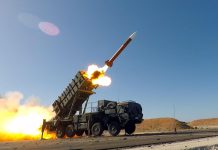
The biggest risk for Kyiv remains the shortage of anti-missile systems. Zelenskyy has stated that Ukraine’s stocks of Patriot interceptors are almost exhausted. If Russia is able to systematically destroy the energy infrastructure and cities, it will attempt to use humanitarian pressure to extract concessions.
Our forecast: when might the war end?
When referring to the «end of the war», a distinction must be made between three different events:
- a reduction in or cessation of air strikes;
- a general ceasefire along the front line;
- the signing of a comprehensive peace treaty.
According to our assessment as at 29 July 2026, the probabilities of the scenarios are as follows:
| Scenario. | Approximate probability |
|---|---|
| A limited ceasefire or a halt to air strikes until the end of 2026 | 35% |
| A broader ceasefire or a freeze on the front line during 2027 | 45% |
| Intense fighting will continue beyond 2027 | 20% |
This is an editorial analysis, not information about agreements that have already been reached.
The most likely scenario is that, by the end of 2026, the parties will attempt to agree on a partial restriction on strikes or some other trial ceasefire. If this proves successful, and economic and military pressure on Russia continues to mount, an agreement on a ceasefire along most of the front line could emerge in the first half of 2027 or during the summer of 2027.
This is unlikely to be a permanent peace, but rather an armed truce with the issue of the occupied territories remaining unresolved. Ukraine does not legally recognise them as Russian, whilst the return of the territories may be deferred until further negotiations. Surveillance systems, international guarantees and a mechanism for the automatic reimposition of sanctions in the event of a new attack will be required along the line of contact.
We consider a comprehensive peace treaty by the end of 2027 to be unlikely — less than 15%. Even after a ceasefire, negotiations on territory, reparations, the return of prisoners of war and deported children, accountability for war crimes and security guarantees may drag on for years.
Conclusion.
The war is unlikely to end with a single meeting between Zelenskyy, Trump and Putin, or with the announcement of a specific date. First, the Kremlin’s calculations must change: continuing the aggression must become more costly and less promising than a ceasefire.
This process has already begun. The Russian offensive has failed to achieve a strategic breakthrough, attacks on the rear are causing ever-greater economic problems, and Europe has secured Ukraine’s financial stability until the end of 2027. But Moscow still believes it can improve its position through the use of force.
Therefore, the most reasonable forecast is — not a swift peace in the coming weeks, but a gradual move towards a ceasefire during 2027. The final resolution of the conflict will depend on whether Ukraine receives sufficient weapons and guarantees to ensure that any lull does not merely serve as a prelude to a new Russian invasion.