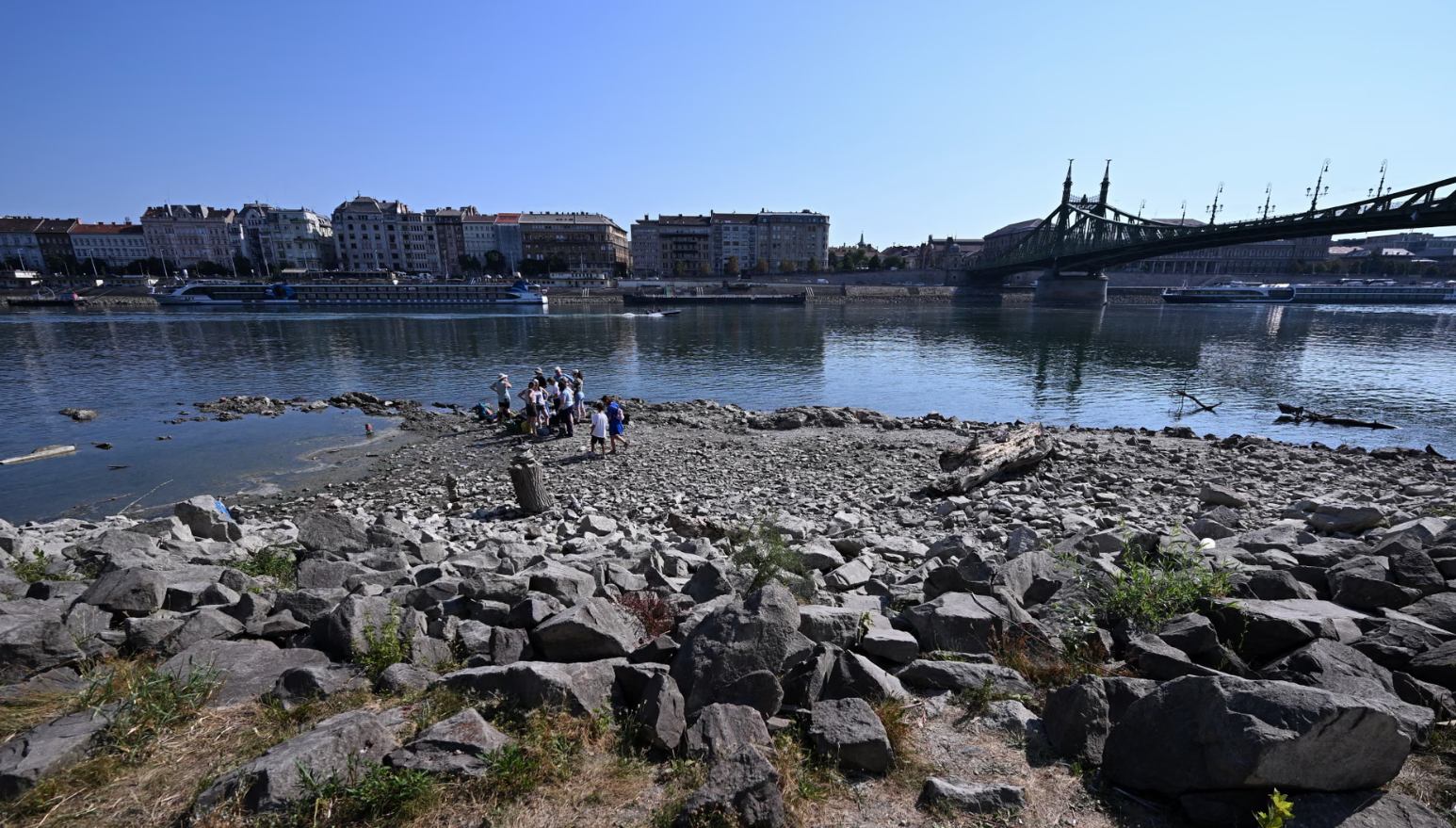
Extreme heat in Central and Eastern Europe is breaking temperature records and has already led to restrictions on electricity generation. The Slovak Hydrometeorological Service reported a temperature of 42°C in Dolné Plachtince, whilst in Poland, the Kozienice and Połaniec coal-fired power stations have been shut down due to critically low water levels in the Vistula. Around 1.3 GW of capacity has been lost from the power system.
Briefly about the main points
- A new record high temperature of 42°C has been recorded in Slovakia.
- Record temperatures were also recorded in Austria and Hungary.
- Water shortages have restricted operations at power stations in Poland and Hungary.
- In Germany, the number of summer deaths linked to the heatwave is estimated at 11,900.
- Drought dries out vegetation and increases the risk of large-scale fires.
Record-breaking heat is putting pressure on the energy sector
Record temperatures were also recorded in Austria and Hungary. In Austria, on 6 August, the temperature rose to 41.2°C — a new national record. In the Czech Republic, the national temperature record was broken earlier this summer.
The heatwave is compounded by a prolonged lack of rainfall. According to Copernicus, in June, large parts of Central and Eastern Europe were drier than normal due to persistent high-pressure conditions and extreme temperatures. At the end of July, the European Commission’s Joint Research Centre reported that soil moisture reserves were running low in Austria, Slovakia and the Czech Republic.
The shutdown of two Polish coal-fired power stations has highlighted the practical impact of drought on systems that rely on river water for cooling. Low water levels can restrict the operation of both thermal and nuclear power generation, although the impact depends on the technical parameters of specific facilities and the power system’s ability to replace the lost capacity.
In Hungary, it is low Danube water level affected the operation of the Paks nuclear power station. Prime Minister Péter Magyar announced that one of its turbines had resumed operation following a temporary shutdown of the station. He also called for voluntary reductions in electricity consumption during the hot day.
In Poland, Prime Minister Donald Tusk yesterday called on employers to provide their staff with air-conditioning and cold water.
Drought increases the risk of fire and poses health risks
In Berlin, climate activists staged a protest outside the German Chancellery, calling for more decisive action to protect the public from extreme heat and to end the use of fossil fuels. The Robert Koch Institute has estimated the number of heat-related deaths in Germany this summer at 11,900. This is an estimate, not an operational register of confirmed causes of death: such figures are usually calculated retrospectively by modelling the link between temperature and mortality.
Since the start of the year in EU countries fire Around 500,000 hectares have been affected, mainly in Spain and France, according to data from the European Forest Fire Information System. In Ukraine, a further 292,000 hectares were burnt during the same period.
Hot, dry and windy weather causes vegetation to lose moisture more quickly, facilitates the spread of fire and makes it more difficult to extinguish. In Austria, the overall fire risk was more than double the previous record for this time of year. In the Czech Republic, the figure was more than 50% higher than the previous record, and in Slovakia, it was 32% higher.
High temperatures accelerate evaporation and dry out the soil and vegetation. Dry soil, in turn, can exacerbate the overheating of the air at ground level. As a result, a lack of rainfall, soil drought and low river water levels are simultaneously putting pressure on the agricultural sector, water resources, the energy sector and fire safety.
In July, World Weather Attribution estimated that global warming had made hot, dry and windy weather at least 20 times more likely in Spain and twice as likely in France.