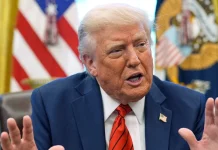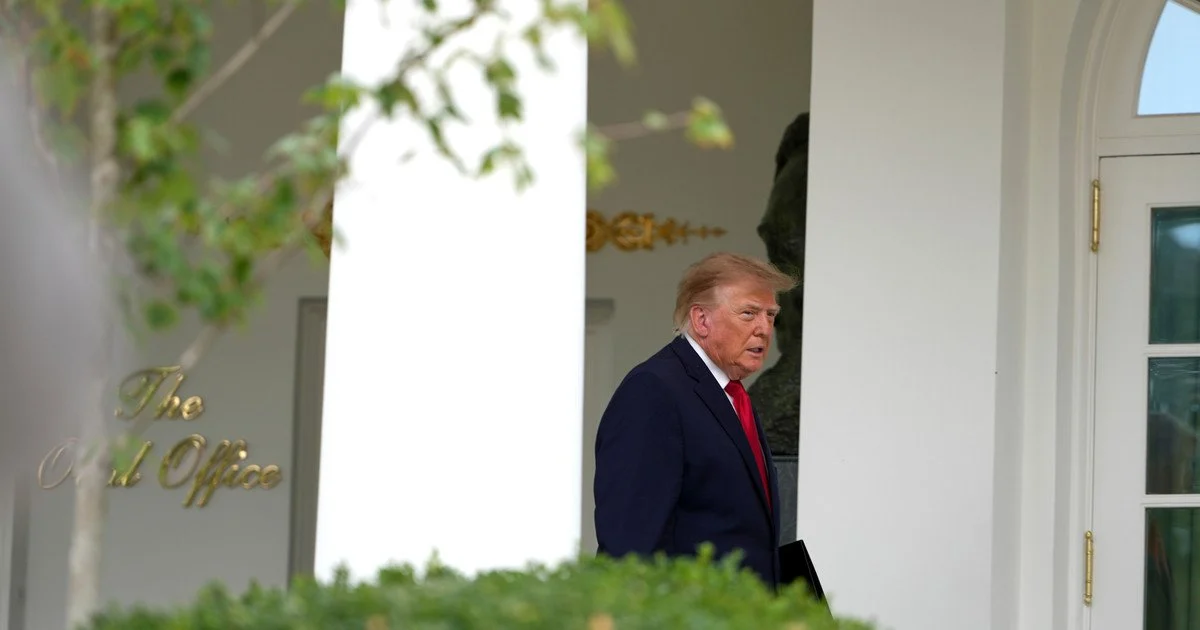
On 16 October 2026, US President Donald Trump signed an executive order suspending the application of key sanctions and tariffs against Russia, as provided for in the Senator Lindsey Graham Act. The document, which Trump himself signed on 18 September, was intended to increase economic pressure on Moscow and on countries that continue to purchase Russian energy resources. Specifically, it involved additional tariffs of up to 500% on Russian goods and 100% on products from the largest buyers of oil and gas from Russia. However, two days before the new trade restrictions were due to come into force, the US President exercised the right to grant exemptions provided for by law, citing US national interests as the reason for his decision.
- Trump has suspended key sanctions against Russia under the Graham Act.
- The document provided for additional duties of up to 500% on Russian goods.
- Trump explained that the suspension of new restrictions was in the US’s national interest.
- The exemptions will remain in force until the US administration takes a new decision.
Trump suspended the sanctions two days before they were due to come into force
The White House has published an executive order entitled Implementing the Lindsey O. Graham Act on Sanctions against Russia and Iran of 2026. The document sets out the procedures for implementing the law passed by the US Congress to increase economic pressure on Russia in response to the war against Ukraine.
At the same time Trump invoked Article 115 of this Act, which allows the President to grant exemptions from the sanctions regime if he deems it necessary in the national interests of the United States.
The decree states that the relevant written justification has been forwarded to Congress.
«I have submitted to Congress confirmation that granting such an exemption is currently in the national interest of the United States,» the document states.
The new trade restrictions were due to come into force on 18 October. Thus, the US President did not repeal the law itself, but effectively blocked the implementation of a significant proportion of the new sanctions measures provided for in it.
What sanctions against Russia did the Graham Act provide for?
Lindsey Graham’s Law provided for far-reaching economic restrictions aimed not only directly at Russia, but also at countries that support trade in Russian energy resources. The most stringent measures concerned international trade and financial transactions.
The document provided for:
-
500% additional duties on goods of Russian origin imported into the US, subject to the exceptions provided for by law.
-
100%: additional duties on goods from the five largest importers of Russian oil and gas, subject to certain conditions.
-
100% in additional duties on products from the five largest countries that are facilitating the circumvention of sanctions against Russian oil.
-
Sanctions targeting specific Russian officials, banks, energy companies and other entities involved in financing the war.
The new tariffs could have a particularly significant impact on China and India, which are among the largest buyers of Russian energy resources.
Beijing had previously opposed the imposition of US sanctions on third countries, whilst India had warned of the negative consequences that potential tariffs could have on bilateral trade.
Does Trump’s decision mean the complete lifting of sanctions against Russia?
It is important to distinguish between the suspension of new sanctions and the lifting of restrictions that were previously in place.
Trump’s executive order contains a specific provision stating that the decision does not alter the existing sanctions imposed by previous presidential executive orders in response to the actions of the Russian authorities. In other words, the United States has not lifted all sanctions against Russia.
Instead, the Trump administration has refused to utilise a significant proportion of the additional economic tools recently approved by Congress. The document also does not specify a particular date for the end of this suspension. The exemptions will remain in force until the US President or the Secretary of State, following appropriate consultations, determines that further action is required.
This means that the new sanctions could, in theory, be implemented at a later date without the relevant law having to be passed again.
Trump’s decision has drawn criticism in the US Congress
The suspension of the sanctions has sparked outrage amongst some US lawmakers.
Democratic Member of Congress Don Bayer accused the president of making a decision that runs counter to the aim of the law, which is designed to increase economic pressure on Russia.
Democratic Senator Richard Blumenthal, who was one of the authors of the legislative proposal, also criticised the White House’s actions.
According to those opposed to the decision, the refusal to impose new restrictions weakens economic pressure against Moscow and could undermine the effectiveness of US sanctions.
The law expressly permits the President to grant such exemptions, provided that Congress is notified. Therefore, the mere fact that sanctions have been suspended does not automatically constitute a breach of US law.
The suspension of sanctions followed the US-Russia diesel deal
Trump’s latest decision comes against the backdrop of changes in US energy policy. The US President had previously announced that an agreement with Vladimir Putin regarding the supply of Russian diesel fuel to global markets.
According to Trump, Russia has agreed to supply more than 300,000 tonnes of diesel in the near future, a further 500,000 tonnes in November and an additional million tonnes at a later date.
The US administration justified this agreement by citing the need to reduce energy prices, which had risen against the backdrop of the conflict in the Middle East. At the same time, some lawmakers from both US political parties expressed concern that an increase in exports of Russian petroleum products would provide Moscow with additional revenue. These funds could potentially be used to finance the war against Ukraine.
The Russian side, by contrast, welcomed the suspension of sanctions. Putin’s representative on investment Kirill Dmitriev described Trump’s decision as a historic moment for economic relations between the two countries.
What the suspension of US sanctions means for Ukraine
The Graham Act was intended to increase pressure on Russia by limiting its ability to generate revenue from energy exports. One of the main mechanisms was the threat of heavy US tariffs on countries that continue to buy Russian oil and gas.
The suspension of these measures means that no further trade restrictions will be imposed for the time being.
The actual impact of the decision on Russian oil revenues will depend on Washington’s next moves, the situation on global energy markets and the sanctions currently in place by other countries.