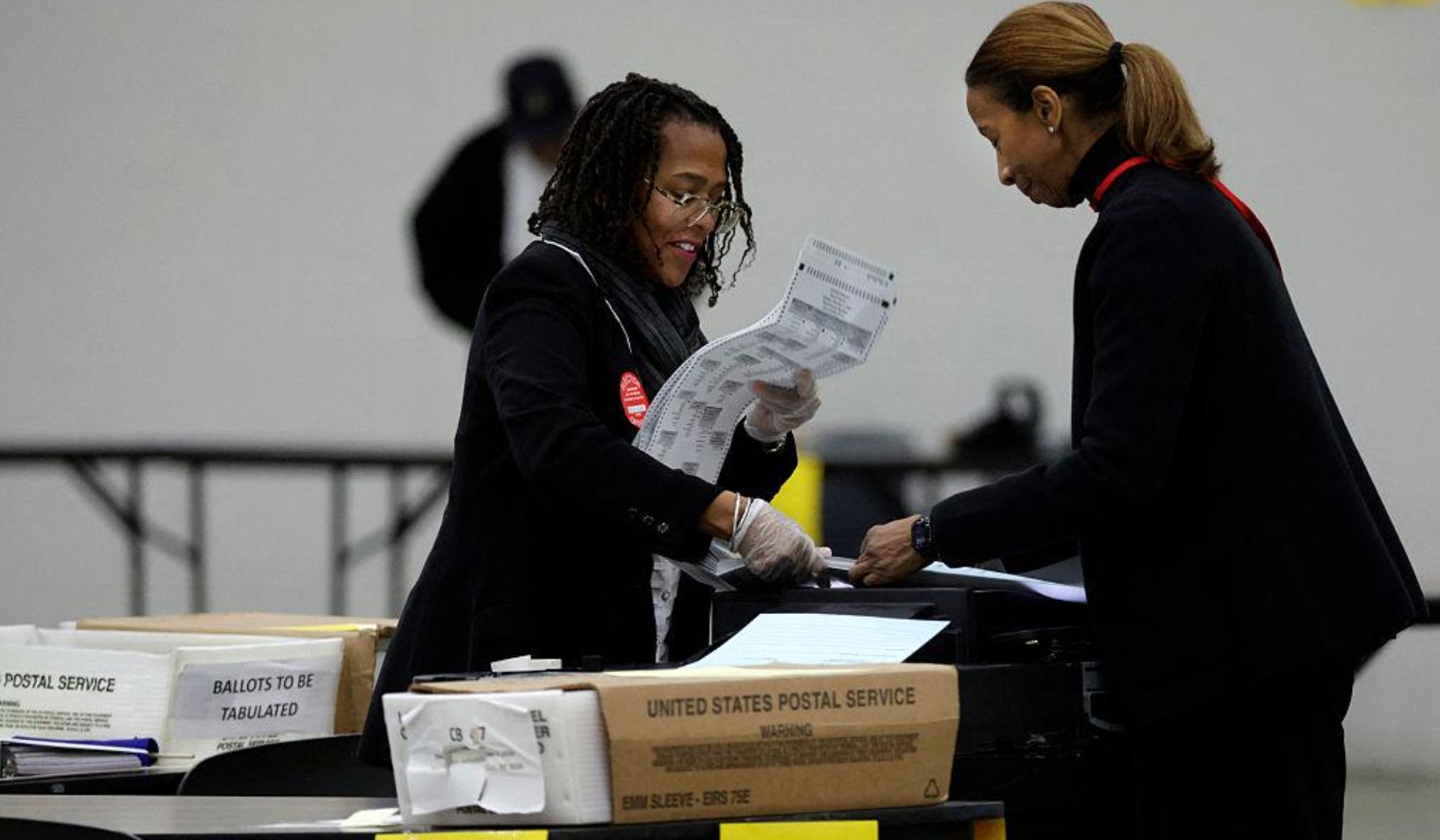
The Democratic Party secured a number of significant victories in the US mid-term congressional elections, which took place on 3 November. The Democrats managed to take four Senate seats from the Republicans, notably in the traditionally conservative states of Texas, Ohio and South Carolina. The party also strengthened its position in the House of Representatives and moved closer to securing a majority in both houses of Congress. However, the final distribution of seats as of the morning of 4 November has not yet been determined.
- The Democrats won four Senate seats from the Republicans in the 3 November election.
- Key victories were secured in Texas, Ohio, South Carolina and North Carolina.
- In the House of Representatives, the Democrats have also strengthened their position in competitive constituencies.
- Dissatisfaction with prices and the war with Iran has affected voters’ sentiments.
- A change in the majority in Congress could affect US aid to Ukraine.
Who won the US Senate elections?
The most surprising results came in the states where the Republicans had long held a political advantage.
A Democrat in Texas James Talarico defeated the state’s Attorney General Kenna Paxton, who was supported by Donald Trump. This is the first victory for a Democratic Party candidate in the US Senate election in Texas since 1988.
In Ohio, a former Democratic senator Sherrod Brown regained his seat in the upper house of Congress by defeating a Republican John Gasted. Brown lost his Senate seat in the 2024 election, but managed to win it back two years later.
In South Carolina, a Democrat Annie Andrews won Darlene Graham, which Trump supported. The state traditionally votes for the Republicans, so the change in the party affiliation of the Senate seat was one of the most notable outcomes of election night.
The Democrats secured another important victory in North Carolina. The former governor Roy Cooper defeated the Republican Michael Wottley.
In addition, the Democrats retained their seats in Georgia and New Hampshire. In Georgia, the incumbent senator John Ossoff won re-election, whilst in New Hampshire the victory went to a Member of Congress Chris Pappas.
The Democrats have therefore already secured four seats previously held by the Republicans. To secure a majority in the Senate, they need to retain their seats in other states, particularly Michigan and Minnesota.
The Democrats are close to securing a majority in the House of Representatives
At the same time, the Democratic Party secured victories in a number of closely contested constituencies in the House of Representatives.
According to the latest reports from Reuters, the Democrats have taken at least eight seats from the Republicans, including in New Jersey, North Carolina and Kentucky.
The results in Florida proved to be significant. The Democrats retained three constituencies whose boundaries had previously been redrawn by the Republican state government in the hope of strengthening its own position.
Prior to the election, the Republican Party held a narrow majority in the House of Representatives. Consequently, the losses in competitive constituencies significantly altered the balance of power.
At the same time, the final decision on which party will secure at least 218 of the 435 seats depends on the completion of the vote count.
Why the Republicans have lost voter support
The main issues of the election campaign were the high cost of living, inflation and the economy the policies of Donald Trump’s administration and the US war with Iran.
According to the results of the AP Voter Poll, around three-quarters of American voters are dissatisfied with the direction the country is taking.
Around 60 per cent of respondents disapprove of Trump’s performance, whilst around 70 per cent believe that Congress should exercise greater oversight of the President.
Voters cited the following as among the most important issues: rise in fuel prices, food, housing and healthcare.
The war with Iran, which the US launched in February, was also one of the causes of discontent. The rise in oil prices has affected prices at American petrol stations.
The poll also revealed a shift in voter sentiment. Young voters and some Latin Americans who had supported Trump in the 2024 presidential election were more likely to vote for the Democrats this time round.
How Trump reacted to the Republicans’ defeats
Donald Trump actively supported his party’s candidates, holding more than two dozen campaign rallies in October. The President repeatedly urged his supporters to vote as if he himself were standing for election.
However, once the first results were in, Trump stated that the Republicans could have won by a much wider margin if his name had been on the ballot papers.
The US President watched the vote count at the White House alongside his advisers and members of the administration.
Intermediate elections do not provide for the re-election of the president. Trump will remain head of state until the end of his term, but the Republicans’ loss of their majority in Congress could significantly limit his administration’s scope for action.
What will change for Trump if the Democrats take control of Congress?
If the Democrats take control of the House of Representatives, they will be able to set the legislative agenda, chair parliamentary committees and launch investigations into the administration’s activities.
Party representatives have already spoken of possible scrutiny of White House decisions, the actions of individual ministers and the use of state powers.
Securing a majority in the Senate would be of particular importance. It is this chamber that confirms the nominations of federal judges, ministers and other senior officials appointed by the President.
A Democratic majority will be able to block some of Trump’s appointments and exert greater control over his foreign policy.
However, even under such a scenario, the President will retain the right to veto legislation. To override a veto, at least two-thirds of the votes in both houses of Congress are required.
What the election results mean for Ukraine
A change in the majority in the US Congress could influence Washington’s policy on the Russia-Ukraine war.
First and foremost, this concerns funding military aid, sanctions against Russia, arms procurement and oversight of the Trump administration’s decisions.
Congress approves federal expenditure and can therefore influence the level of aid to Ukraine and the conditions under which it is provided.
Should they secure a majority, the Democrats will be able to push their own legislative initiatives in support of Kyiv more vigorously, as well as demand explanations from the administration regarding its negotiations with Moscow.
At the same time, the new balance of power does not mean an automatic increase in US arms supplies. Some decisions will remain within the President’s remit, whilst the passing of new budget laws will require political agreements.
This issue is particularly relevant against the backdrop of negotiations Ukraine, the US and Russia, with the next round of talks scheduled for 10–11 November.
The newly elected Congress will begin its work on 3 January 2027. Until then, the current members of parliament will continue to carry out their duties, and the final composition of both chambers will be determined once the vote count and the necessary electoral procedures have been completed.