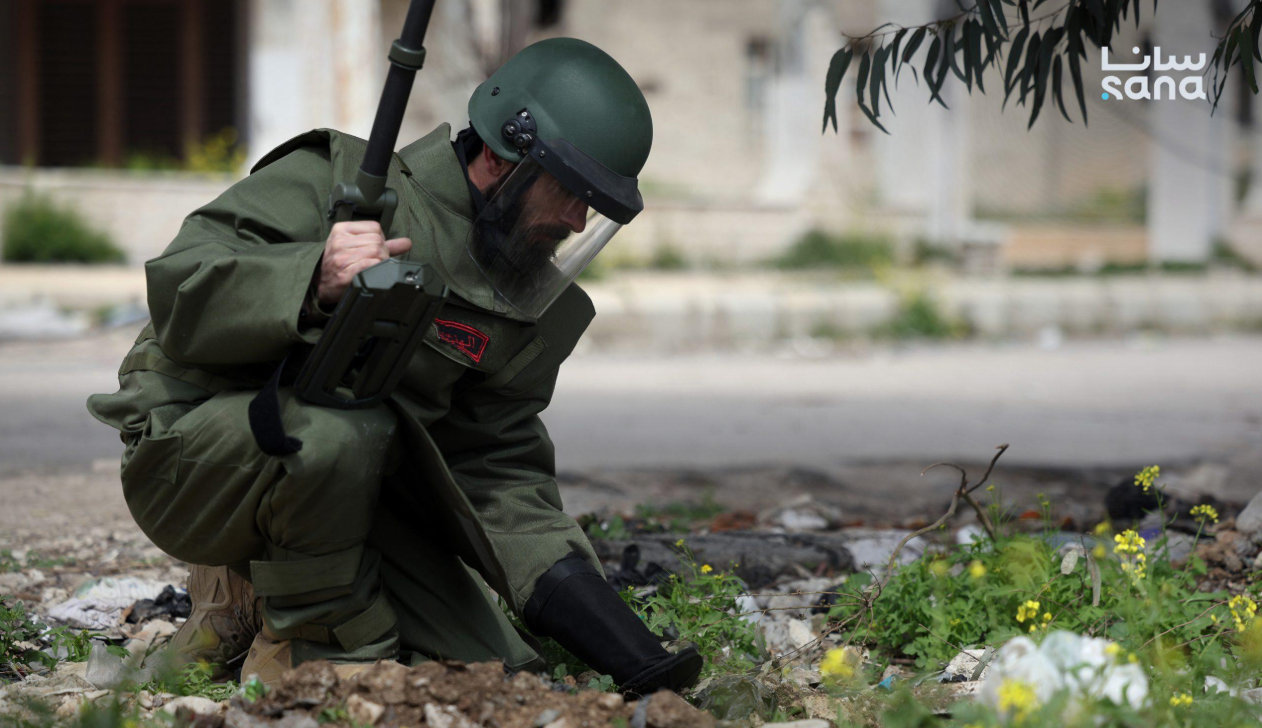
The United States is discussing the possibility of sending a small military contingent back to Syria to train local military personnel in mine clearance and the disposal of explosive ordnance. If approved, this would be the first joint training mission between the US and Syrian armed forces since the overthrow of Bashar al-Assad’s regime in December 2024. Around 15 US allies could join the programme, including the United Kingdom, France and Germany. Training could potentially begin as early as March 2027, although no final decision has yet been made.
- The US is considering the possibility of sending troops back to Syria in 2027.
- American instructors may train the Syrian army in mine clearance and the disposal of munitions.
- It is planned to involve representatives from around 15 allied countries in the multinational mission.
- The implementation of the programme is hampered by US legal restrictions and the stance taken by the Syrian military.
The US is discussing a new military mission in Syria
Washington is considering setting up a multinational programme to train Syrian military personnel, the main objective of which will be to clear areas of mines and unexploded ordnance. American instructors may work either directly in Syria or at training bases in Jordan.
It is proposed that the Damascus Coordination Centre (DCC), established in Jordan in 2025 to facilitate cooperation between the Syrian authorities, the US military and regional allies, should form the basis of this cooperation.
The new plans were a continuation of Damascus’s rapprochement with Washington, which intensified following the Syrian President’s accession to power Ahmed al-Sharaa and his negotiations with Donald Trump.
According to a spokesperson for US Central Command Tima Hawkins, the coordination centre continues to work towards stabilising the situation in Syria, although its future structure and remit have not yet been finalised.
Up to 15 countries may be involved in training the Syrian army
The project involves military instructors from the United Kingdom, France, Germany, Australia, Saudi Arabia, the United Arab Emirates and other countries.
In the initial phase of the training, the focus will be on mine detection, the safe disposal of explosive ordnance and the training of specialist engineering units. Assistance in strengthening border security is also being discussed.
On 12 November, the Syrian Minister of Defence Murhaf Abu Kasra met in Damascus with Rear Admiral, the commander of Operation Inherent Resolve Liam Gulin. According to a Syrian military source, the parties discussed possible mechanisms for multinational cooperation.
Why can’t Washington start the training straight away?
The main obstacle remains the US Leahy Laws, which prohibit the provision of assistance to foreign security forces where there is credible information regarding their involvement in gross human rights violations.
The issue is particularly relevant to the New Syrian Army, which comprises former members of various armed groups. UN investigators have previously documented human rights violations committed by forces linked to the new Syrian authorities.
A further complication is the reluctance of some members of the Syrian military leadership to grant American instructors access to military installations and facilities.
Washington is also exploring the possibility of using remaining funds from Operation Inherent Resolve. Approximately $200 million in funding is available, although journalists have been unable to independently verify this figure.
The return of US troops will mark a new phase in relations with Damascus
American troops finally withdrew from Syria in April 2026 following a long-running operation against the terrorist group «Islamic State». Previously, Washington had cooperated mainly with Kurdish forces rather than with the central Syrian government.
Following the overthrow Bashar al-Assad Relations between the two countries began to change. In December 2025, the US lifted its sweeping economic sanctions against Syria; in August 2026, it removed Syria from the list of state sponsors of terrorism; and in October, it eased restrictions on the export of defence equipment.
Demining remains one of the most important tasks in the wake of a protracted civil war. According to estimates by the United Nations Mine Action Service, explosive remnants of war threaten millions of Syrians and hinder the reconstruction of homes, roads and agricultural land.
For the time being, Washington and Damascus are merely agreeing on the format of their cooperation. If approved, the demining mission could form the basis for broader military relations between the two countries, which until recently were on opposite sides of the Syrian conflict.