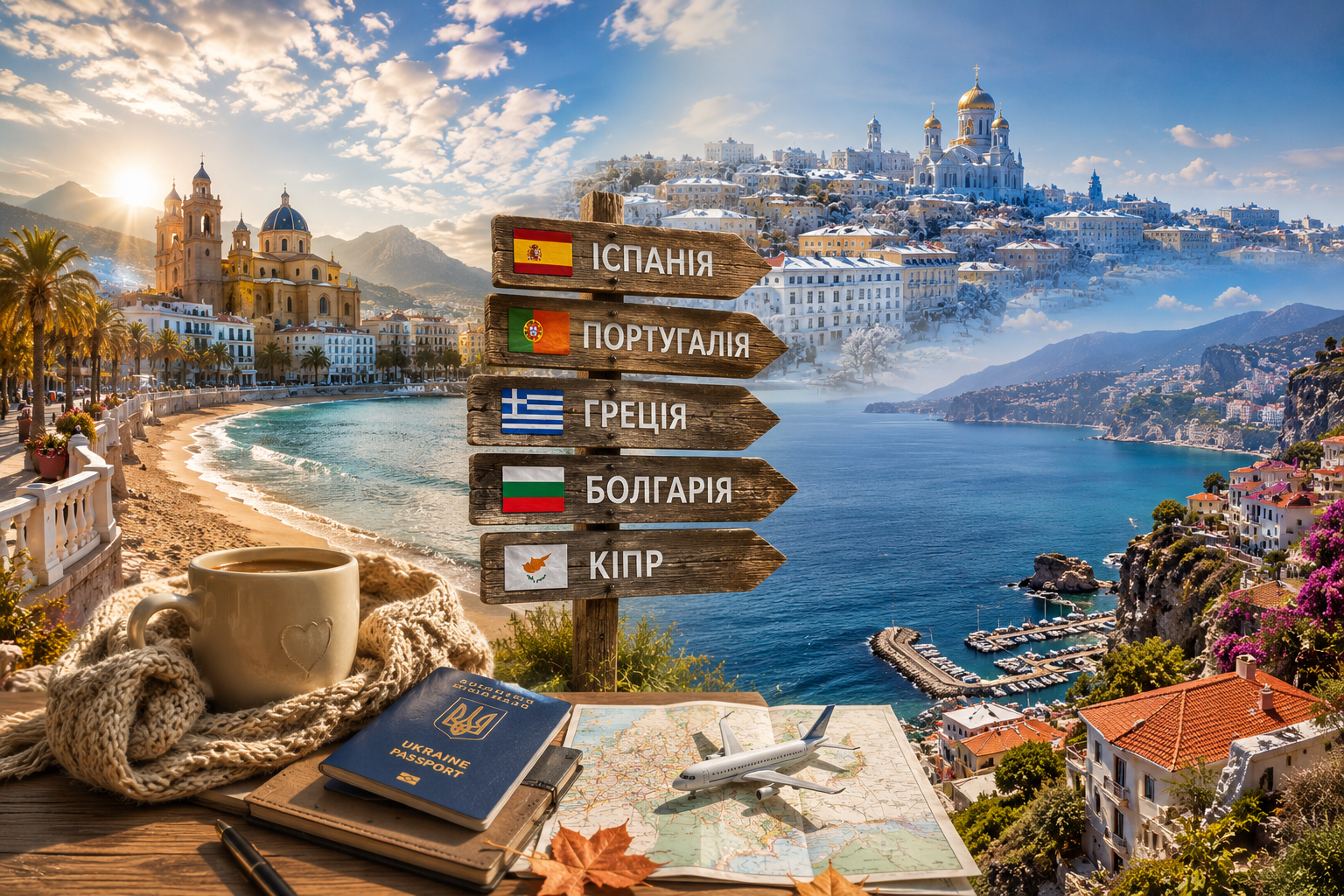
Winter in Europe doesn’t necessarily mean freezing temperatures, snow and high heating bills. In southern Spain, Madeira in Portugal, Crete in Greece and Cyprus, the temperature – even in January – often allows you to spend plenty of time outdoors. At the same time, Ukrainians need to consider not only the climate, but also the cost of rent, food, utilities, access to healthcare and legal residency. There is no single ‘best’ destination. Spain offers the most balanced combination of climate and infrastructure, Bulgaria remains one of the cheapest options, whilst Madeira is suitable for those willing to pay more for a mild island winter.
- The Spanish city of Alicante offers the best balance between climate, prices and infrastructure.
- The most affordable winter holiday destinations remain Varna and Burgas in Bulgaria.
- Cyprus and Madeira in Portugal have the warmest winter climates among the popular holiday destinations.
- Rental costs range from 400–600 euros in Bulgaria to 900–1,500 euros in Madeira.
- Ukrainians with temporary protection may access medical care in EU countries once they have completed the necessary paperwork.
- Before moving, it is worth comparing not only prices, but also access to healthcare, heating, transport and the terms of long-term tenancies.
Alicante: the perfect balance of climate and urban comfort
Alicante, in south-eastern Spain, is one of the most convenient places to spend the winter. It has an international airport, public transport, large supermarkets, hospitals, schools and well-established expat communities.
For a long-term let of a one-bedroom flat, you should budget for around 700–1,000 euros a month. Accommodation near the seaside or in the city centre may cost more. Utility bills for a medium-sized flat can add around 100–200 euros, depending on electricity consumption.
According to Numbeo, the total monthly cost of living for a family of four in Alicante, excluding rent, is estimated at around 2,665 euros. At the same time, the city remains cheaper than the tourist destination of Palma de Mallorca, particularly due to lower housing costs.
Food for one person can cost around 250–350 euros a month if you cook at home. Lunch in an inexpensive café usually costs 12–18 euros, whilst dinner for two costs around 40–60 euros.
Advantages:
- a mild and mostly sunny winter;
- a well-developed public transport system;
- a large number of shops and medical facilities;
- a large Ukrainian and international community;
- convenient flight connections.
Disadvantages:
- high demand for flats;
- Landlords may require a deposit and proof of income;
- In older buildings, the thermal insulation is often poor;
- Short-term rentals booked through travel agencies are considerably more expensive.
Attitudes towards Ukrainians in major Spanish cities are generally calm and friendly, although personal experiences depend on the specific neighbourhood and the landlord. It is important to note that Spain has a well-developed support system for people with temporary protection.
Madeira: the mildest winter, but expensive accommodation
The Portuguese island of Madeira attracts visitors with its stable temperatures, green landscapes and the absence of proper winter frosts. The island’s main city is Funchal, where hospitals, shops, schools, government offices and most services are concentrated.
Rent is the main drawback of Madeira. A modest flat for one person can cost around 850–1,200 euros a month, whilst modern accommodation in the centre of Funchal costs 1,300–1,700 euros. A rough budget for one person, covering rent, groceries, transport and basic living costs, can start from €1,500.
You should budget 250–400 euros a month for food. Utilities and internet access can cost a further 110–170 euros or so. Some goods on the island are more expensive due to logistics.
Advantages:
- one of the most pleasant winter climates in Europe;
- clean air and a wealth of nature trails;
- a peaceful atmosphere;
- high-quality mobile phone coverage and internet;
- relatively affordable private healthcare.
Disadvantages:
- high costs and a limited supply of housing;
- dependence on air links;
- the challenging terrain, which often makes a car a more convenient option than public transport;
- damp and mould in poorly ventilated flats;
- a smaller selection of specialist doctors than in cities on the mainland.
Madeira is best suited to people with a steady source of passive income. For the most budget-friendly winter holiday, this destination can hardly be described as the best choice.
Crete: affordable housing and a relaxed way of life
Greek Crete remains one of the most attractive Mediterranean destinations. For a long-term stay, it is best to consider Heraklion or Chania, where shops, hospitals, schools and public transport continue to operate throughout the winter.
A one-bedroom flat in Heraklion costs around 400–750 euros a month. Accommodation in a small town or village can be found for 350–500 euros, but it can be difficult to get about there without a car.
One person needs approximately 250–350 euros for food. Utility bills in winter may turn out to be higher than expected, especially if the flat is heated using electric air conditioners or heaters.
According to Numbeo’s estimates, the monthly cost of living for a family of four in Heraklion, excluding rent, is around 2,960 euros. However, the actual budget for those living frugally could be significantly lower.
Advantages:
- relatively affordable long-term tenancy;
- a mild winter on the coast;
- inexpensive local vegetables, fruit, cheese and olive oil;
- a peaceful pace of life;
- the major hospitals in Heraklion and Chania.
Disadvantages:
- Some tourist establishments close in winter;
- Public transport outside major cities is limited;
- flats often do not have central heating;
- English may not be sufficient for communicating with public authorities;
- During storms, there may be disruption to ferry and air services.
Greeks generally have a favourable view of Ukrainians, but it is best to deal with formal matters through an interpreter or with the help of local voluntary organisations.
Varna and Burgas: the most affordable seaside winter break
The Bulgarian coast isn’t as warm as Spain, Crete or Cyprus. In winter, there are cold winds, rain and sub-zero temperatures. At the same time, Varna and Burgas have one major advantage — relatively affordable accommodation.
A one-bedroom flat can be rented for around 400–600 euros a month. Cheaper options are available in the suburbs or in small holiday resorts, particularly outside the tourist season.
According to Numbeo, the overall cost of living, including rent, in Bulgaria is approximately 28% lower than in Spain, whilst food is approximately 20% cheaper.
A single person’s food budget can amount to 200–300 euros a month. Utility bills come to around 100–180 euros, but electric heating in winter can significantly increase the bill.
Advantages:
- the most affordable rental rates amongst popular seaside destinations in the EU;
- a language that is familiar to many Ukrainians;
- its proximity to Ukraine;
- a large Ukrainian community;
- affordable household services and public transport.
Disadvantages:
- a cool and windy winter;
- some of the flats are poorly insulated;
- resort areas are almost deserted in winter;
- the quality of public healthcare and service may vary;
- Without a car, living outside the major cities is less comfortable.
Bulgaria is the best choice, first and foremost, for those who prioritise value for money rather than guaranteed warm weather.
Cyprus: plenty of sunshine, but high living costs
Larnaca, Paphos and Limassol offer some of the warmest winters in the European Union. Even in January, it is often pleasant to take a stroll by the sea during the day, although the evenings can be chilly.
You’ll have to pay for comfort. A one-bedroom flat in Larnaca or Paphos can cost between 750 and 1,100 euros, whilst in Limassol it is considerably more expensive. Spain is generally around 10% cheaper than Cyprus in terms of rent, whilst Alicante is approximately 14% cheaper than Larnaca.
You should budget between 300 and 450 euros per person for food. A car is often a necessity, as public transport is not equally well developed across the country. Another unusual factor is that traffic drives on the left.
Advantages:
- a very mild and sunny winter;
- English is widely spoken;
- a well-developed private healthcare sector;
- a large international community;
- a relaxed way of life by the sea.
Disadvantages:
- expensive housing and food;
- poorer public transport;
- high electricity costs;
- It’s difficult to live outside the city centre without a car;
- Being an island increases the cost of travel.
Cyprus is ideal for those who prioritise the climate over cost and have a budget of at least 1,500–2,000 euros per month per person.
How much does it cost to spend the winter in Europe?
An approximate monthly budget for one person renting a flat on their own:
| Direction. | Rental | Products | Utilities and the internet | Total budget |
|---|---|---|---|---|
| Varna or Burgas | €400–600 | €200–300 | €100–180 | €850–1,200 |
| Crete | €400–750 | €250–350 | €120–220 | €1,000–1,450 |
| Alicante | €700–1,000 | €250–350 | €130–220 | €1,250–1,700 |
| Madeira | €850–1,500 | €250–400 | €110–180 | €1,500–2,200 |
| Cyprus | €750–1,200 | €300–450 | €150–250 | €1,500–2,100 |
These estimates do not include airfares, tourist trips, expensive medicines, car hire or major unforeseen expenses. Data on the cost of living is based primarily on user-submitted price data, so it is best used as a guide rather than a guaranteed estimate. Numbeo explicitly states that it compiles its figures based on a large amount of crowdsourced data.
Healthcare and the status of Ukrainians in the EU
Ukrainians who have received temporary protection, are entitled to access healthcare in their country of residence once they have registered and completed the necessary paperwork. The specific list of free services, the referral system and co-payments vary from country to country.
In July 2026, EU countries agreed to extend temporary protection for people who had fled Ukraine due to the war until 4 March 2028. The rules regarding new arrivals and certain categories of citizens may be further clarified at national level.
For people with chronic conditions, it is important to:
- collect medical reports and have them translated into English;
- stock up on your regular medication;
- check whether a local prescription is required;
- find out the location of the nearest public hospital;
- Consider taking out private insurance for quick consultations.
A private consultation with a GP in southern Europe usually costs around 40–80 euros. Consultations with specialists, medical examinations and dental treatment can be considerably more expensive.
Which course to choose
For most Ukrainians, the best all-round option seems to be Alicante. The city offers milder winters, a well-developed infrastructure, hospitals, transport and a wide choice of accommodation, although rents are no longer cheap.
Varna or Burgas These are suitable for a budget-friendly winter break and for people who want to stay closer to Ukraine. However, you shouldn’t expect genuine Mediterranean warmth there.
Crete It strikes a balance between price, climate and a peaceful lifestyle. It’s best to choose Heraklion or Chania rather than a small, seasonal resort.
Madeira It would be a good choice for remote working, enjoying the countryside and a mild climate, but the cost of accommodation may be higher than expected.
Cyprus It is worth considering if you have a sufficient budget and are prepared to use a car. In terms of overall costs, it often comes second to Spain, although it can offer more sunny and warm days.
Before moving in, it’s best not to pay for accommodation for several months in advance based solely on photographs. The safest option is to book temporary accommodation for one or two weeks, view the flats in person and be sure to check the heating, humidity, internet connection, the terms for the return of your deposit and the distance to the nearest hospital.