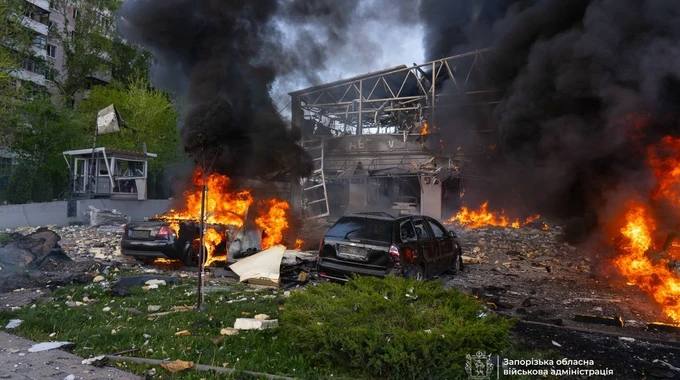
As a result of a Russian missile strike on Zaporizhzhia on 5 May, the number of casualties reached 43. Doctors assessed the condition of four of the wounded as serious, while 12 others were killed.
The number of victims in Zaporizhzhia is growing
Following the Russian attack on Zaporizhzhia on 5 May, the number of wounded continues to grow. According to in the message said that as of today, the number of victims has reached 43. The attack killed 12 people.
The head of the regional military administration said that 18 of the wounded are in hospital. Four of them remain in serious condition, while 14 others are assessed as moderately injured. The rest of the injured are being treated at home after receiving medical assistance.
Medical care and condition of the wounded
Zaporizhzhia's medical facilities have mobilised all the necessary resources to help the victims. Doctors are fighting for the lives of four people who are in the most serious condition. The rest of the injured are being treated according to the extent of their injuries.
It is also reported that 14 patients with moderate injuries remain under medical supervision, while those with minor injuries continue to be treated at home. Doctors emphasise the importance of prompt response in such emergencies.
Reaction of local authorities and society
Local authorities are urging residents to follow safety rules during air raids and not to ignore the alarms. The authorities also expressed their condolences to the families of the victims and promised support to all those affected.
NGOs and volunteers are actively involved in helping the victims and their families. Aid collection points have been set up in the city for those who need support after the tragedy.
Why it matters
Increase in the number of victims after shelling of Zaporizhzhya underlines the danger that civilians in the frontline regions face on a daily basis. Such attacks result in significant human losses and strain on the healthcare system.
Dissemination of information on the status of victims is important for coordinating assistance and support to families in difficult circumstances. It is also a reminder of the need to strengthen the protection of civilians and respond to the humanitarian challenges posed by war.