
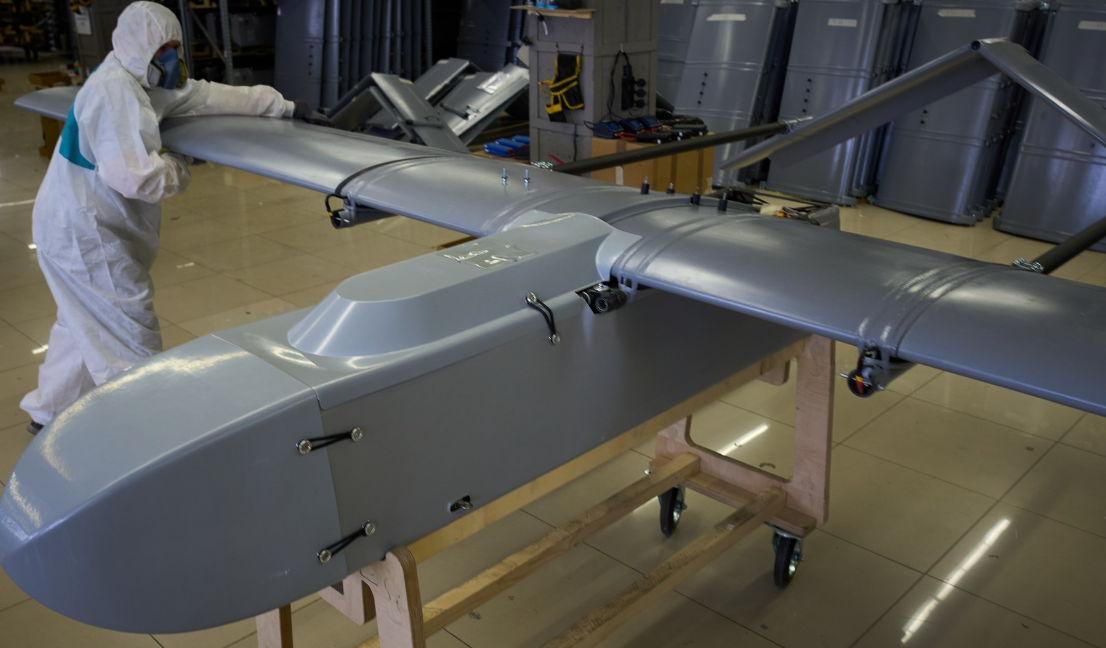
The Ukrainian company Fire Point produces around 100 Flamingo long-range cruise missiles per month, according to its CEO, Iryna Terekh. The company also manufactures hundreds of FP-1 and FP-2 drones every day. According to her, these products are used to strike targets deep inside Russia, and production is resuming following a pause caused by a delay in the approval of EU funding.
Briefly about the main points
- Fire Point produces around 100 Flamingo missiles every month.
- FP-1 and FP-2 are produced at a rate of hundreds of units per day.
- Flamingo can carry 1,150 kilograms of explosives.
- The company has 83 production facilities in Ukraine and one in Denmark.
- Fire Point develops ballistic missiles and components for the Freyja system.
Flamingo’s production capacity and capabilities
Fire Point describes a production rate of 100 Flamingo missiles per month as sufficient for a sustained campaign of strikes against targets at considerable distances within Russia. According to Iryna Terekh, over the past few months, she is not aware of a single long-range strike in which the company’s products were not used. According to her estimates, attacks involving its missiles and drones take place on average between five and 15 times a day.
The Flamingo is capable of carrying 1,150 kg of explosives, which, according to Terekh, is enough to breach concrete walls. In June, these missiles were used to attack a military components factory in Cheboksary — more than 600 miles from Kharkiv. The actual flight distance was approximately 1,800 km due to the complex flight path; the CEO described it as one of the longest cruise missile missions in history.
The cost of a single Flamingo is just under 600,000 dollars, said Terekh. By way of comparison, she cited the American Tomahawk, which she estimated to be worth approximately 3.5 million dollars.
Drones used to attack oil refineries
According to Terekh, the lighter FP-1 missiles, with a range of over 1,000 miles, are being used primarily against less well-protected Russian oil refineries. She linked this campaign to a 20% reduction in their output and queues at petrol stations.
According to the head of Fire Point, the price of the FP-1 ranges from 55,000 to 75,000 dollars. Mass production of the FP-1 and FP-2 is resuming following a hiatus caused by a delay in the approval of a 90 billion euro European Union loan for Ukraine.
From a start-up to a network of production facilities
Fire Point, founded in 2022, currently operates through 83 factories in Ukraine and one in Denmark, Terekh said. The company has 6,000 employees, compared with 3,500 at the end of last year. When she joined the start-up in the summer of 2023, it had a staff of 18.
Former Commander of the US Army in Europe Ben Hodges believes that these Ukrainian developments are the result of several years’ work. According to him, they are capable of reaching targets deep within Russia, overcoming Russian air defences and carrying a warhead sufficient to destroy targets.
Ballistics and the Freyja project
Fire Point is developing Ukraine’s first ballistic missiles; Terekh hopes to see their maiden launch by the end of the year. The company is also working on a short-range variant, the FP-7, which is set to form the basis of an international initiative Freyja to develop an alternative to the US Patriot system, with the participation of Ukraine and nine other European countries.
Fire Point is to manufacture launchers and interceptors for Freyja, with a target price of $1 million per unit. Terekh emphasised that the company holds the Patriot system in high regard, but that global production is failing to meet demand. According to her, annual global production of PAC-3 missiles stands at around 600–700 units — a quantity which, she claims, was used up in the Middle East in just two weeks. The first tests of Freyja’s technology are scheduled to take place by July next year.
A focus on technology exports after the war
According to Terekh, the war has accelerated the modernisation of Ukrainian industry, which must be based on high value-added products. At present, Fire Point is not exporting weapons due to the demands of the war. At the same time, the stated scale of production suggests that the company is already transforming from a start-up into one of Ukraine’s leading manufacturers of long-range weaponry.
The majority stake in Fire Point is held by its founder, a businessman To Denis Stilerman. He stated that the negotiations regarding the sale of a stake to Timur Mindich had not resulted in a deal.