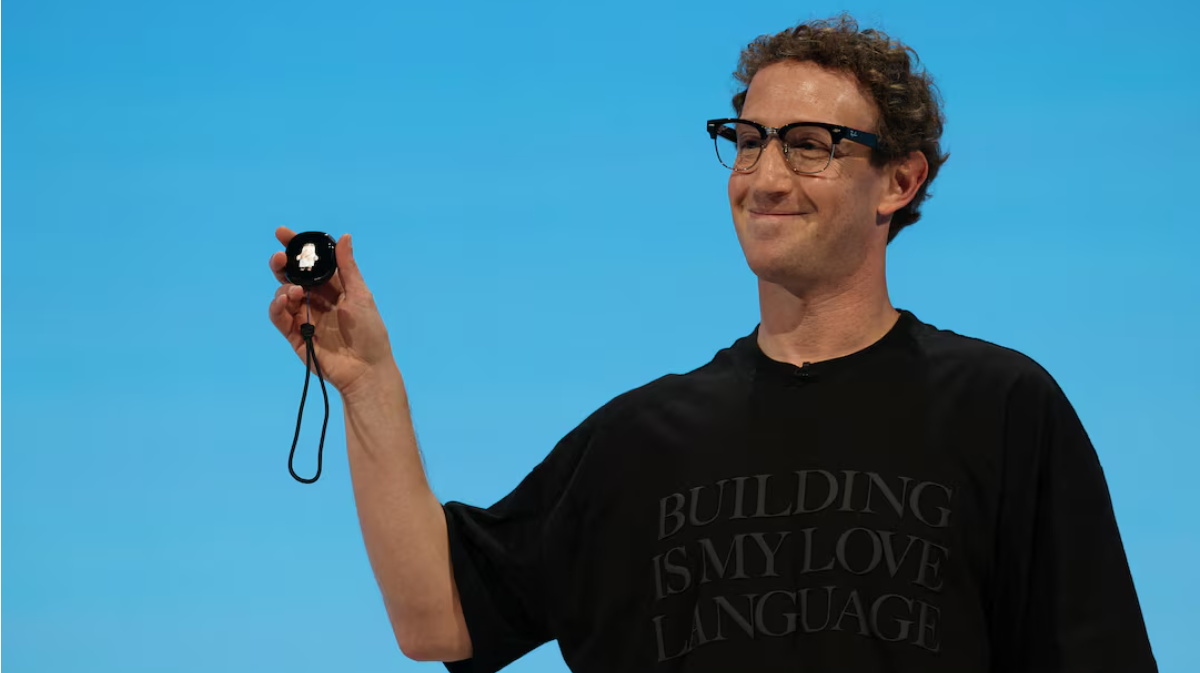
Meta has unveiled the Muse Charm — a pocket-sized device offering direct access to its AI agent, Muse. Users can activate the agent with a single touch, without needing to open the AI app on their smartphone. The company is positioning the gadget as part of the transition towards «personal superintelligence», whilst analysts see a potential audience amongst younger users but are sceptical about mass demand.
Briefly about the main points
- Muse Charm activates the Muse AI agent with a touch, without the need for a smartphone app.
- The gadget has 5G, a screen measuring around 5 cm and cannot be used to make calls.
- Meta is shifting its focus from the metaverse to «personal superintelligence».
- Muse has racked up millions of downloads, whilst Meta’s share price has risen.
- Analysts believe that its unique benefits are the key to Charm’s widespread success.
Meta’s commitment to its own AI platform
Presentation Charm took place at the annual Meta Connect conference in Menlo Park. The company has long sought to reduce its reliance on Apple and Google’s operating systems by developing its own platform and devices for it.
Mark Zuckerberg stated that «personal superintelligence» would emerge sooner and be more important than the metaverse — the direction with which Meta had linked its rebranding in 2021. According to him, Muse It will also soon be available across the entire Meta smart glasses range.
A small screen, 5G and a focus on a younger audience
The Muse Charm has a screen measuring approximately 2 inches, or 5 centimetres, which can be operated with your thumb. At the centre of the interface is a customisable Muse character. The built-in 5G modem provides a connection to the agent without Wi-Fi, however, the device is not designed for making phone calls.
Analysts suggest that the format may appeal to Gen Z, whose members are more likely to view AI not only as a search tool, but also as a conversation partner or collaborator for generating ideas. Linda Sui of Smart Analytics Global attributes Charm’s potential appeal to its combination of artificial intelligence, personalisation and design.
IDC Director Jitesh Ubriani noted that the gadget might appeal to people who do not want to wear smart glasses or do not trust them. In his view, The device may bring to mind a Tamagotchi — virtual pets, which were popular in the late 1990s.
Muse’s success boosted the company’s share price
Within a few days of its launch on 8 September, Muse had been downloaded millions of times. Some analysts suggest that this could be the biggest app launch in the US since the advent of ChatGPT in November 2022.
Investors responded positively to the agent’s ability to automate tasks — from booking flights to submitting tax documents. On Thursday, Meta’s shares rose by more than 3% and were nearly 24% higher than on the date Muse was launched. The company was on course for a daily increase in market capitalisation of approximately $56 billion, following a rise of approximately $324 billion by the close of trading on Wednesday.
Previous experience with AI gadgets introduces risks
Muse’s early successes do not yet guarantee demand for a standalone device. The Rabbit R1 — a portable generative AI gadget with a screen and a button — failed to become a success following its high-profile launch in early 2024 due to over-promised features and an unreliable user experience.
Sui warns that without features that smartphones, smartwatches, headphones or smart glasses cannot easily replace, Charm is likely to remain a niche product for early adopters. The coming months will show whether Muse can maintain its initial momentum, and whether the new gadget can turn this into sustained user interest.