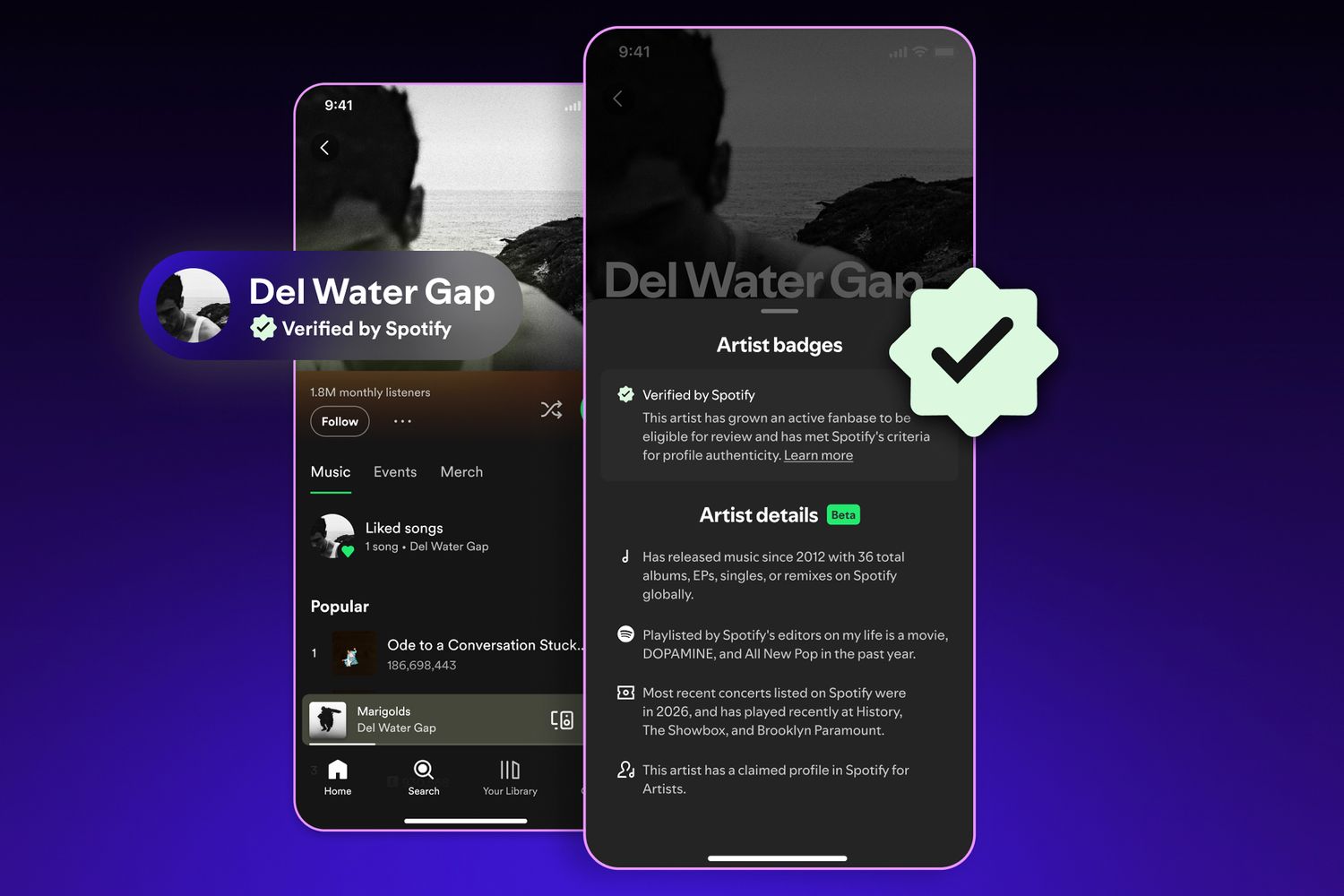
From mid-September, Spotify will begin labelling profiles of fictional artists created using artificial intelligence with the tag «AI Persona». Tracks from these profiles will not appear by default in personalised recommendations or editorial playlists, but users will still be able to find and listen to them themselves.
Briefly about the main points
- The label will relate to the performer’s fictional persona, rather than the use of AI in the musician’s work.
- Initially, the service will check popular profiles with specific audience metrics.
- Profile owners will be able to self-declare an AI persona, and verification will be carried out by moderators and automated systems.
- If there are grounds for suspicion, the platform may assign the status «Likely AI Persona».
- Spotify previously removed around 75 million spam tracks in a year.
Where will the badge be displayed, and who will be checked first?
The label will be visible on the artist’s page, in the section containing information about them, in the search results and alongside tracks in playlists. In the first phase, Spotify will focus on popular profiles that have already reached certain audience milestones.
Pros. information The Guardian reports that the platform aims to help listeners distinguish between real musicians and fictional digital characters. Spotify has stated that trust and authenticity form the basis of the connection between an artist and their audience.
The policy distinguishes between a digital identity and the method of creating a track
The new rules do not provide for the removal of music from such projects from the service. It will be possible to find it via the search function or access it directly from the profile page; however, the algorithms will not promote these tracks alongside the work of real artists.
As The Verge explains, the decision relates to the artist’s identity, rather than the technology used to create a particular song. A musician who has used artificial intelligence whilst writing or editing a track will not necessarily be labelled as such. The labelling is intended for profiles that present a fictional digital persona as a real performer.
Decisions will be reviewed by moderators, and the artists’ representatives will have the right to appeal
Account holders will be able to specify for themselves what they represent AI character. At the same time, Spotify will be using moderators and automated tools to identify profiles with fabricated names, biographies and photorealistic images.
If the platform has grounds to believe that a profile is fake, it may assign it the status «Likely AI Persona». The artist’s representatives will be notified of this decision and given the opportunity to appeal it. In future, listeners will also be able to report profiles which they believe are hiding a fictitious identity.
Velvet Sundown and Sienna Rose have drawn attention to digital music projects
The rock band Velvet Sundown, styled after 1970s American music, had built up a significant following before its creators confirmed that they had used artificial intelligence to create the band’s music, imagery and backstory. The project currently has around 117,000 monthly listeners. Its profile includes the description «synthetic», but there is no prominent standard labelling indicating the use of AI.
Questions have also been raised about the singer Sienna Rose, who made it onto Spotify’s viral chart without any live performances or conventional videos, whilst her profile was rapidly being updated with new tracks. The origins of this project have not been definitively confirmed.
The labelling scheme is being launched as part of the fight against spam in the music catalogue
Streaming platforms are facing a massive influx of automatically generated music, fake profiles and recordings that mimic well-known artists. Spotify previously reported that it had removed approximately 75 million spam tracks in a single year, whilst the service’s legitimate catalogue comprises around 100 million tracks.
The new system does not ban music created using artificial intelligence. It is designed to make the origins of performers more transparent and prevent fictional artists from gaining an unfair advantage in algorithmic promotion.