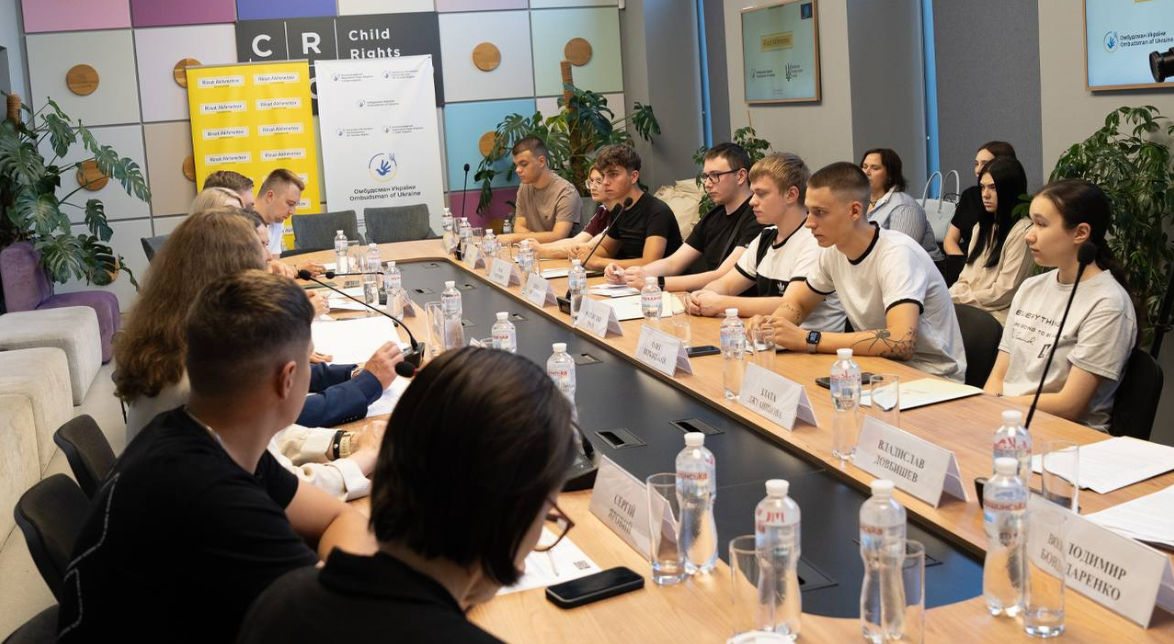
In Kyiv, participants in the «Youth Choose Ukraine» pilot project discussed its next stages, as well as opportunities for education, professional development and integration. The programme brings together young men and women aged 18–23 who have returned to Ukraine following deportation, forced displacement or a prolonged stay in the temporarily occupied territories. The project is being implemented by the Rinat Akhmetov Foundation, the Ombudsman’s Office and the Ministry of Youth and Sport.
Briefly about the main points
- The participants identified the steps they would take personally to achieve their goals in Ukraine.
- The pilot scheme began in June 2026 with an initial group of 20 people.
- The intensive phase will last six months, followed by a one-year support period.
- The programme covers medical, psychological, legal and career support.
- The partners refer to the scaling up of the model from 2027 onwards as a plan.
Returning to one’s own educational and career path
During the meeting, the young people mapped out the next steps towards achieving their own goals in Ukraine. The areas of focus identified include education, professional development and social integration, so the pilot scheme should help them make the transition from returning home to living independently.
Chair of the Fund’s Supervisory Board Natalia Yemchenko stated that working with young people is a priority, and that the pilot scheme is being implemented on the initiative and by the personal decision of Rinat Akhmetov.
The first cohort will receive personalised support throughout the year
The pilot scheme was launched in June 2026. The first intake comprised 20 young people: they are set to undergo six months of intensive training and one year of personalised support.
The support package includes psychological and medical support, career guidance, educational opportunities, employment support, mentoring, legal assistance and housing solutions. The partners have stated their intention to scale up the model from 2027 onwards once the pilot has been completed; at present, this is a plan rather than a fully-fledged nationwide programme.