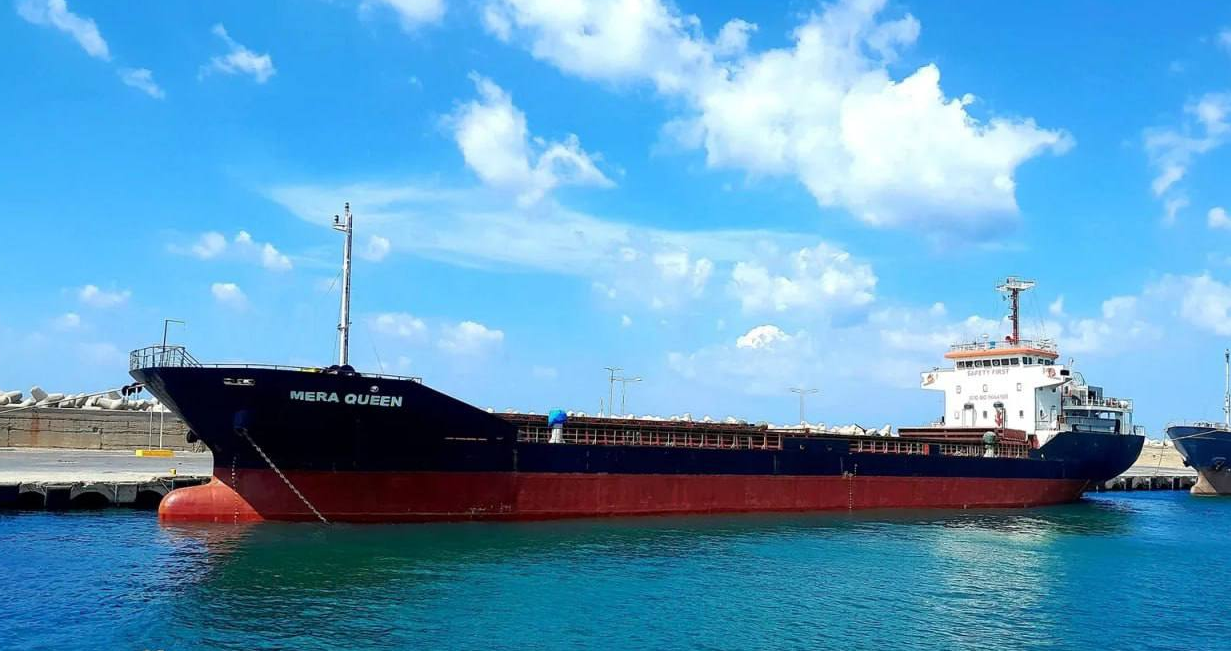
On the evening of 5 August, Russian forces attacked the civilian dry cargo vessel MERA QUEEN, which was carrying Ukrainian wheat, in the Black Sea. One crew member — a Ukrainian national — was killed, whilst three others were injured and are receiving medical treatment, according to Oleg Kipper, head of the Odesa Regional State Administration.
Briefly about the main points
- The dry cargo ship was attacked on the evening of 5 August in the Black Sea.
- A Ukrainian national died on board, and three other people were injured.
- Damage to the fuselage caused a fire; the crew were evacuated.
- This morning, the damaged dry cargo ship was moored at the quay.
- The July attacks had already forced shipowners to suspend new calls at ports.
A fire broke out on board after the crew had been evacuated
The collision damaged the hull of the vessel, after which a fire broke out on board. The crew were evacuated to shore, where the injured were given medical attention.
The Ukrainian Sea Ports Authority has confirmed the nationality of the deceased. The Odesa Regional Military Administration also reported the attack. According to a local publication, the damaged dry cargo ship was moored at the quay on the morning of 6 August.
The vessel was flying the flag of Guinea-Bissau
MERA QUEEN — a merchant dry cargo vessel with IMO number 9664108, built in 2013. It is approximately 91 metres long, 15 metres wide and has a deadweight of approximately 5,195 tonnes.
MERA SHIPPING LTD is listed as the registered owner of the vessel, and GMZ Ship Management Co SA as the commercial and technical manager.
The attacks pose risks to the operation of the maritime corridor
Oleg Kiper described the strike as the latest in a series of Russian attacks on civilian merchant vessels and port infrastructure Ukraine. Ukrainian ports are one of the key routes for supplying grain to the global market.
In July, following a Russian attack, the dry cargo ship Golden Leo, which was also flying the flag of Guinea-Bissau and carrying grain from Ukraine, sank. According to Reuters, the intensification of attacks at that time forced shipowners to temporarily suspend new voyages by vessels to Black Sea ports for agricultural exports.
A new attack could further increase the risks for freight, insurance and shipowners’ willingness to operate with ports in the Odesa region.