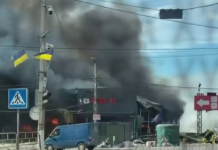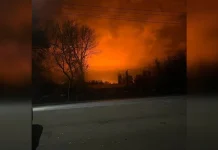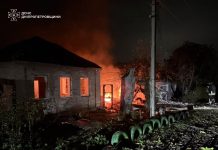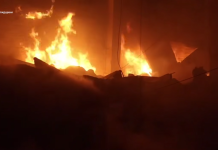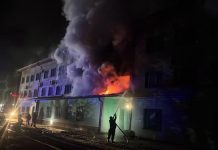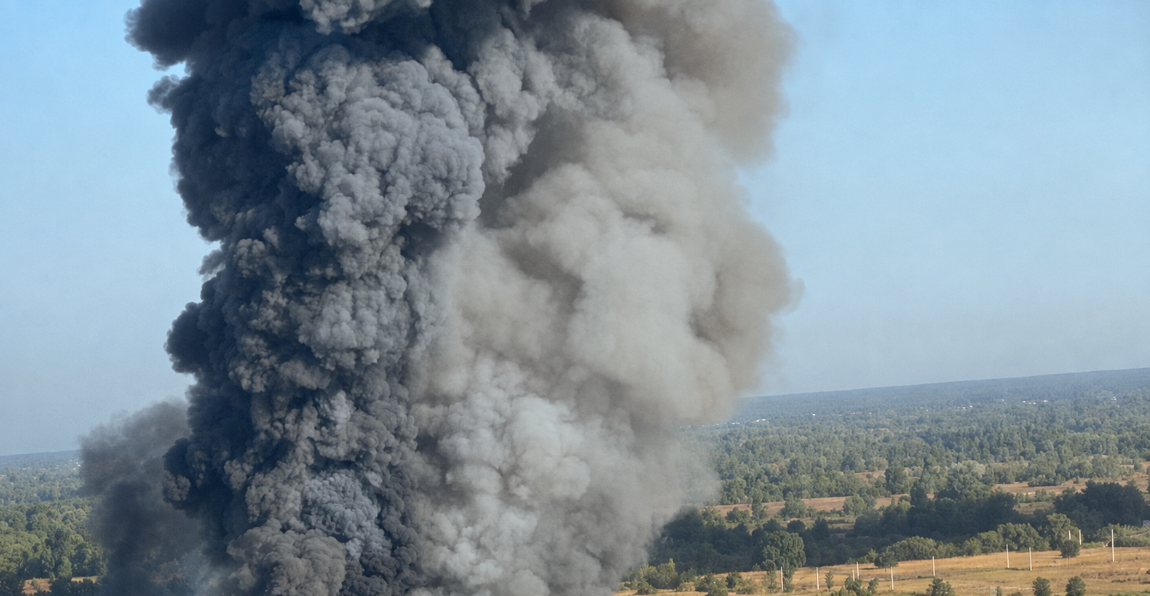
On the morning of 31 August, Russian forces attacked logistics and warehouse facilities in Kyiv and the surrounding region using strike drones. Following a second strike in the Brovary district, ATB warehouses containing food supplies caught fire, whilst a warehouse building in the Desnianskyi district of the capital caught fire, the Kyiv City Military Administration confirmed. Thick black smoke is visible from various parts of the city.
Briefly about the main points
- Following a second strike, ATB’s logistics facilities in the Brovary district are on fire.
- The Kyiv City State Administration has confirmed that a fire broke out at a warehouse in the Desnianskyi district.
- Rescue workers are dealing with the aftermath of the attacks; the extent of the damage is still being assessed.
- The air raid on the Kyiv region is now in its fifth day of intense attacks.
- In the event of heavy smoke, it is advised to close the windows and limit time spent outdoors.
Food and goods for the chain were stored in the warehouses
According to local media reports, a fire at logistics facilities ATB The fire broke out in the Brovary district following a second Russian strike. The blaze engulfed the premises where food and other goods intended for the retail chain were stored.
Rescue workers are continuing to deal with the aftermath of the attack. The area affected by the fire, the volume of goods destroyed and the final extent of the damage are still being determined. A large plume of thick black smoke has risen above the Kyiv region as a result of the fire and is visible from a considerable distance.
The Kyiv City State Administration reported a fire in the Desnianskyi district
A major fire broke out in a warehouse in the Desnianskyi district of Kyiv. The Kyiv City Military Administration confirmed the report this morning; *Ukrainska Pravda* also reported on the fire in the warehouse premises, citing the Kyiv City Military Administration.
The city authorities have urged residents to remain in shelters, as the threat of further attacks remains.
The air strikes have been going on for five days; Russia is deploying jet-powered UAVs
Explosions in Kyiv began to be heard in the early hours of 31 August, at around 00:30. The current The attack is taking place against the backdrop of the fifth consecutive day of intense Russian air strikes in the capital and the region.
President Volodymyr Zelenskyy stated that over the previous four days, Russia had launched around 800 attack drones. Over the past week, according to his figures, Russia has deployed nearly 2,000 attack drones against Ukraine, over 1,600 guided aerial bombs and 31 missiles, including North Korean-made ballistic missiles.
Jet-powered UAVs are considerably faster than the traditional «Shaheds», so air defence systems have less time to detect and intercept them. During the attacks on 28 August, the Air Force reported that Russia had launched around 140 attack drones in 12 hours, over 100 of which were jet-powered; the majority were heading for Kyiv.
Roshen, «Nova Poshta» and the Auchan warehouse were targeted
In recent days jet drones attacked a logistics centre Roshen, «Nova Poshta» warehouses and sorting centres, as well as retail and warehouse complexes belonging to other companies. On 28 August, Petro Poroshenko reported a sustained attack by jet-powered drones on the Roshen logistics centre in Kyiv.
On 30 August, damage was reported Auchan warehouse in the Boryspil district. Reuters had previously reported on the widespread destruction of food supply chains, retail chain warehouses and postal operators as a result of a new wave of Russian strikes.
What to do if smoke spreads to residential areas
Smoke from large fires may spread across Kyiv, depending on the direction of the wind. If there is a strong smell of burning in the area, you should close the windows, avoid airing the room and limit time spent outdoors until the smoke clears.
People with respiratory or cardiovascular conditions should be particularly cautious. During an air raid alert, you must remain in a shelter: due to the speed of jet-powered drones, the time between the threat being announced and a possible strike may be shorter than in the case of attacks by conventional strike UAVs.