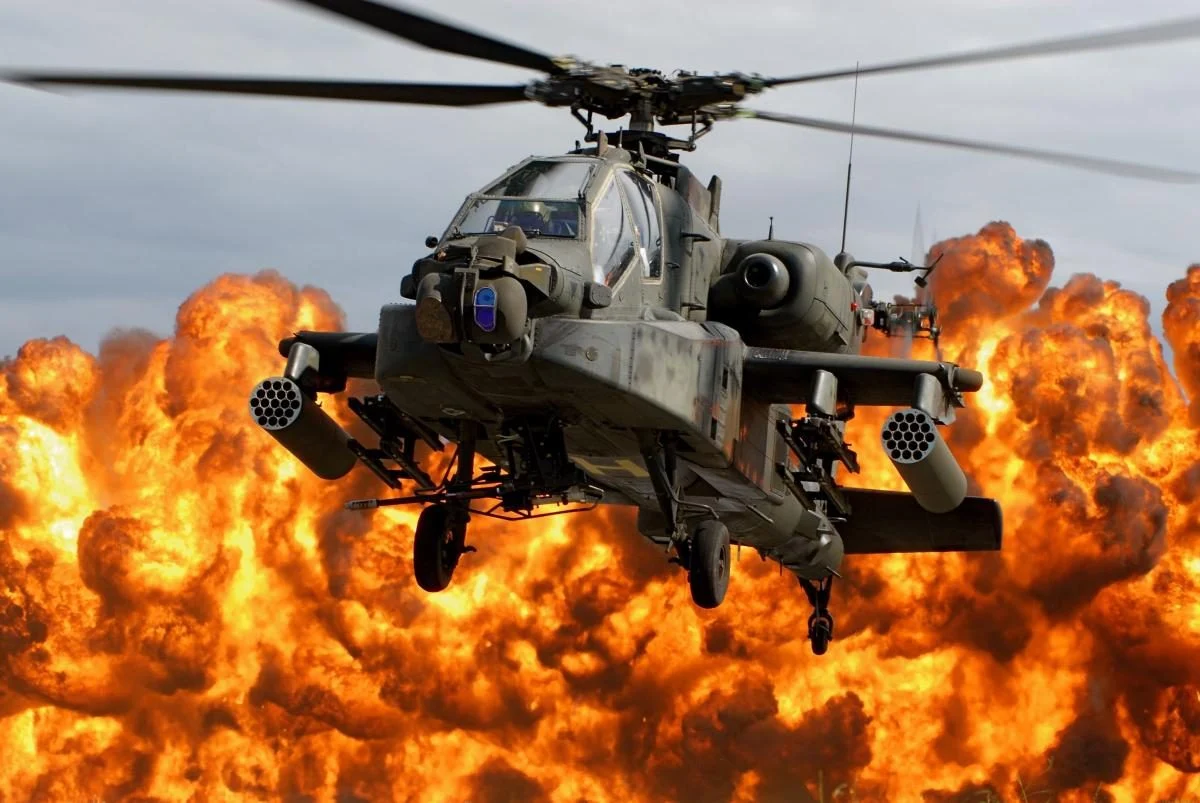
A US military AH-64 Apache helicopter was shot down by an Iranian Shahed drone near the Strait of Hormuz. Two crew members were rescued by a US Navy Corsair surface drone, which brought them to safety. US President Donald Trump confirmed the success of the rescue operation, but the official cause of the crash has not been made public.
- An American AH-64 Apache helicopter is shot down by an Iranian Shahed drone.
- Two crew members were rescued with the help of a Corsair surface drone.
- This is the first time an Apache helicopter has been lost in the conflict with Iran.
- US President Donald Trump announced a successful rescue operation.
Circumstances of the AH-64 Apache helicopter crash
American military helicopter AH-64 Apache crashed on 8 June in the Strait of Hormuz. According to CNN, it was shot down by an Iranian Shahed drone. This is the first time such equipment has been lost in the conflict between the US and Iran. The official cause of the crash has not yet been disclosed.
Rescue operations and the use of drones
The two helicopter crew members were rescued by a US Navy Corsair surface drone. The drone transported the servicemen to safety, after which the crew was transferred to another helicopter. NAVY USA began using such systems in March 2026, which increases the efficiency of rescue operations in difficult conditions.
Political reaction from the United States
President of the United States Donald Trump confirmed the successful completion of the rescue operation and announced an imminent military response. This event marks a new stage in the deterioration of relations between the two countries, which increases tensions in the Strait of Hormuz region, which is important for global energy.
Significance of the incident for regional security
The downing of the AH-64 Apache helicopter and the use of a drone by the Iranian military underline the growing use of unmanned systems in regional conflicts. The incident could further aggravate the situation in the Persian Gulf, which has an impact on global oil markets and the security of sea lanes.