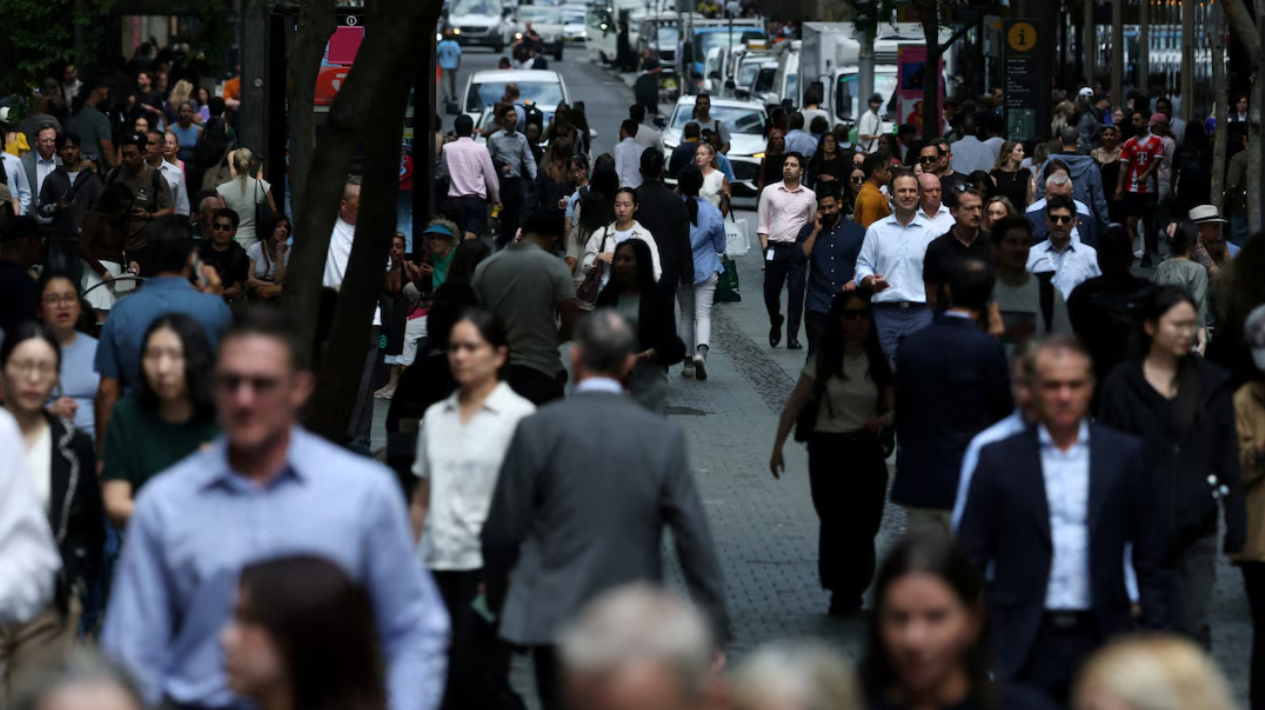
The Australian Treasury forecasts that, in the 2060s, the number of deaths in the country will exceed the number of births for the first time. According to the Generations Report, the average annual population growth over the next four decades will slow to 0.9% due to lower fertility rates and a decline in net overseas migration, whilst an ageing population will increase the burden on healthcare and care services.
Briefly about the main points
- In the 2060s, the number of deaths in Australia will exceed the number of births.
- Population growth is forecast at 0.9% per annum.
- The number of people aged over 85 will triple by 2066.
- Healthcare and care services in regions with ageing populations are at risk of facing staff shortages.
- The government has tightened its immigration rules amid political pressure.
Lower birth rates are changing the long-term outlook
Over the past few decades, Australia has sustained population growth mainly through immigration, which has offset the low birth rate. Net international migration – that is, the difference between the number of people arriving and those leaving – is now expected to decline and eventually stabilise.
In 2024, the total fertility rate stood at 1.481 children per woman, compared with 1.499 the previous year. It remains below the replacement level of approximately 2.1 children per woman.
The Treasury report identifies five transformations that will shape the economy over the next 40 years: artificial intelligence, geopolitical fragmentation, the energy transition, an ageing population and the shift towards a service-based economy.
Demand for healthcare and care services is set to rise
The number of Australians aged over 85 is set to triple by 2066, said Treasurer Jim Chalmers. This will mean additional demand for healthcare services and care for the elderly.
The Treasury expects that regions with an ageing population will experience a more acute shortage of staff in the healthcare and care sectors. Both sectors rely heavily on migrant workers.
Under the report’s baseline scenario, the budget deficit will widen to 1.8% of GDP by 2065–66, whilst public expenditure will reach 27.7% of GDP. The Treasury attributes a significant proportion of this increase to an ageing population.
Tighter immigration policies coincide with staffing requirements
The Labour government tightened immigration rules last week. The Prime Minister Anthony Albanese is trying to curb the rise in support for the right-wing populist party One Nation, which promises to drastically restrict immigration.
At the same time, the government plans to reduce net overseas migration to 245,000 in the current financial year and to 225,000 in 2027–28. For some skilled worker visas, priority has been given, in particular, to the fields of medicine, education, construction and agriculture.
Albanese’s approval rating this week has fallen to its lowest level since he took office in 2022.
The Government is preparing the following budgetary decisions
The report also points to possible future tax cuts. At the same time, the government is providing support to Australians in the face of rising inflation, more expensive mortgages and high house prices.
The Treasury believes that the country’s working-age population will continue to grow, although the population will age more rapidly and the total population will grow more slowly than forecast in the 2023 report.