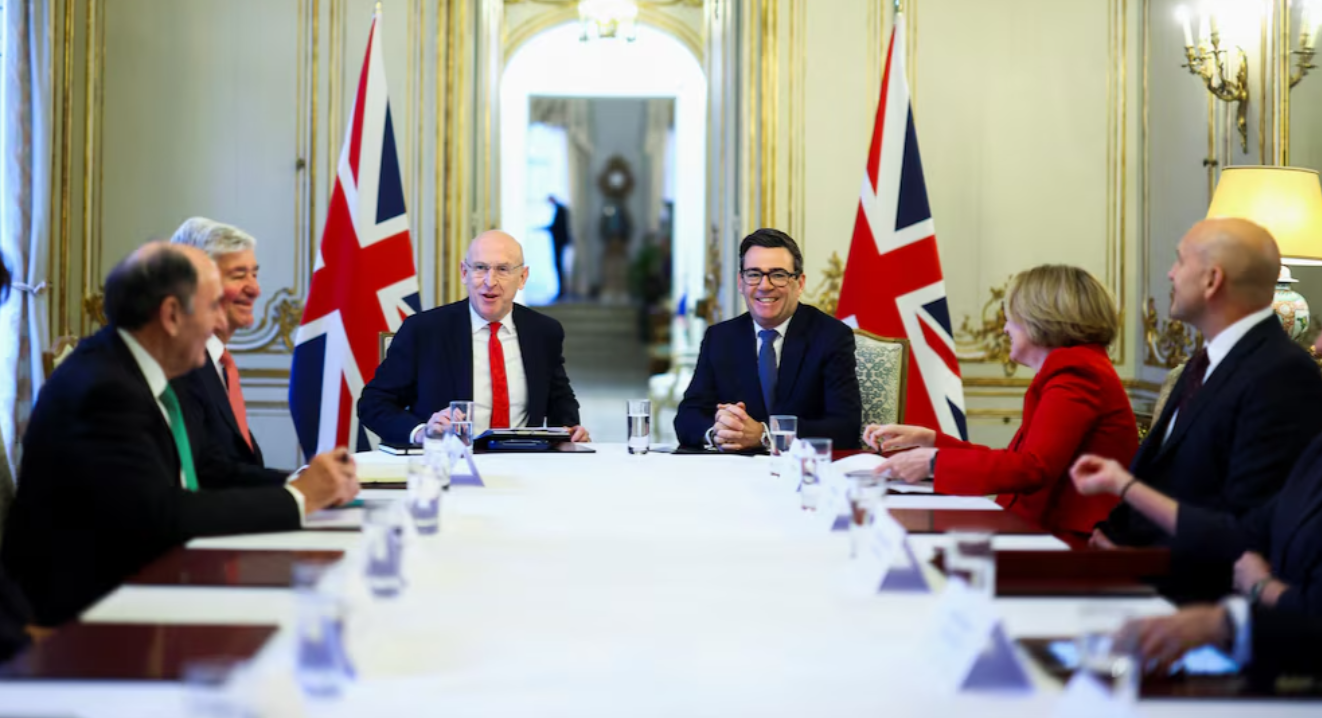
The United Kingdom and the European Union plan to agree on a package of deals on 20 November at a summit in Brussels to streamline trade, youth mobility and economic cooperation. Ten years after the Brexit referendum, London is seeking to re-establish closer ties with the EU, and Prime Minister Andy Burnham has not ruled out the possibility of the country rejoining the European bloc.
Key points at a glance:
- The UK and the EU are preparing a package of agreements to address the consequences of Brexit.
- Simplifying trade in food could generate £5.1 billion for the UK economy each year.
- Up to 100,000 young people will be able to take part in the mutual mobility programme.
- Andy Burnham has not ruled out the possibility of the UK rejoining the European Union.
London is seeking to reassess the consequences of Brexit
How to. reports Reuters reports that international geopolitical shifts – notably Russia’s war against Ukraine, US tariffs and China’s growing economic influence – are prompting London and Brussels to seek ways to deepen their cooperation.
Prime Minister Andy Burnham acknowledged that the UK has lost more from Brexit than it has gained. The question the restoration of relations with the EU is being discussed with increasing frequency in British political circles.
New trade deals could bring in billions of pounds
One of the key agreements is set to be the abolition of a significant proportion of the certificates and inspections required in the trade in agricultural and food products.
The British Government estimates the potential economic impact of this agreement at £5.1 billion a year.
Separately, the parties plan to link their carbon emissions trading schemes. This will protect British and European steel and aluminium producers from reciprocal carbon levies. The potential benefit to the UK economy is up to £3.8 billion a year.
The UK and the EU will open up new opportunities for young people
The planned mobility programme will enable young British and EU citizens to study and work in the other party’s territory for three years.
London initially proposed capping the number of participants at 50,000, but during the negotiations the parties agreed to raise the limit to 100,000.
At the same time, the issue of tuition fees remains unresolved. Brussels is insisting on equal fees for British and European students, whilst London is only prepared to offer substantial discounts.
Disagreements over European rules persist
The UK is also seeking to secure special status within the framework of industrial policy Made in Europe, primarily for the automotive industry.
The European Union is prepared to consider this possibility, provided that UK regulations are brought into line with European ones. In particular, this may require London to impose tariffs on Chinese electric cars.
Despite the prospect of new economic agreements, the question of the UK’s full return to the EU is not yet the subject of official negotiations.