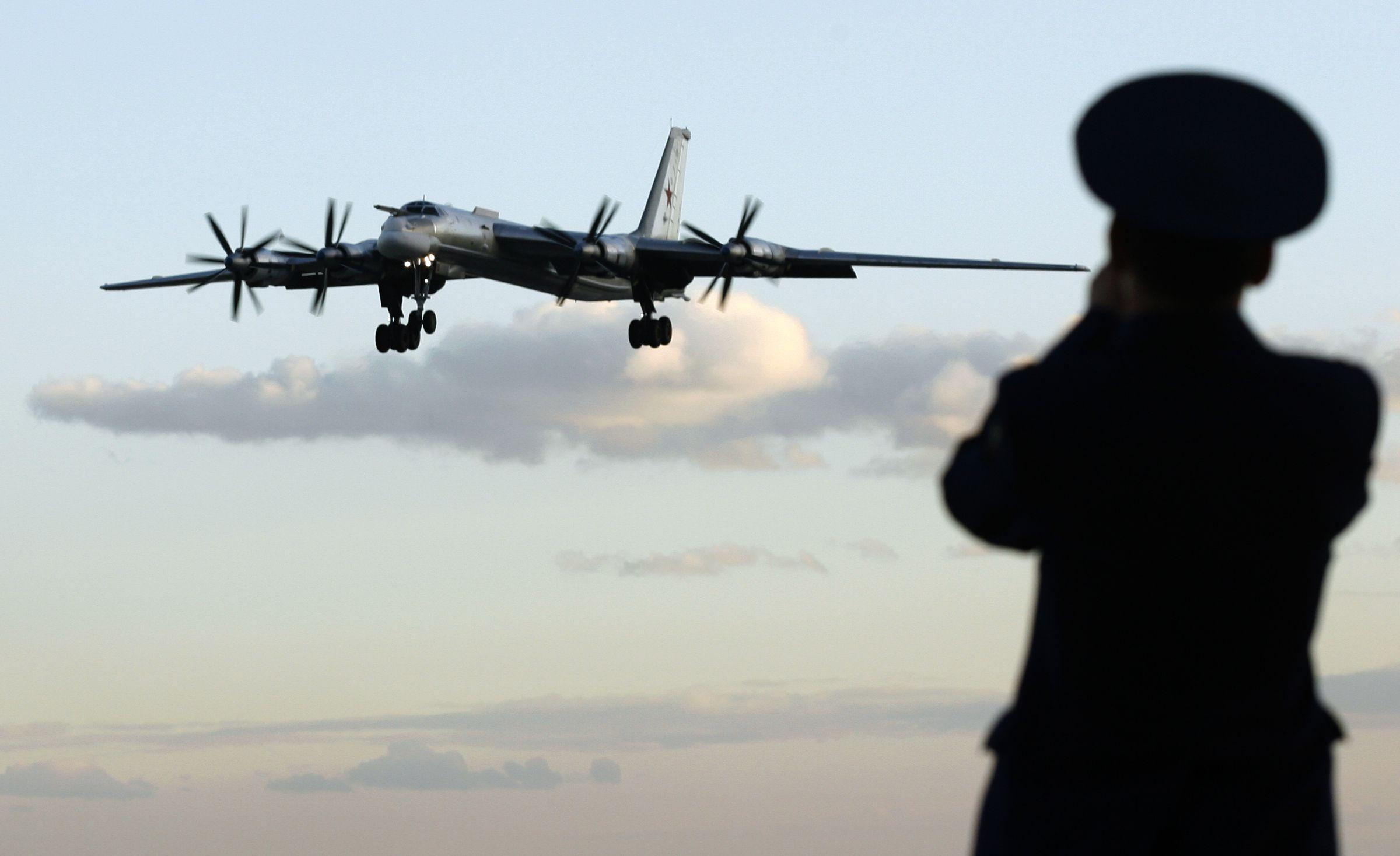
Two Russian Tu-95 strategic bombers, capable of carrying nuclear weapons, departed from Da Nang International Airport in Vietnam on the morning of 19 November 2026. The aircraft had arrived in the country on 17 November, accompanied by two support military aircraft. Following their departure, Taiwan’s Ministry of Defence reported the presence of Russian aircraft near the island’s east coast. This was reported by the Associated Press and Reuters. Military analysts view the operation as a demonstration of Moscow’s capability to conduct long-range air missions in the Asia-Pacific region.
- Two Russian Tu-95 strategic bombers took off from Da Nang in Vietnam on 19 November 2026.
- Russian aircraft arrived in Vietnam on 17 November, accompanied by two support aircraft.
- Japan reported that Russian aircraft had violated its airspace, whilst South Korea and Taiwan monitored their movements.
- Experts from Reuters and the AP link the redeployment of aircraft to a demonstration of Russia’s military presence in Asia.
Russian bombers have left Danang Airport
According to the Associated Press, two strategic Tu-95 bombers were present at Da Nang International Airport on at least 17–18 November. Two military support aircraft arrived in Vietnam alongside them.
The presence of Russian aircraft is confirmed by satellite images from Planet Labs, taken on 17 November. The images show two bombers and two transport aircraft.
On the morning of 19 November, Russian aircraft left Vietnam. Reuters verified a video showing one of the Tu-95s taking off from Da Nang, and Taiwan’s Ministry of Defence subsequently reported that two such aircraft had been spotted near the island.
According to the Taiwanese military, the bombers approached from the south, flew along the east coast and continued north-eastwards.
The Russian Ministry of Defence did not provide Reuters with a comment on this operation.
Japan scrambled fighter jets in response to Russian aircraft
The redeployment of strategic bombers was accompanied by several incidents near the air borders of countries in the region.
17 November Japan reported that two Russian aircraft had violated its airspace near Fukuoka Prefecture. According to Defence Minister Shinjirō Koizumi, the violation lasted approximately five minutes.
The Japanese Self-Defence Forces have raised fighter aircraft and issued warnings to the crews. Tokyo also lodged an official protest with Moscow.
In South Korea, the military reported that on 16 November, several Russian aircraft temporarily entered the air defence identification zone over the sea between the Korean Peninsula and Japan.
At the same time, officials in Seoul clarified that there had been no violation of South Korea’s sovereign airspace. The Air Defence Identification Zone is not the same as national airspace.
On 19 November, Taiwan also reported that two Tu-95s had entered its air defence identification zone. The military used reconnaissance assets and fighter jets to monitor the aircraft F-16.
Why did Russia send a Tu-95 to Vietnam?
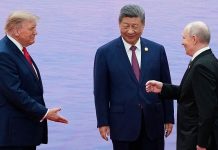
Russian bombers arrived in Vietnam the day before tripartite talks the president of the United States Donald Trump, President of the People’s Republic of China Xi Jinping and the President of Russia Vladimir Putin in Shenzhen, China.
Analysts view this redeployment as a political and military signal to regional states.
Ian Storey, an expert at the ISEAS – Yusof Ishak Institute in Singapore, told Reuters that Moscow is seeking to demonstrate its ability to conduct military operations in South-East Asia, despite the ongoing war against Ukraine.
In his view, such a flight was also intended to underline Russia’s claims to the status of a global military power in the run-up to Putin’s talks with the leaders of the US and China.
Another expert, Nguyen The Phuong from the University of New South Wales, suggested that Vietnam might have allowed its airfield to be used for refuelling and maintenance of aircraft.
At the same time, he believes that Hanoi may have used this visit to demonstrate that it maintains close military ties with Moscow, against the backdrop of China’s growing presence in neighbouring Laos.
These are analysts’ estimates, not the officially stated objective of the operation.
What is known about the Tu-95 strategic bombers
The Tu-95 is a Soviet strategic turboprop bomber which remains in service with Russia following numerous upgrades. It is designated «Bear» in the NATO classification.
The aircraft is fitted with four engines, each with a distinctive coaxial counter-rotating propeller. It is designed for long-haul flights over long distances.
Tu-95MS variants are capable of carrying long-range cruise missiles, including the Kh-55 and Kh-101. Some of the armaments for which these aircraft were designed can be fitted with a nuclear warhead.
Russia uses Tu-95MS for launching cruise missiles during a full-scale war against Ukraine.
At the same time, the fact that the bomber was capable of carrying nuclear weapons does not confirm that any were on board during the flight to Vietnam. Neither the AP nor Reuters reported that these aircraft were carrying nuclear munitions.
Russia is resuming military flights to Vietnam after a long hiatus
According to the Associated Press, the last known instance of a Vietnamese airfield being used by the Russian military air force dates back to 2014.
At that time, Russian refuelling aircraft were using the aviation infrastructure at Cam Ranh to support long-range flights over the South China Sea.
Vietnam and Russia have maintained diplomatic relations since 1950. For a long time, Moscow remained one of the main suppliers of arms to the Vietnamese army, although in recent years Hanoi has been seeking to diversify its military procurement.
The current visit by the Tu-95 demonstrates that Russia retains the ability to use its partners’ military infrastructure in South-East Asia.
As of 19 November, the Russian bombers had already left Vietnamese territory. Taiwan and Japan reported on their subsequent movements in the region. The official purpose of the deployment and the possibility of similar flights taking place again remain unknown.