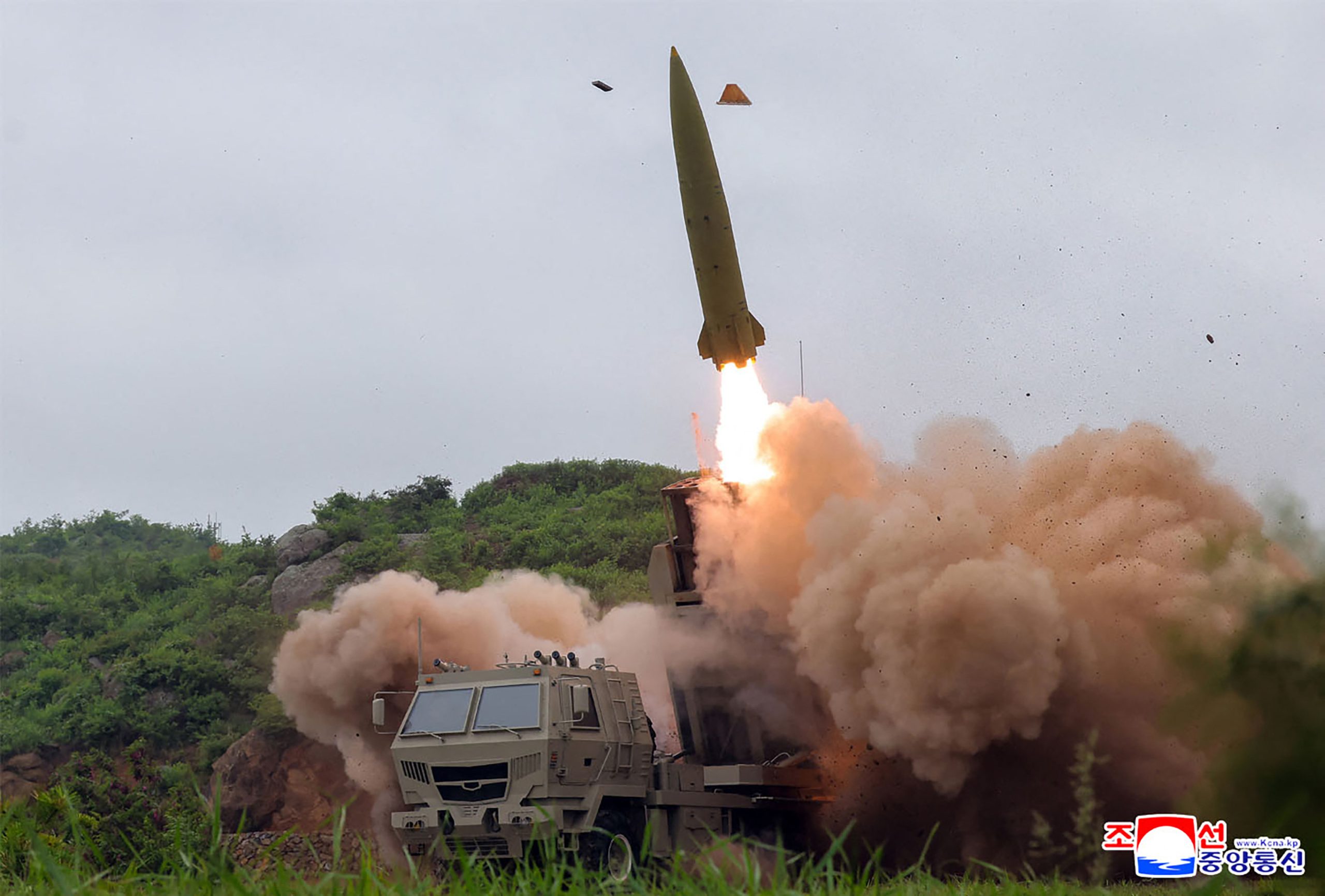
On 12 August, North Korea launched a ballistic missile from the Wonsan area towards the sea to the east of the Korean Peninsula, according to the South Korean and Japanese authorities. They estimate that it travelled around 700 km. The launch took place a few days before the US-South Korea joint military exercises, Ulchi Freedom Shield, scheduled for 17–27 August.
Briefly about the main points
- The missile was launched this morning from the Wonsan area on the east coast of North Korea.
- Seoul and Tokyo estimated the flight range to be approximately 700 km.
- The South Korean military is still determining the type of missile.
- Japan lodged a protest, whilst Seoul convened an emergency meeting.
- The US did not perceive any immediate threat to its territory, personnel or allies.
The type of missile is still being analysed
South Korea’s Joint Chiefs of Staff reported that the launch took place at around 6.00 am local time. The military did not classify the missile as short-range and is continuing to analyse its characteristics in detail.
Previous ballistic launch Seoul detected a launch from this area on 6 August, but North Korean state media did not report it. According to South Korean estimates, this latest incident marks the 11th suspected ballistic missile test by the DPRK in 2026.
Hong Min, a senior researcher at the Korean Institute for National Unification, suggested that the range, trajectory and launch site could indicate a hypersonic system; he also did not rule out the possibility of a submarine-launched missile. These are the analyst’s assessments, not the military’s conclusion.
Reaction to the launch and Ulchi Freedom Shield exercises
The Ulchi Freedom Shield exercises, aimed at countering the development of Pyongyang’s nuclear and military capabilities, are scheduled for 17–27 August. Hong Min believes that the launch may have been in line with the current weapons development schedule, but the timing could also have been intended as a political signal ahead of the exercises. Pyongyang did not immediately comment on the launch.
Japan stated that it had lodged a strong protest with the DPRK through diplomatic channels via its embassy in Beijing. South Korea and Japan condemned the launch. South Korea’s National Security Office held an emergency meeting, expressed concern over the continued launches and called on Pyongyang to cease provocations which, according to Seoul, violate UN Security Council resolutions. The South Korean military stated its readiness to respond decisively to any provocation as part of its joint defence arrangements with the US.
The US Indo-Pacific Command has stated that it is consulting with allies and partners. According to its initial assessment, the launch did not pose an immediate threat to US personnel, US territory or allies.
The day before, on 11 August, the President Volodymyr Zelenskyy stated that Russia had used North Korean ballistic missiles during attacks on Ukraine. According to him, the strike on Zaporizhzhia killed seven employees of a steelworks.