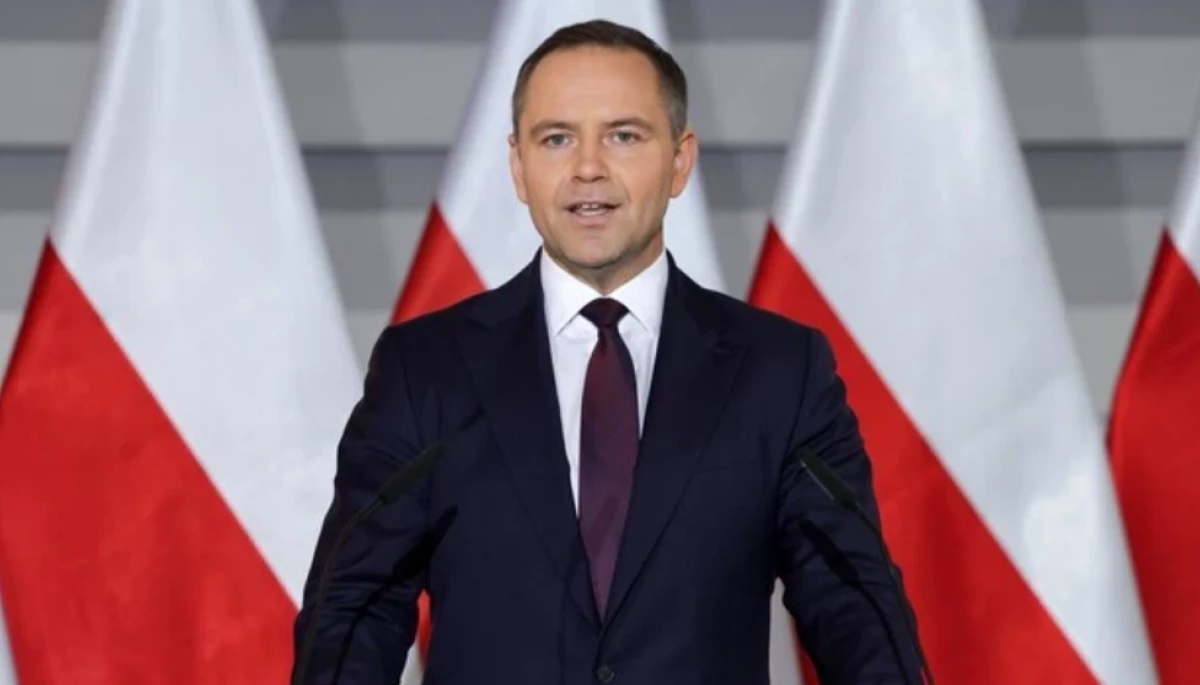
Polish President Karol Nawrocki stated that Poles may lose territory, but they will not lose their homeland or their national identity. His remarks, published by the President’s Office without any broader context, sparked a heated debate in Poland and prompted a response from Prime Minister Donald Tusk.
- Navrotsky spoke about the possible loss of territory.
- His comments sparked a controversy in Poland.
- Tusk stated that Poland would not give up a single scrap of land.
- Navrotskyy explained his remarks by referring to the historical context.
What exactly did the Polish President say?
Navrotsky spoke on 17 September in Włodawa during the events marking The 87th anniversary of the Soviet invasion of Poland in 1939. The President visited a military cemetery where Polish soldiers who fought in September 1939 and faced Soviet troops are buried.
During his speech, he spoke about Poland’s historical experience — the partition of the country, the loss of independence and the German-Soviet invasion. The President’s Office published a separate post on X the statement that the Polish people «It may lose territory, but it will never lose its spirit», and may also lose territory, but not its homeland.
In the full version of his speech, Navrotsky explained that Poland had already lost territory — for 123 years following the partitions of the state, and subsequently for six years during the Second World War. His argument centred on the preservation of Polish identity even in the absence of an independent state.
Tusk called for the post to be removed
When published in isolation, the phrase quickly sparked a political row.
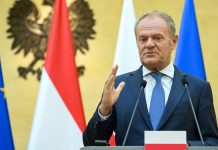
Prime Minister Donald Tusk replied to the President that Poland has no intention of ceding any part of its territory, and asked the office to remove the post. Other representatives of the Polish government also reacted to Navrotsky’s comments. Some of them stated that such wording, taken out of its historical context, could be misinterpreted, particularly against the backdrop of the current security situation in Eastern Europe.
The President’s Office, on the other hand, emphasised that the critics had taken the Head of State’s words out of context in his speech on the Soviet aggression of 1939.
Navrotsky replied to Tusk
Following the criticism, the President specifically drew attention to the date of his speech. Navrotsky reminded Tusk that 17 September marks the anniversary of the Soviet Union’s invasion of Poland, and explained that he was referring specifically to the country’s historical experience: Poland lost territory and its statehood, but subsequently regained its independence. In other words, the President’s words were not a declaration of Warsaw’s willingness to cede part of present-day Poland to Russia or any other state. On the contrary, later in the same speech, Navrotsky spoke of the need to learn from the defeat of 1939 — to forge strong alliances, strengthen NATO and enhance cooperation with the United States.