Polish Prime Minister Donald Tusk has stated that the country faces «very difficult» weeks and months ahead due to Russia’s increasingly aggressive actions against Ukraine and attacks that are taking place ever closer to the Polish border. Warsaw is strengthening its air defence and the protection of border infrastructure, increasing defence spending and mobilising reserves.
- Tusk warned that the coming weeks and months would be «very difficult».
- Russian attacks on Ukraine are taking place ever closer to the Polish border.
- Poland is strengthening its air defence and the security of its border crossings.
- The budget for defence in 2027 is set at 198.1 billion zlotys — 4.51% of GDP.
Russian strikes have come close to the Polish border
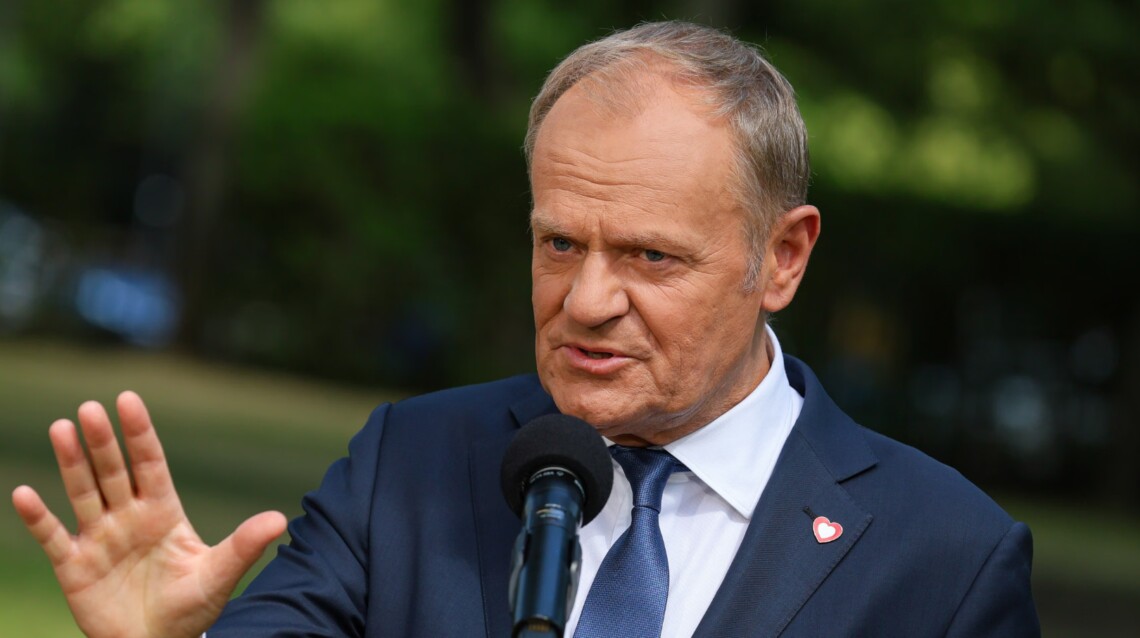
Tusk made a statement on 29 September ahead of a cabinet meeting. According to him, the latest Russian attacks in western Ukraine have become virtually constant, and some blows are taking place about a kilometre from the Polish border.
The Prime Minister emphasised that, due to the threat from Poland, combat aircraft have to be scrambled regularly and the relevant services placed on high alert.
«We have some very difficult weeks and months ahead, due to Russia’s highly aggressive stance towards Ukraine.».
As early as 13 September, the Polish Prime Minister warned that the coming months could see an increase in Russian activity and that Warsaw could not entirely rule out the possibility of certain elements of the escalation spilling over onto Polish territory.
Poland is strengthening its border with Ukraine
Following a series of Russian strikes near the border, the Polish military began to further fortify border crossings.
In particular, defensive infrastructure is being put in place near Dorohusk, Medyka and Korchova. Engineering structures, protective walls and additional observation posts are being utilised. Poland has also deployed air defence assets near six border crossings and stepped up radar surveillance.
Separate contingents of military engineers have been formed to carry out the rapid repair of roads, railway lines and other infrastructure in the event of a possible attack.
There has been an increase in the activity of F-16s, Mi-17s and Black Hawks in Polish airspace, and rapid reaction forces are on high alert.
Sikorsky had warned of the risk of a Russian provocation
Polish Foreign Minister Radoslav Sikorsky had previously warned that Russia might resort to new provocations or hybrid operations, including «false flag» operations.
The Polish Ministry of Foreign Affairs explained that such assessments are based on open and classified intelligence, previous experience of Russian hybrid operations, and an analysis of the Kremlin’s actions.
At the same time, representatives of the countries NATO They emphasise that the increase in the number of acts of sabotage, cyber-attacks and airspace violations does not mean that a direct Russian attack on the Alliance is already inevitable. Some allies view Moscow’s current activities primarily as a campaign of pressure and intimidation.
Poland will spend more than 4.5% of its GDP on defence
At the same time, Warsaw is continuing its large-scale rearmament programme.
Poland’s draft budget for 2027 allocates funds for national defence and the Armed Forces Support Fund 198.1 billion zlotys, which is 4,511 TP3T of projected GDP. That is approximately $53 billion, depending on the exchange rate.
High defence spending is one of the factors contributing to the high budget deficit. The Polish Government forecasts a general government deficit of 7.1% GDP in 2027. A significant proportion of the additional expenditure is linked to record deliveries of new military equipment.
Warsaw wants to have an army of up to 500,000
One of the key priorities is a sharp increase in the trained reserve.
Defence Minister Vladislav Kosinyak-Kamysh identified as a strategic objective the creation of a structure comprising approximately 500,000 military personnel and reservists. This does not refer to the 500,000 full-time professional soldiers. The concept envisages a regular army, territorial defence forces and a substantial reserve, including a high-readiness reserve which will undergo regular training.
It is only in 2027 that the government’s draft bill allows for a call to 200,000 reservists for military exercises, up to 40,000 people for territorial service and up to 20,000 for professional military service.
A permanent US base in Poland is getting closer, but no agreement has yet been reached
Warsaw is also pushing for the creation of a permanent US military base.
President of the United States Donald Trump On 17 September, he announced that significant progress had been made on this issue. The President of Poland Karol Navrotskyi He later said that he believed setting up a database «a matter of time» and would like to call it Fort Trump.
However, there is as yet no final agreement or confirmed price for such a property. Therefore, the figure commonly cited $4.4 billion for «Trump Fort» This should not be presented as an established fact. The Polish government is currently discussing the need to create the logistical, accommodation, financial and organisational conditions for a permanent US contingent, whilst the specific financial details have yet to be agreed.
Poland is stepping up its air defence readiness
Against the backdrop of regular incidents, Warsaw is also changing its practical approach to responding to airborne threats.
Following previous breaches of Polish airspace, the military had been authorised to destroy targets posing an immediate threat. The Polish authorities stated that existing procedures already permitted the shooting down of dangerous Russian drones.
Poland is increasing the number of air defence systems near the border, carrying out more frequent air patrols and preparing its infrastructure for possible new incidents.
Tusk emphasises that the aim of these measures is — not Poland’s preparations for an inevitable war, but deterring Russia and being ready to respond to various scenarios. Back in August, the Prime Minister outlined Poland’s strategy precisely as a means of strengthening the country in order to avoid war.