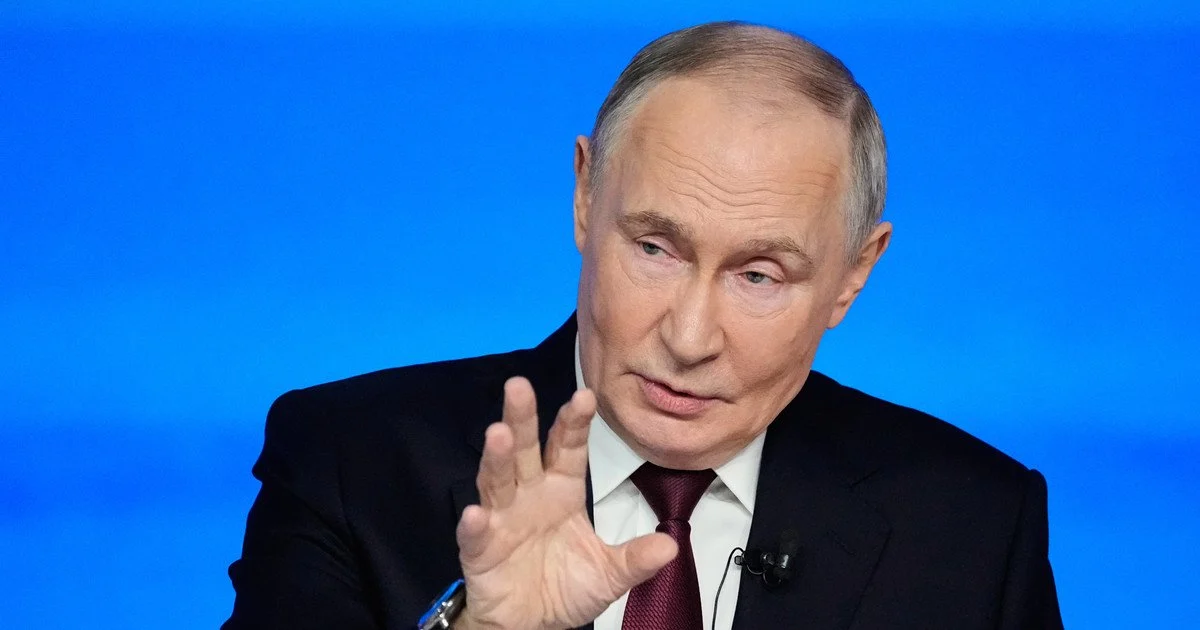
Vladimir Putin has called on the Russian Navy to respond «resolutely» to any attempts to detain Russian merchant ships. The following day, the Kremlin authorised the use of the navy to protect commercial vessels, whilst stating that there were no plans to arm the vessels themselves due to the rules of international merchant shipping.
Briefly about the main points
- Putin has called on the navy to respond decisively to the detention of merchant ships.
- The Russian leader likened the possible detention of tankers to piracy.
- The Kremlin has authorised the Navy to take protective measures on behalf of the merchant fleet.
- There are no plans to arm Russian merchant ships.
- Western scrutiny of tankers linked to the Russian Federation is intensifying.
Putin stated that the actions were in accordance with the law of the sea
Statement Vladimir Putin He made the remarks on 26 July whilst listening to reports from the commanders of the Russian fleets. Prior to this, the commanders of the Northern and Pacific Fleets had reported on attempts by other states to influence the Russian military and merchant fleets.
According to the Kremlin leader, Russia must act cautiously and comply with international maritime law. He compared the possible detention of Russian tankers to piracy and stated that it must be tackled decisively.
The Kremlin has set out the limits of the possible protection for the ships
Kremlin spokesman Dmitry Peskov stated that Russian commercial vessels would not be armed, as this would contravene the rules of international merchant shipping.
He confirmed that the Navy might take action to protect Russian commercial vessels. At the same time, the Russian authorities have not announced any intention to seize foreign vessels in retaliation. Moscow has not publicly specified the practical scenarios for such intervention or the conditions under which it might take place.
Western countries are tightening controls on tankers
The Kremlin’s statements came against the backdrop of Western countries tightening their controls over tankers that could be used to circumvent Russian oil sanctions. The term «shadow fleet» refers to a network of vessels characterised by an opaque ownership structure, frequent changes of flag and dubious insurance documents.
At the start of the year, the US seized a tanker flying the Russian flag. In June, the French military detained the Tagor, a vessel linked to Russia, in the Atlantic Ocean on suspicion of breaching sanctions and due to issues with its registration documents. That same month, the UK detained a tanker subject to sanctions for investigation SMYRTOS; its captain has been charged with transporting prohibited Russian oil or petroleum products.
Under the United Nations Convention on the Law of the Sea, a warship does not have an unrestricted right to stop foreign merchant vessels on the high seas. The legality of a specific interception depends, in particular, on the vessel’s flag, the location of the operation and its legal basis.