Russia has spent years modernising and maintaining the «Grot» complex – linked to the backup command system for strategic nuclear forces – as revealed by The Sunday Times, the Danish organisation Danwatch and the «Dossier» Centre. Documents relating to construction, procurement and equipment point to the operation of an underground infrastructure designed to maintain communications and the transmission of commands following a large-scale strike.
Briefly about the main points
- «The Grotto» — underground facility No. 1335 in a mountain in the Northern Urals.
- The complex is linked to the «Perimeter» backup command transmission system.
- In 2004, it was designated as the base for a reserve unit of the General Staff of the Russian Federation.
- The procurement contracts indicate the large scale of the construction and engineering works.
Underground infrastructure inside the mountain
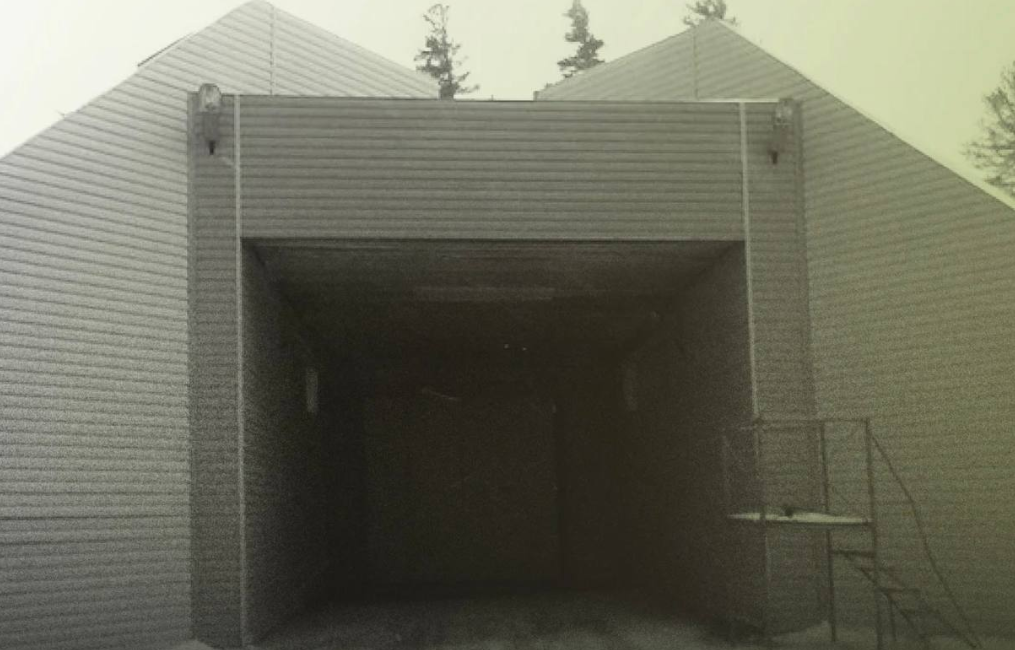
Object No. 1335, codenamed «Grot» It is situated inside Kosvinsky Kamen Mountain in the Sverdlovsk Region of Russia. Investigators have established that there are at least four equipped entrances leading to it, and that a network of rooms and tunnels has been carved out within the mountain.
The complex houses long-wave and short-wave radio stations, communications and life-support systems, as well as equipment for the command and control of the Russian Federation’s strategic nuclear forces. Construction began in 1982: the site was chosen because of the properties of the rock formations, which allow radio signals to be transmitted through a considerable thickness of the mountain.
A backup channel for transmitting commands
«Grot» is regarded as one of the key elements of the «Perimeter» system developed in the USSR, known in the West as the «Dead Hand». Its purpose is to ensure that an order for a nuclear strike can still be transmitted if conventional communication channels are destroyed and the leadership and main command centres are unable to direct the strategic forces.
UN expert on nuclear weapons Pavlo Podvig warns that «Perimeter» should be regarded primarily as a backup command-and-control system, rather than as a separate «automatic Doomsday button». Its creation is linked to fears of a decapitation strike against the political leadership, the General Staff and communications centres.
After the collapse of the USSR, the site was not mothballed
Following the collapse of the Soviet Union, Russia continued to modernise the complex. In the mid-2000s, new control equipment was being developed for «Perimeter», which, following testing, was sent to Facility No. 1335, wrote Major-General Viktor Khalin, who was involved in the creation of the Soviet system and its subsequent modernisation.
In 2004, the Russian military leadership approved regulations under which «Grot» became the base for a reserve facility of the General Staff of the Russian Armed Forces. In the years that followed, a military town was built nearby, complete with accommodation, medical facilities, a boiler house and other facilities; part of the work was completed in 2020.
Procurement figures illustrate the scale of the equipment programme
According to the «Dossier» Centre, around 56,000 tonnes of cement were purchased for the complex. An expert from the Technical University of Denmark estimated that this quantity would be sufficient to produce approximately 150,000 cubic metres of concrete.
In 2019, refrigeration equipment with a total capacity of around 5 MW was purchased for the facility. Such systems are used to remove heat from server, communications and radio equipment operating underground. The procurement documents also mention products from Rockwool, Danfoss, K-Flex, Haulotte and Belimo; some of the deliveries took place after sanctions were imposed on Russia in 2014.
What the documents reveal, and what remains classified
The investigation does not confirm that Moscow has only now switched «Grot» to a new emergency or pre-launch mode. A former assistant to the US Secretary of Defence Andy Weber The Sunday Times reported that this data indicates Russia’s desire to keep the system operational. The newspaper also states that the documents and intelligence obtained point to the operational readiness of the relevant nuclear infrastructure.
Khalin claimed that, following its modernisation, «Perimeter» is capable of operating in both automated and fully automatic modes. However, the system’s technical algorithms are classified, so it is impossible to independently verify the extent of its automation.