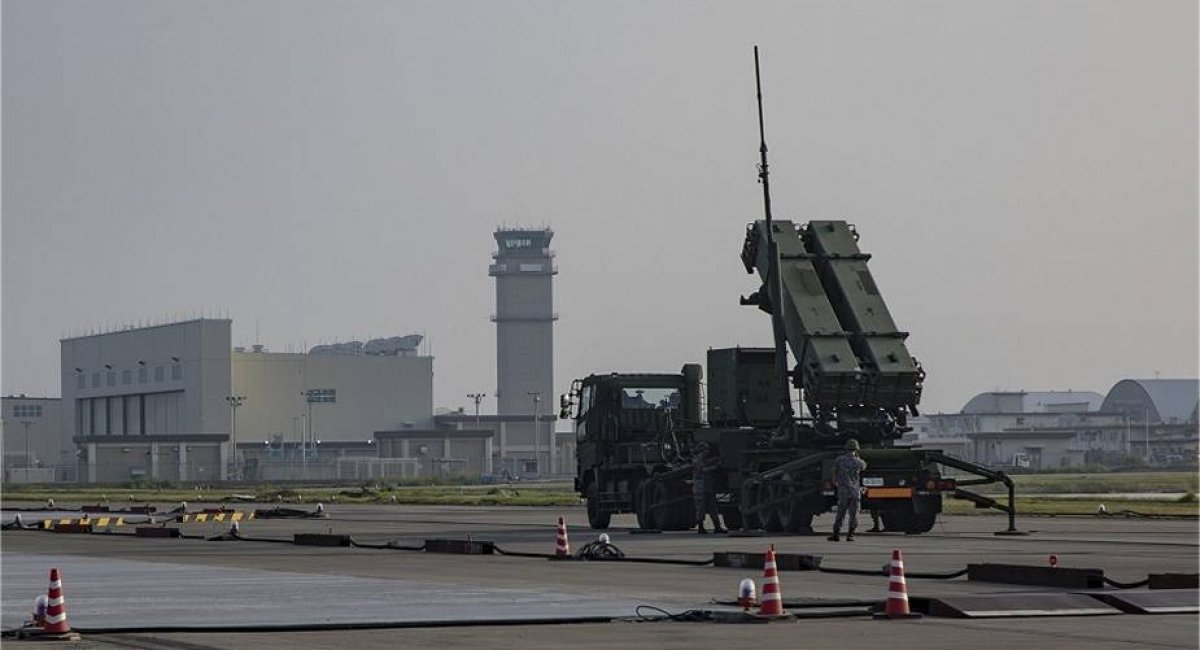
Japan plans to resume government discussions on the possible provision or sale of weapons to Ukraine, which may include interceptor missiles for Patriot systems. This was stated during a visit to Kyiv by Itsunori Onodera, a member of the ruling Liberal Democratic Party and former Japanese defence minister. No final decision has yet been made on the transfer of the missiles: Tokyo must take into account the current legal and political restrictions on arms exports.
- Japan plans to resume discussions on the possible supply or sale of arms to Ukraine.
- Interceptor missiles for the Patriot systems are mentioned among the possible options.
- No final decision has yet been taken on the transfer of missiles to Ukraine.
- Current Japanese regulations significantly restrict the transfer of finished weapons to countries where hostilities are ongoing.
What Itsunori Onodera said
Onodera During his visit to Kyiv, he stated that the Japanese side intends to use its current contacts with the Ukrainian leadership as an opportunity to hold fresh discussions on further military support for Ukraine.
According to him, both legal and political restrictions on arms exports remain in place in Japan. At the same time, representatives of the ruling party intend to initiate discussions on this matter within the Prime Minister’s government Sanae Takaichi. Among the weapons whose transfer may be under discussion, Patriot interceptors are specifically mentioned.
On 2 October, the Ukrainian Ministry of Defence also reported on talks with a Japanese parliamentary delegation led by Onodera. The Ukrainian side highlighted the intensification of Russian air strikes and the need to strengthen defence cooperation.
Why the decision on the Patriot system will be important for Japan
For decades, Japan pursued a very restrictive policy on arms exports. However, the rules gradually changed: in 2014, Tokyo introduced the Three Principles on the Transfer of Defence Equipment, and in the years that followed, it revised the conditions for their application on several occasions. In April 2026, the rules were updated once again.
Current guidelines already permit, in certain cases, the transfer of defence equipment to states that have been subjected to aggression. However, the transfer of finished weaponry – which Japanese legislation classifies as Self-Defence Forces weapons – to a country where hostilities are currently taking place remains considerably more complex and requires separate justification.
Therefore, the potential supply of combat interceptor missiles to Ukraine would mark a significant shift in Japanese defence policy. At the same time, the assertion that Japan has not transferred any weapons to anyone at all since the Second World War no longer reflects current practice: following a change in the rules, Tokyo has transferred missiles manufactured under US licence Patriot to the United States to replenish its stocks. This was confirmed during hearings in the Japanese Parliament.
Ukraine is in urgent need of Patriot interceptors
The issue of additional missiles for the Patriot system has become particularly pressing against the backdrop of escalating tensions Russian strikes ballistic missiles. The Ukrainian side had informed its partners of the need for approximately 300 additional Patriot interceptors to provide protection during the winter months.
The Patriot is one of Ukraine’s key assets for intercepting some of Russia’s ballistic missiles. At the same time, even a significant increase in the number of interceptors would not mean a complete «closure of the skies»: the effectiveness of air defence depends on the number of systems, their deployment, missile stocks and the scale of a simultaneous attack.
That is precisely why potential access to Japanese stocks or production capacity could provide a further source of supplies for Ukraine’s air defence forces, but at present we are only talking about the possibility of launching a government debate, rather than an approved delivery.
At the same time, Japan has tightened sanctions against Russia
On 2 October, the Japanese Government announced a new package of sanctions in response to Russia’s aggression against Ukraine. Assets are being frozen in relation to 9 individuals and 33 Russian organisations. Certain restrictions have been introduced regarding 35 vessels, linked to Russia.
In addition, Japan has imposed export restrictions on four companies outside Russia and Belarus and has expanded the list of goods whose export to the Russian Federation is prohibited due to their potential use in strengthening Russia’s industrial capacity.
Tokyo is therefore simultaneously stepping up economic pressure on Moscow whilst discussing the possibility of stepping up defence support for Kyiv. However, the transfer of Patriot missiles to Ukraine will require a separate political decision and will have to go through Japan’s export control procedures.