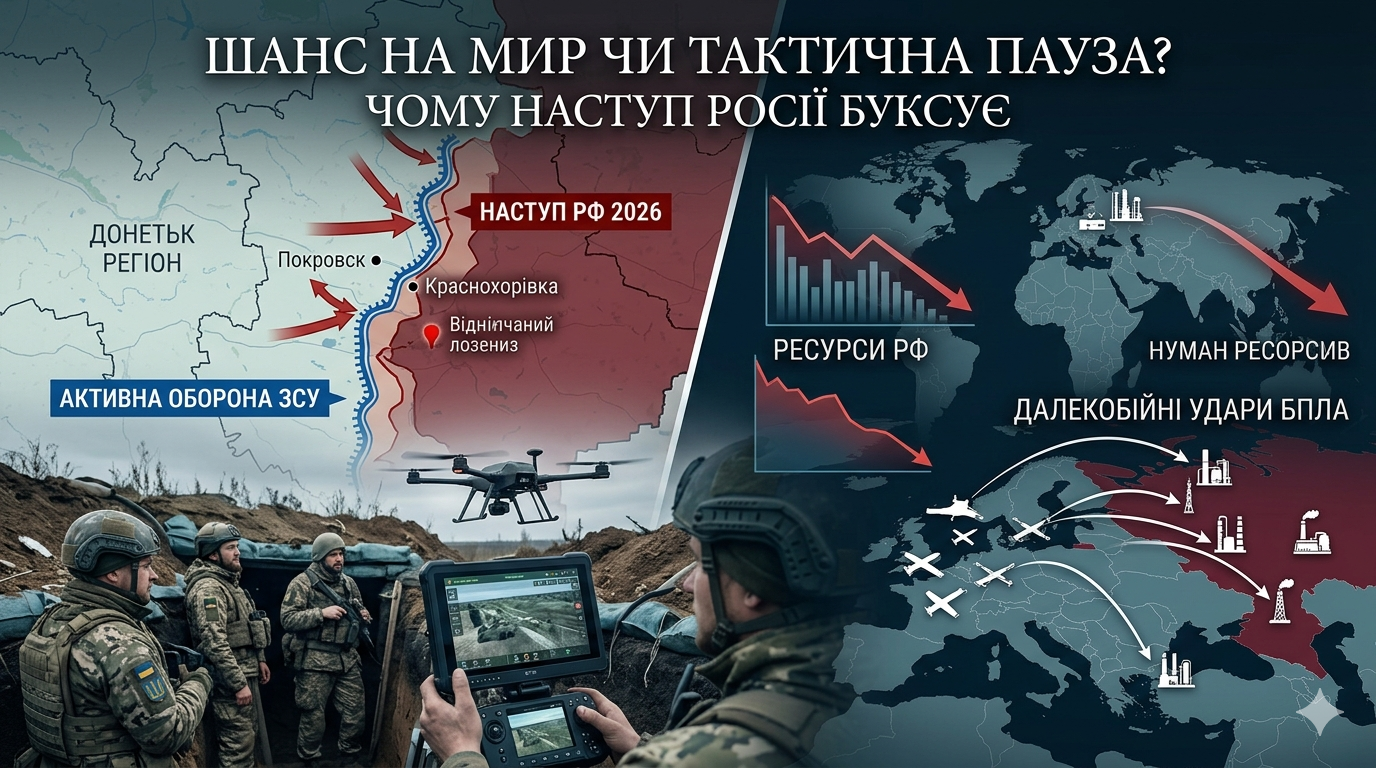
The spring-summer campaign of 2026, which the Kremlin planned to be decisive for the capture of Donetsk region, is showing unexpected dynamics for Moscow. The Russian military machine is spending enormous amounts of human resources and equipment to achieve increasingly modest, almost imperceptible tactical results. Against the backdrop of protracted fighting and the effective transfer of the war to the territory of the Russian Federation itself, the media are increasingly asking whether we are really on the verge of suspending the hot phase of the war, and why the «second army of the world» has begun to stall.
Frontline without breakthroughs: where the Kremlin's blitzkrieg broke down
In May 2026, OSINT analysts and leading military institutions (including ISW) recorded a unique anomaly: the traditional May scale-up of the Russian offensive did not occur. The war remains deeply positional, and the pace of the occupation forces' advance has dropped to of the lowest figures for the last year.
The enemy's main attack is still concentrated in Donetsk region. The Kremlin is obsessed with the idea of capturing the Pokrovsko-Myrnohrad agglomeration, reaching Dobropillia and then quickly covering Kramatorsk, Sloviansk, Druzhkivka and Kostiantynivka from the west. Complete capture of Donetsk region is a political order Putin, whose deadlines have already been shifted from the end of summer to the end of 2026.
However, the reality for the occupiers looks disappointing:
-
On the Pokrovske and Dobropillia directions The assaults have been suspended, and the Defence Forces are holding their ground.
-
In Konstantinovka the enemy tries to «infiltrate» in small groups, but is unable to take or bypass the city.
-
In the Oleksandrivske direction (administrative border of Dnipro and Zaporizhzhia regions), the Ukrainian military is not only holding the line, but also conducting successful counterattacks deep into enemy positions at a distance of up to 10 kilometres.
The mathematics of depletion: the price per square kilometre
The main factor behind the enemy's slowdown is that the Ukrainian Defence Forces have managed to bring the number of eliminated occupants to a new critical level. So far, Russian losses (killed and seriously wounded) have reached 35 thousand people per month, of which more than 60% are irrecoverable losses.
Analytical marker: According to the Ministry of Defence of Ukraine, the cost of the advance for the aggressor has become astronomical. While in October last year, the enemy lost 67 soldiers for every square kilometre of land seized, in the spring of 2026, this figure rose to 179 soldiers per square kilometre.
Current pace recruitment of contract workers in the Russian Federation barely covers these enormous gaps. That is why the Kremlin is once again considering a scenario of a new wave of forced mobilisation (for approximately 100,000 people). This is evidenced by the massive distribution of mobilisation orders in the regions of the Russian Federation, which oblige citizens to report to military commissariats without additional summonses in the event of a state of emergency. This resource can be used by Putin to strengthen the East and open up a new hypothetical front in the North (Chernihiv region or actions from the territory of Belarus), which, however, will take at least three months to prepare for.
The effectiveness of the «Active Defence» Syrsky
Experts from the President's entourage note that the current stabilisation is the result of the implementation of the concept of active defence, implemented by the Main Command Alexander Syrsky. This approach is based on three pillars:
-
Material and technological destruction: maximising the elimination of enemy manpower directly on the front line with the help of FPV drones and artillery.
-
Destruction of logistics: constant attacks on operational rear areas, supply routes, BC warehouses and command posts, which makes it impossible to accumulate forces for powerful assaults.
-
Deprivation of initiative: regular local counterattacks by the Defence Forces, which force the enemy to constantly regroup and prevent him from concentrating a single “fist” for a breakthrough.
The war is moving to Russia: technological parity and the crisis of enemy air defence
The biggest strategic turning point in 2026 was Ukraine's entry into the parity with Russia in the number and quality of launches of long-range UAVs. War has finally ceased to be a one-sided game. The systemic drone campaign of the Defence Forces in the enemy's deep rear (at a distance of more than 1,000 km) is currently focused on two priorities:
-
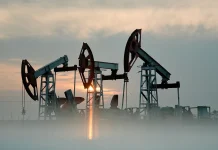
Fuel and energy complex: strikes on oil refineries, oil depots, terminals, which undermines the Kremlin's oil revenues.
-
Military-industrial complex: destruction of factories producing explosives and high-precision weapons.
The statistics are impressive: more than 10-12% Ukrainian long-range drones consistently reach and destroy their targets. The Russian air defence system is facing a cruel dilemma. In an attempt to protect the frontline, the Russian command is forced to withdraw Pantsyr systems and anti-aircraft missiles from the interior of the country, leaving its own strategic enterprises unprotected. Russian attempts to create interceptor drones (such as the Elka project) currently show serious technical limitations and lag far behind Ukrainian developments.
Is Putin ready for peace?
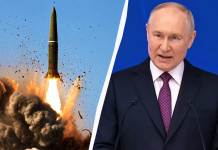
Against the backdrop of military and economic difficulties, Russia has launched a large-scale campaign of escalation threats, including systemic attacks on Kyiv. According to informed sources, there are several goals behind this blackmail: an attempt to respond to the humiliating strikes on the Moscow region, an attempt to force Ukraine to stop attacking the Russian rear, and, most importantly, to psychological pressure on Ukrainian society.
Putin talks about the end of the war and paints fictitious «successes» with only one goal in mind: to persuade Ukraine and the West to agree to a truce on exclusively Russian terms (with the occupied territories fixed). Russia is not yet ready to give up its strategic aggressive goals.
Will the hot phase end in 2026? In Ukrainian government circles, such a scenario is considered possible, but not guaranteed. It depends on three key factors:
-
Maintaining the current dynamics of enemy exhaustion at the front.
-
The effectiveness of further transfer of hostilities (economically and technologically) to the territory of the Russian Federation.
-
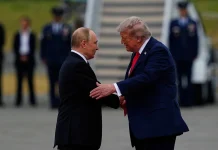
Geopolitical stability, in particular the US position in the context of the upcoming congressional elections.
The dynamics of the war are gradually changing. Russia no longer has an absolute advantage in resources thanks to Ukrainian technology, and this technological parity is the only real tool that can force the Kremlin to a real, not a sham, peace.