The European Union and China have agreed to make substantial progress by October in resolving their trade disputes. The parties will discuss the EU’s trade deficit with China, export restrictions and the protection of intellectual property.
- The EU and China have agreed to make progress on trade by October.
- The EU’s trade deficit with China in 2025 stood at €360 billion.
- The parties will set up a platform to monitor trade flows.
- Export restrictions and market access will be discussed.
- The EU is trying to reduce its dependence on Chinese goods.
A new phase in trade relations
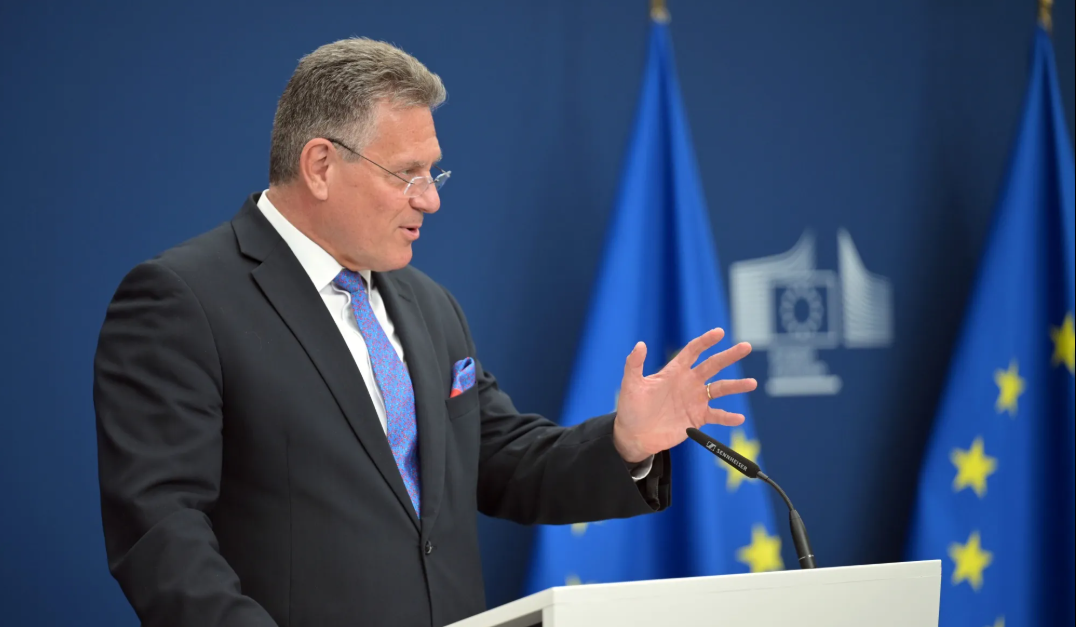
The European Union and China have agreed to make substantial progress in resolving their trade disputes by October. This was announced by the European Commissioner for Trade Maroš Šefčovič following a meeting with the Minister of Commerce of the People’s Republic of China Wang Wentao in Brussels. The parties do not expect to resolve all the issues completely within a few months, but they hope to achieve concrete results by October.
«Not everything will be resolved, not everything will be put right, but we believe that our teams have enough time between now and October to deliver tangible results,» said the European Commissioner.
A platform for monitoring trade flows
The EU and China plan to set up a joint platform to monitor trade flows. This initiative is intended to help identify sudden spikes in imports or exports promptly and respond to potential imbalances. The main issue on the agenda is the European Union’s record trade deficit in goods with China, which reached around €360 billion in 2025.
Challenges for the EU
Brussels believes that the situation is being exacerbated by the large influx of subsidised Chinese goods into the European market. European officials are concerned about EU companies’ dependence on supplies of critical goods from China, particularly semiconductors and rare-earth metals. Among the issues to be addressed by the negotiating teams are Chinese export restrictions on critical materials, expanding European companies’ access to the Chinese market, the protection of intellectual property rights, reform of the World Trade Organisation, the issue of state subsidies and a level playing field.
Criticism from China
At the same time, China is criticising new European rules that restrict Chinese investment in certain strategic sectors. Beijing describes them as protectionist and potentially in breach of WTO rules. The European Union is stepping up protection of its own industry against Chinese competition, though Brussels is aware of the risk of a retaliatory response from Beijing.
The EU’s plans for the future
In parallel European Commission is drawing up a plan designed to reduce European businesses’ critical dependence on a single supplier — China. The relevant proposals are expected to be presented in the autumn. The October deadline will be a test for trade relations between the EU and China. If the parties are unable to agree on at least a partial levelling of the playing field, Brussels may move to impose tougher restrictions.