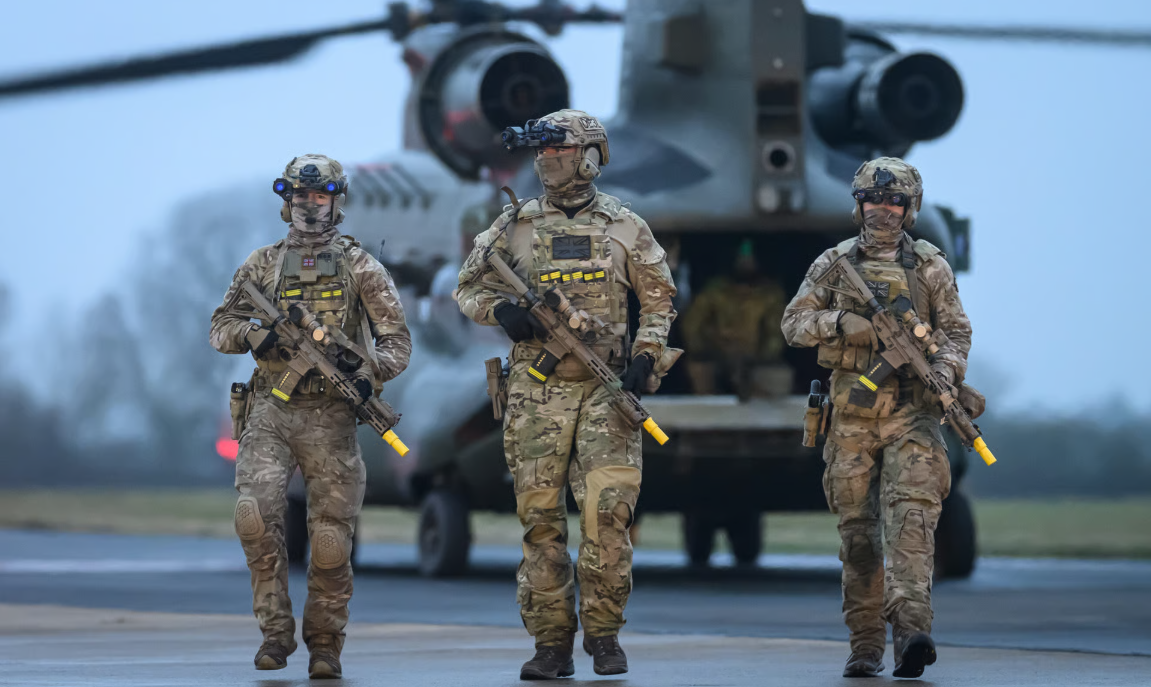
The UK is embarking on one of the most significant reforms of its Armed Forces, drawing on Ukraine’s experience in the war against Russia. The main aim is to introduce drones and autonomous systems.
- The UK has announced military reforms, drawing on Ukraine’s experience.
- The plan provides for investment in drones and autonomous systems.
- Britain is to set up Europe’s largest drone testing centre.
- The army will phase out some of its traditional ships in favour of unmanned platforms.
- The war in Ukraine has changed perceptions of modern warfare and defence.
Ukraine’s experience will form the basis of the reform
The UK has announced a major reform of its Armed Forces, drawing on Ukraine’s experience in the war against Russia. The UK Ministry of Defence has emphasised that the new strategy involves the use of low-cost technologies to engage high-value military targets. A key aspect is the rapid introduction of innovations and the widespread use of unmanned systems.
Drones instead of expensive ships
The changes will also affect the Royal Navy. Britain will review its development plans, investing in the construction of at least six new warships, which will serve as command platforms for unmanned systems. The Ministry of Defence notes that the effectiveness of Ukrainian marine drones The conflict with the Russian Federation’s Black Sea Fleet served as a key example for this reform.
A new phase in the development of military aviation
The Royal Air Force is also undergoing changes. There are plans to set up a programme Collaborative Combat Air, which involves the development of autonomous aircraft capable of operating alongside new-generation manned fighter jets. The government also plans to build Europe’s largest drone testing centre.
Ukraine has changed our understanding of modern warfare
The war in Ukraine has highlighted the vulnerability of traditional weapon systems and demonstrated the effectiveness of the widespread use of drones. According to London’s estimates, Ukraine deploys around 200,000 drones every month, and it is precisely this approach that Britain is seeking to adapt to its own needs.