The White House has begun monitoring the situation in Russia’s Irkutsk Oblast following the death of a 28-year-old employee of the anti-plague institute and reports of a possible case of pneumonic plague. According to Axios, Donald Trump’s administration is being briefed on the incident and is assessing possible responses. The Russian authorities have not officially confirmed the plague infection, although enhanced anti-epidemic measures have been introduced in the region.
Briefly about the main points
- Daria Shipilova, a 28-year-old employee of the Irkutsk Anti-Plague Institute, died in Shelekhov on 2 October.
- According to local media reports, shortly before falling ill, she may have damaged a test tube containing material that harboured the plague pathogen.
- Almost 200 people who may have come into contact with the woman have been placed under medical supervision.
- The White House has stated, through a spokesperson for the administration, that it is monitoring the situation and assessing possible courses of action.
What happened in the Irkutsk Region
Daria Shipilova She worked at the Irkutsk Research Institute for Plague Control in Siberia and the Far East. According to reports in the independent Russian media, on 25 September, whilst at work, she may have damage the test tube containing the sample, linked to the pathogen that causes pneumonic plague. A few days later, she was admitted to hospital with severe pneumonia.
The patient’s condition deteriorated rapidly. She was placed on a ventilator, but she died during the night of 2 October. The Russian authorities have not publicly confirmed that the infection was laboratory-acquired.
The Russian authorities are referring to «pneumonia of unknown origin»
Rospotrebnadzor stated that the deceased had been diagnosed with «pneumonia of unknown aetiology». The agency also claims that no microorganisms linked to her professional activities at the anti-plague institute were found in her body, and that the epidemiological situation in Irkutsk and Shelekhov reportedly remains stable.
Following Shipilova’s death, the authorities launched a large-scale contact tracing operation. According to local media reports, around 190–200 people. Some of them were placed in isolation.
At the time of the latest reports, no symptoms had been observed in the close contacts, and the test results were negative.
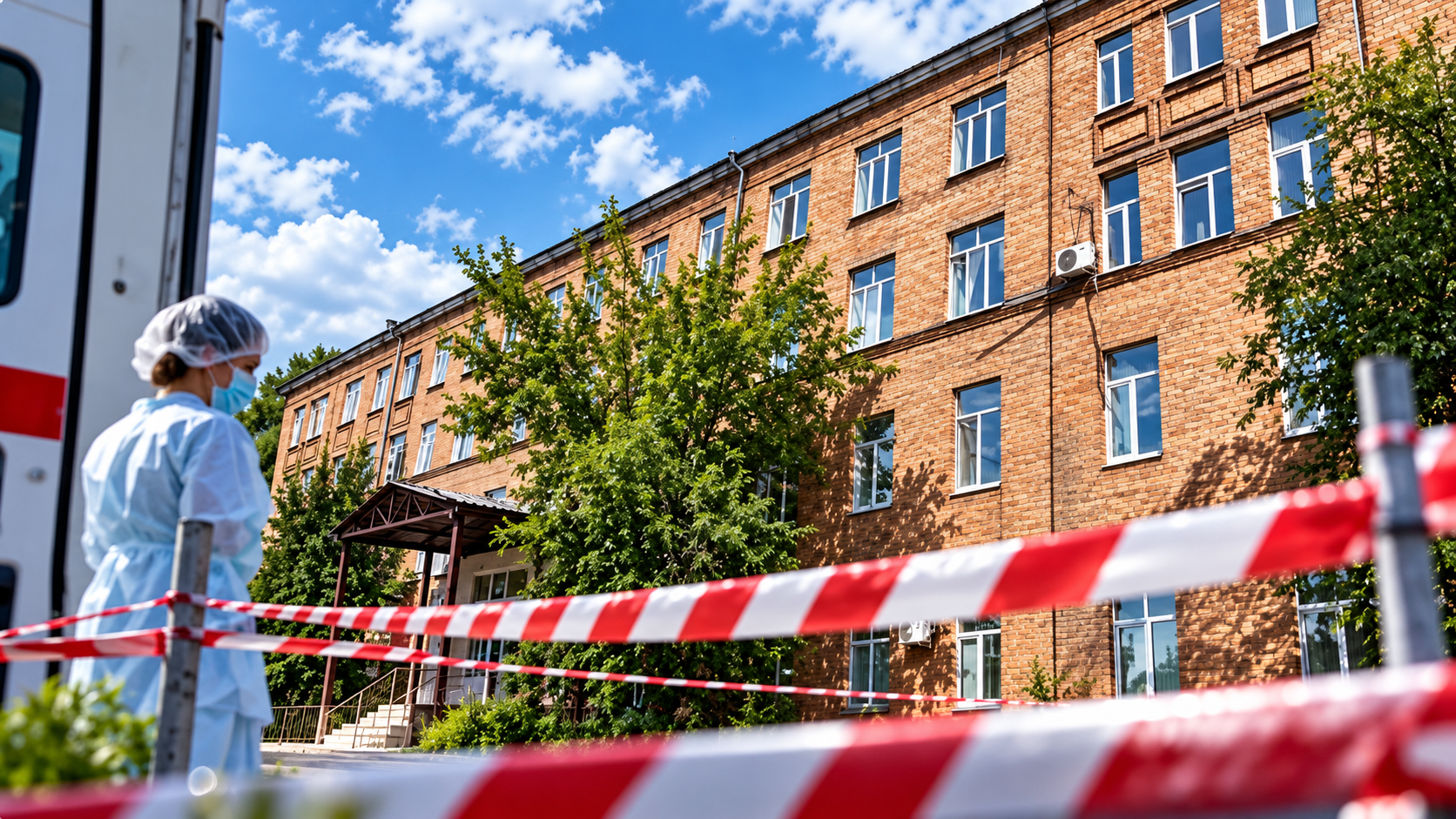
Hospitals have been placed under quarantine, and face masks have been made compulsory at the factory
In the wake of the incident, some healthcare facilities in Irkutsk and Shelekhov have introduced quarantine restrictions. On 3 October, a mask mandate was also introduced at the Irkutsk Aluminium Plant in Shelekhov. The plant’s management described this as a preventative measure.
It is precisely the scale of the precautionary measures, against the backdrop of the absence of a clearly stated diagnosis, that has given rise to numerous speculations that the true circumstances of the case may be more extensive than officially reported. However, there is currently no independent evidence of a large-scale outbreak of the plague.
The White House has begun monitoring the situation
The situation has also attracted attention in Washington. A spokesperson for the administration Donald Trump said that the White House had been informed of a possible case of plague in Russia, monitors developments and assesses possible courses of action.
The US side has not yet announced any specific restrictions or other practical measures in connection with the situation in Russia.
Why is pneumonic plague dangerous?
Pneumonic plague — the most dangerous form of the infection caused by the bacterium Yersinia pestis. Unlike the bubonic form, it can be transmitted from person to person via infected respiratory droplets during close contact.
According to the WHO, without prompt treatment, pneumonic plague can quickly lead to death. At the same time, modern antibiotics are effective if treatment is started early enough. That is why, if the pulmonary form is suspected, patients are isolated, and people who have been in close contact with them are placed under observation and, if necessary, given preventive treatment.
Is there a risk of another major outbreak?
At present, there is no reason to speak of the start of an epidemic, let alone a pandemic. There has been one reported death, the cause of which remains the subject of conflicting reports, and a significant number of people are under medical supervision. No confirmed secondary cases of the disease have been reported so far.
A comparison with the situation at the start of the pandemic COVID-19 It is also premature. We are talking about different pathogens, different modes of transmission and fundamentally different treatment options.
The attention paid by the US administration and the strict lockdown measures in the Irkutsk Region show that the situation is being taken seriously — primarily due to the potential danger posed by the pneumonic form of the plague and the conflicting information regarding the cause of death of the employee at the specialist institute.