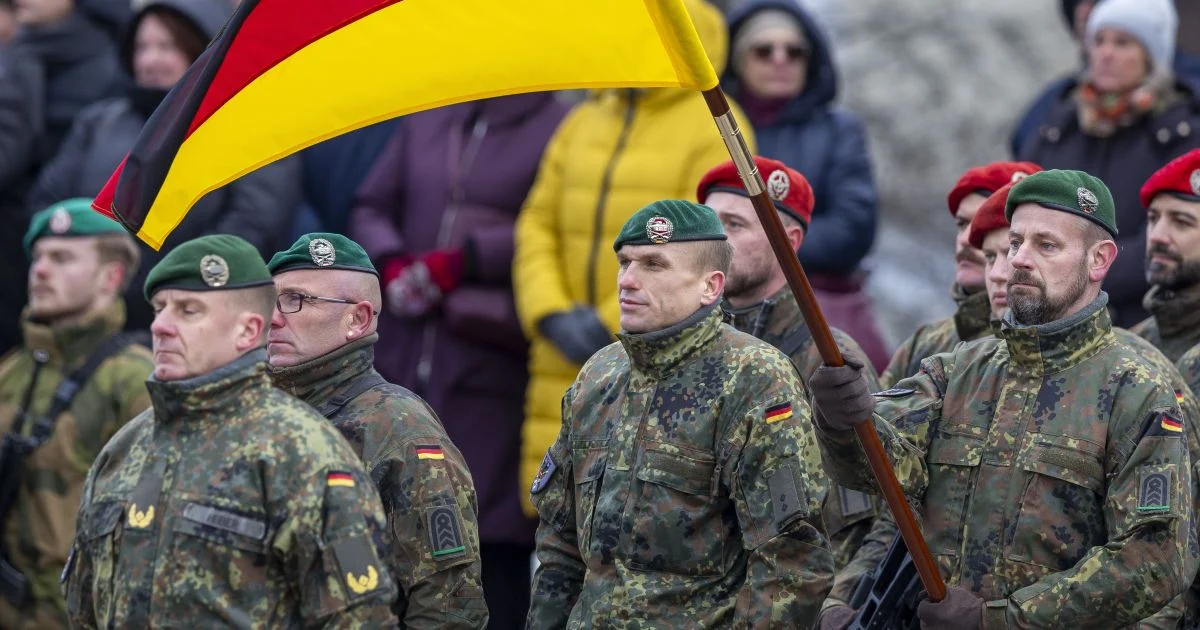
Martin Jäger, head of Germany’s Federal Intelligence Service, has stated that Russia could carry out limited operations against NATO member states following the so-called «little green men» scenario. He identified the Baltic states as the most likely target for such actions. At the same time, the BND sees no signs that Moscow is preparing for a large-scale attack on Alliance territory.
Briefly about the main points
- The BND believes that Russia may carry out localised operations against NATO member states.
- The Baltic states have been cited as a possible target for such provocations.
- Intelligence reports do not indicate that Russia is preparing a large-scale attack on the Alliance.
- Berlin describes Russia as the main current threat to its security.
- The BND expects Russia to step up its military pressure on Ukraine this winter.
A localised scenario rather than a large-scale invasion
Assessment Hunter announced on 5 October at the annual public hearings of the heads of the German intelligence services in Bundestag. According to him, the absence of signs of a full-scale invasion does not rule out targeted actions on a smaller scale.
As an example, the head of the BND cited the «little green men» scenario — armed soldiers without identifying insignia, whom Russia deployed during the annexation of Crimea in 2014. This approach can temporarily conceal the forces’ national affiliation and create uncertainty regarding the nature of the attack.
According to Jäger, Moscow may resort to such measures in order to test its allies’ reaction and their readiness to respond to limited provocations.
German intelligence services are warning of a more dangerous dimension to the conflict
Jäger stated that the confrontation between Russia and Germany had entered a «new, more dangerous phase», and that the country risked being drawn into a violent conflict with the Russian Federation. In his view, Russia is currently Germany’s most dangerous adversary and poses a direct, comprehensive and specific threat to it.
During the hearings, the heads of Germany’s three federal intelligence agencies agreed that Russia poses the greatest current threat to the country’s security. The President of the Federal Office for the Protection of the Constitution Sinan Selen said that the threats which, in military scenarios, had been linked to the year 2029 had, in fact, already become a reality in the sphere of intelligence work.
«The »shadow war’ against Germany and the outlook for Ukraine
Jäger described Moscow’s activities against Germany as a «shadow war». German intelligence services are recording threats of espionage, sabotage, cyberattacks and operations targeting critical infrastructure. Selen cited transport, the defence industry and military infrastructure as potential targets.
Jäger also mentioned the attempted attack at Leipzig Airport in August, for which the German authorities hold Russia responsible. Berlin has repeatedly accused Moscow of waging a hybrid campaign involving the use of drones and cyberattack; Russia rejects these allegations.
Separately, the BND predicts that Moscow will step up pressure on Ukraine this winter in an effort to demonstrate military success, and that the intensity of Russian attacks will increase. Following the Chancellor’s visit Friedrich Merz Germany has announced additional military and energy aid for Ukraine. Merz stated that Berlin would not allow itself to be intimidated by Russia’s hybrid actions. Moscow also denies any intention of attacking NATO member states.