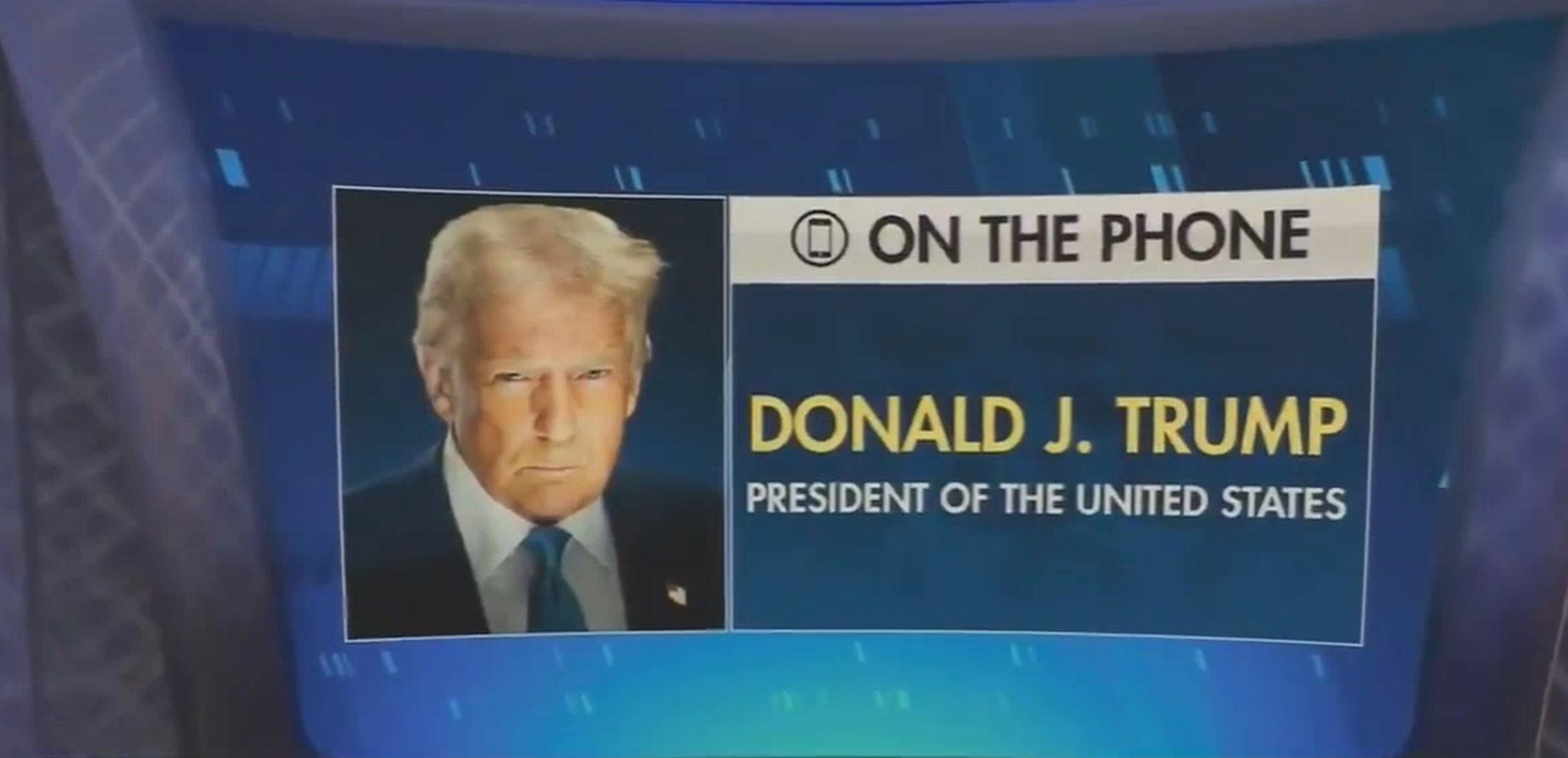
US President Donald Trump has acknowledged that the war with Iran and the resulting rise in energy prices were among the factors behind the Republican Party’s loss of support in the mid-term congressional elections. Following the vote on 3 November, he commented for the first time on his party’s heavy losses, but stressed that he did not regret launching military operations against Tehran.
Briefly about the main points
- Trump acknowledged that the war with Iran had contributed to the Republicans’ losses in the election.
- The rise in the price of oil and petrol has been one of the main economic consequences of the conflict.
- On the morning of 4 November, Brent crude was trading at around $103 a barrel.
- Trump had previously linked high prices to Ukrainian strikes on Russian oil refineries.
Trump admitted that the war with Iran had influenced the election results
Following the appearance of voting results The US President gave telephone interviews to Fox News and The Wall Street Journal, in which he commented on the reasons for the Republicans’ setbacks.
«I think it was partly down to Iran. But at the same time, people understood the importance of what I did regarding Iran,» Trump said on Fox News.
In an interview with The Wall Street Journal, the president also acknowledged that the war had been one of the factors influencing the vote. At the same time, he emphasised that, under similar circumstances, he would again decide to launch a military operation.
According to estimates Trump, the main political consequence of the conflict was a rise in the price of oil and motor fuel, which fuelled Americans’ dissatisfaction with the economic situation.
Despite this, the president continues to insist that the military campaign was necessary to prevent Iran from developing nuclear weapons.
How the war with Iran has affected global oil prices
The United States and Israel launched a large-scale military operation against Iran on 28 February 2026. The conflict, which Washington had initially expected to be over within a few weeks, has now been going on for more than eight months.
The fighting has caused serious disruptions to oil transport via Strait of Hormuz — one of the most important routes for global energy trade. Before the war began, around one-fifth of the world’s oil flows passed through it.
Iranian attacks on ships and energy infrastructure, as well as the US naval blockade, have exacerbated supply disruptions.
Throughout the conflict the price of oil Brent has repeatedly exceeded $100 per barrel. This has had an impact on the prices of petrol, diesel and transport services.
As of the morning of 4 November, Brent futures were trading at around $103.34 per barrel, whilst US WTI was trading at around $95.56. The previous day, prices had fallen amid reports of diplomatic talks aimed at ending the war.
Trump had previously accused Ukraine of causing fuel prices to rise
As early as 5 October, Donald Trump had tried to attribute the high petrol prices to other factors.
In a post on Truth Social, he claimed that the Strait of Hormuz was no longer the main reason for the price rises. Instead, the president blamed Ukraine because attacks on Russian oil refineries, as well as the closure of US oil refineries in states controlled by the Democrats.
The war with Iran remains one of the main factors driving up energy prices, although Ukrainian strikes on Russian oil infrastructure are also affecting certain segments of the fuel market.
Now, following the Republicans’ electoral losses, Trump has openly acknowledged the political consequences of the war in the Middle East.
The Democrats have strengthened their position in the US Congress
In the mid-term elections on 3 November, the Democrats secured a number of significant victories, particularly in states where the Republicans had previously held a majority.
The results of the vote have created a new political situation for the Trump administration: the Democrats now have the opportunity to tighten their grip on the White House and curb some of the President’s legislative initiatives.
Trump himself has already stated that he is prepared to use his veto against any bills he deems unacceptable.
The President suggested that, following a period of political deadlock, the Republicans and Democrats would be able to resume talks on joint decisions.
The question of bringing the war with Iran to an end remains unresolved. Although Washington and Tehran are conducting indirect talks mediated by regional powers, the parties still have significant differences regarding sanctions, the naval blockade and Iran’s nuclear programme.