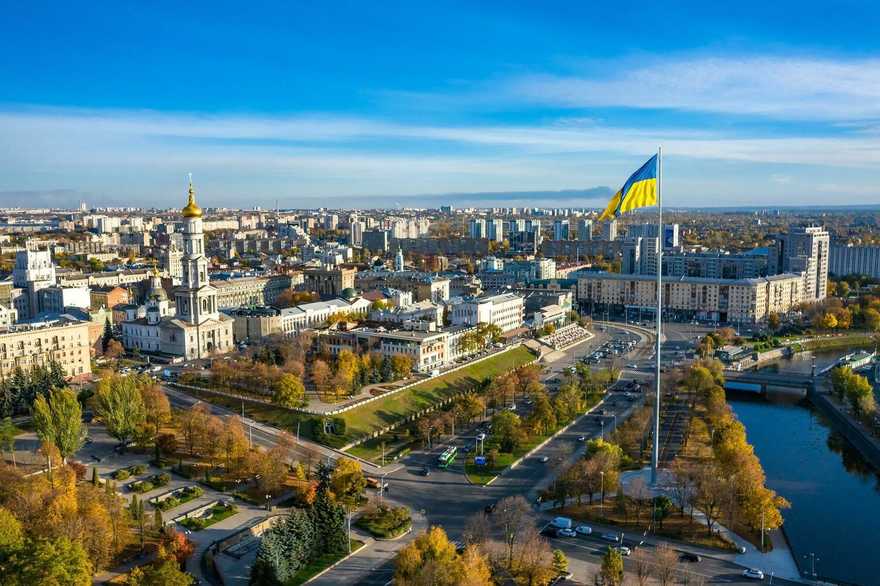
Life on the firing line: Today, Kharkiv, Dnipro and Zaporizhzhia are not only the largest industrial and cultural centres of Eastern and Southern Ukraine, but also the main defence outposts. Constant shelling, energy terror, but also unique underground schools, business relocation, and billions of hryvnias spent on fortifications. What is really happening in the frontline cities and what scenarios do analysts predict?
Frontline giants: current status and key challenges
Each of these three cities plays its own unique role in the overall system of survival and defence of the country. However, they all have one thing in common: their critical proximity to the frontline or the state border with the aggressor country, which dictates harsh conditions for life and business.
Kharkiv: Life under constant terror and underground infrastructure
Kharkiv is in the most difficult geographical location, just a few dozen kilometres from the border. The city's main problem is the critically short flight time Russian missiles, The company's main focus is on ballistics and guided missiles.
Despite the daily devastation, the city is demonstrating unprecedented adaptation: the first underground school in Ukraine has been built here, and hospital operating rooms and even cultural events are partially moved underground. The biggest concern for Kharkiv residents is the threat of complete destruction of the energy infrastructure before the coming winter.
Zaporizhzhia: The threat of CABs and the ZNPP factor
In recent years, Zaporizhzhia has become a major hub for IDPs from the temporarily occupied territories of the south. However, since the end of 2024 and during 2025-2026, the city has faced new enemy tactics - massive attacks modernised control rooms, The company is now able to fly directly to residential areas of the city centre.
In addition to the security factor, the city is constantly threatened by nuclear blackmail due to the proximity of Enerhodar and the occupied Zaporizhzhya NPP, This is holding back the return of large investments.
Dnipro: The country's main hospital and logistical rear
Dnipro is somewhat further away from the direct line of contact than Kharkiv, which has allowed it to become a key military medical and logistics centre in Ukraine. It is here that the main flows of wounded people come together, and where humanitarian missions and strategic frontline supply depots are based.
At the same time, Dnipro is a regular target for massive combined attacks, aimed at destroying railway junctions, bridges and the Prydniprovska TPP.
Economy and business: Who left and who stayed?
The economic map of the frontline cities has changed significantly, but the complete collapse that the enemy was counting on did not occur.
-
Relocation vs Adaptation: Large industrial giants in heavy engineering and metallurgy were forced to either mothball their facilities or partially relocate their equipment to the west of the country. At the same time, small and medium-sized businesses (services, retail, coffee shops, grocery chains) have demonstrated miraculous resilience, adjusting to the schedules of power outages and air raids.
-
Tax benefits: The Cabinet of Ministers has introduced a number of tax breaks (exemption from land tax and real estate tax) for businesses in areas of possible or active hostilities, which helps local entrepreneurs stay afloat.
-
Budget priorities: The lion's share of the budgets of Kharkiv, Dnipro and Zaporizhzhia is currently spent on two things: helping the Defence Forces and building large-scale fortifications around the cities.
Prospects and concerns: What cities are preparing for
Analysts identify several key scenarios and the biggest fears that are being discussed at the level of civil-military administrations and the expert community.
The main concern: Depopulation and the grey zone. The biggest risk for Kharkiv and Zaporizhzhia is that prolonged fuel, energy and missile terror could force the departure of the working population and businesses, turning these thriving metropolises into an economic desert even before the frontline physically approaches.
Humanitarian situation and civil protection measures
In addition to restoring critical infrastructure, city authorities are forced to quickly address civil protection issues. Hundreds of quick-deployable concrete ground shelters have appeared on the streets of Kharkiv, Dnipro and Zaporizhzhia, located near public transport stops.
We are constantly upgrading our public warning systems and setting up additional «Points of Unbreakability» with autonomous heating and water supply. Public utilities play a huge role: even the most severe impacts on residential buildings usually take a few hours to resolve, minimising panic among residents.
Prospects for recovery:
Despite the gloomy forecasts, large-scale plans for post-war reconstruction. In particular, the team of world-renowned architect Norman Foster has been engaged to create a new master plan for Kharkiv, taking into account modern security requirements (green areas, safe neighbourhoods, autonomous energy supply). Dnipro has every chance of securing the status of a major industrial and technological hub that will coordinate the restoration of the entire Donbas and Azov region after de-occupation.