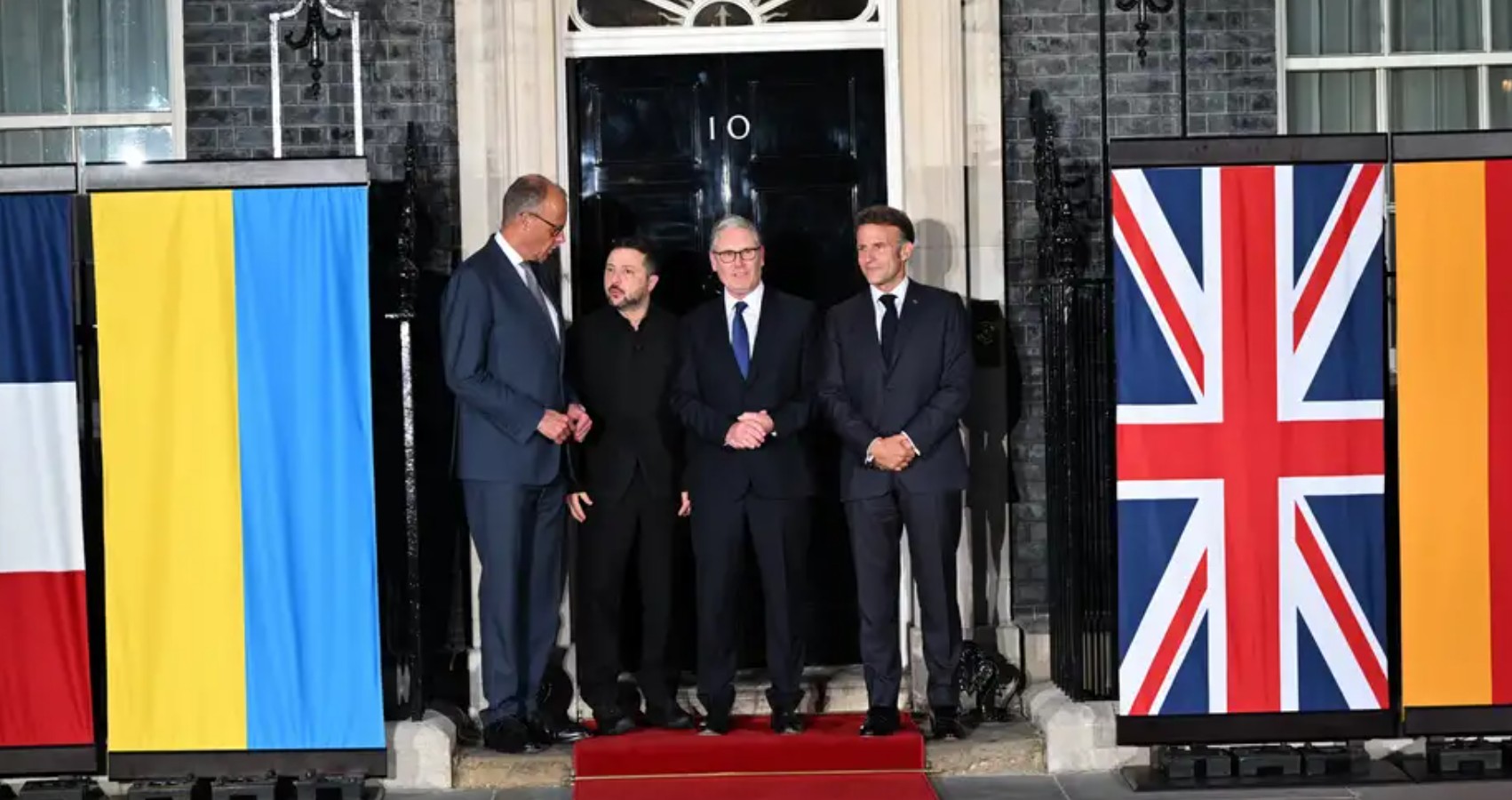
At a meeting in London, the leaders of the UK, France, Germany and Ukraine approved five key conditions for achieving a just and lasting peace in Ukraine. They emphasised the need for European countries to be actively involved in peace negotiations and to increase pressure on Russia. These conditions include a cessation of hostilities, the preservation of international borders and legal guarantees of security for Ukraine.
- The leaders of the Eurotroika and Zelenskyy outlined five conditions for peace in Ukraine.
- The first is the cessation of hostilities, and the second is the contact line as the basis for negotiations.
- Ukraine should receive legally binding security guarantees.
- Russian assets will remain frozen until the aggression stops.
- All agreements must protect the interests of European security.
Participation of the Eurotroika leaders in peace talks
London hosted the meeting Federal Chancellor of Germany Friedrich Merz, Prime Minister of the United Kingdom Kira Starmer, President of France Emmanuel Macron and the President of Ukraine Vladimir Zelensky. The main issue was the coordination of efforts to put pressure on Russia, as well as the definition of conditions for ending the war. The joint statement issued by on the website The British government's newly created commission has identified priorities for future talks between Kyiv and Moscow.
The participants agreed on the need for active support for Ukraine, including increased military assistance and joint production of missiles for air defence and long-range strikes.
Five conditions for a just and lasting peace
The leaders outlined Five key conditions for achieving peace. The first is the cessation of hostilities, which is a basic precondition for negotiations. The second is that the current front line should serve as a starting point for the negotiation process. The joint statement emphasises that Ukraine's international borders should not be changed by force, and that the country's sovereign right to choose its security mechanisms should be unquestionably respected.
The third condition provides for legally binding security guarantees for Ukraine after the ceasefire is in place. This includes the deployment of multinational forces on Ukrainian territory.
The fourth condition concerns Freezing of Russian assets until the war is over and Ukraine is compensated for the damage caused.
The fifth condition is that any agreements must take into account the interests of European security and require the consent of the EU and NATO allies.
Zelensky's open letter and Putin's response
On 4 June, Volodymyr Zelenskyy addressed the President of Russia Vladimir Putin з by open letter, in which he proposed to end the war and set a date for their personal meeting. Zelenskyy noted that representatives of Europe and the United States could join the talks.
The next day, Putin rejected the offer, saying he saw no point in such a meeting. He characterised Zelenskyy's letter as containing «elements of rudeness» and creating obstacles to possible negotiations. Putin also stressed that the fighting will end only after Russia achieves its goals and asked the Russian military to continue to perform their tasks.