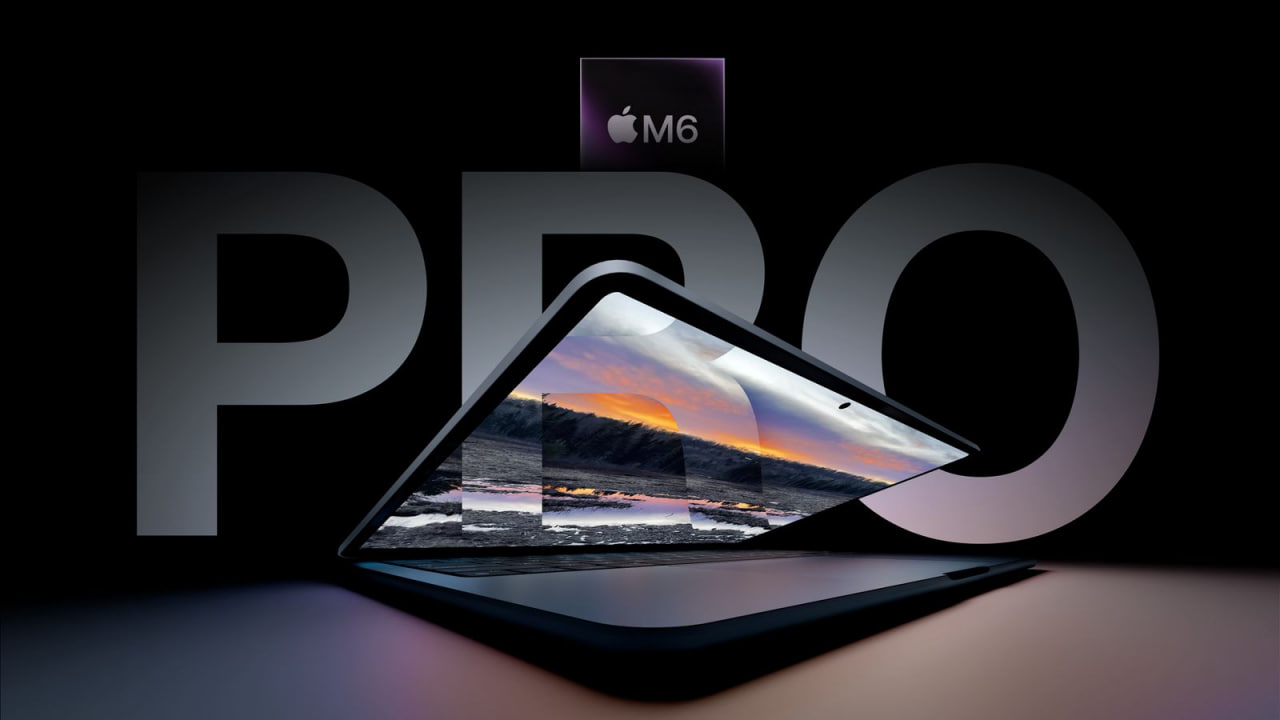
Apple is preparing one of the biggest updates to the MacBook Pro in recent years. As early as the end of October 2026, the company may unveil the first Mac laptops featuring OLED touchscreens, a revamped design and the interactive ‘Dynamic Island’ cut-out, familiar to iPhone users. The new models are expected to feature 14- and 16-inch screens, be noticeably lighter than previous models and offer new ways to control macOS. The tentative launch date is said to be 27 October.
Briefly about the main points
- Apple is preparing its first MacBook Pro with a touchscreen.
- The new model may feature an OLED display and Dynamic Island.
- Models with 14-inch and 16-inch screens are expected.
- The presentation could take place as early as 27 October 2026.
The first touchscreen MacBook Pro: Apple is changing its approach to laptops
For many years Apple has consistently differentiated between the ways in which it manages its devices. iPhone whilst the iPad featured touchscreens, the MacBook remained focused on the keyboard, trackpad and mouse. Even after the introduction of Apple Silicon chips, the company stuck to this approach, emphasising the advantages of traditional controls for professional tasks.
The next generation MacBook Pro This could change that approach. A touchscreen will allow users to interact with interface elements directly on the screen, whilst still being able to use their usual input methods. Users will be able to select files by touch, scroll through pages, zoom in and out on images using gestures, and interact with programme elements without having to constantly use the trackpad.
That said, the new MacBook will not turn into a tablet. It is expected to retain the traditional laptop design, a full-size keyboard and a desktop operating system. Touch control will be an additional means of interaction, rather than a replacement for existing tools.
For Apple, this could be one of the most significant rethinks of the MacBook concept since the switch to in-house processors.
OLED instead of Mini-LED: how the new screen will differ
One of the key anticipated innovations is the switch from Liquid Retina XDR displays to OLED technology. Apple’s current professional laptops use Mini-LED backlighting, which delivers high brightness and contrast. However, OLED allows each pixel to be controlled individually, meaning that dark areas of the image can be displayed without any glow.
This opens up new possibilities for working with photographs, videos and graphics. OLED delivers deep blacks, high contrast and accurate rendering of detail in dark scenes. These features are particularly important for professional editing, colour grading and working with HDR content.
Furthermore, OLED panels have the potential to reduce the thickness of the display module. This could help Apple create a lighter chassis without radically altering the laptop’s appearance.
The use of OLED displays has its own particular characteristics. These include the risk of individual pixels gradually burning out when static interface elements are displayed for long periods. It is not yet known exactly which protection technologies Apple will use.
Dynamic Island is coming to the MacBook: how the new feature will work
Along with the new display, Apple may change the design of the top of the screen. Instead of the usual camera cut-out, we can expect to see Dynamic Island — an interactive area that first made its debut on the iPhone.
On smartphones, this technology is used to display ongoing processes, notifications, the music player, timers and information about active apps. On a MacBook, a similar mechanism can be adapted to work with a desktop operating system.
For example, Dynamic Island will potentially be able to display the status of file transfers, screen recording, active calls, music playback or other background processes. However, the specific list of features for the Mac has not yet been officially revealed.
Using this design could also alter the appearance of the top menu bar in macOS, making the camera area a functional part of the interface.
macOS is being prepared for touch control
The introduction of the touchscreen requires changes not only to the hardware, but also to the operating system itself. The macOS interface has traditionally been designed for precise cursor control, so some buttons, menus and other elements may be awkward to tap with your fingers.
Apple is expected to adapt the system to two interaction modes. When using a mouse or trackpad, the user will see the familiar interface, whilst when touching the screen, certain controls will automatically enlarge.
Support for gestures familiar to iPhone and iPad users is also being considered:
-
zooming in and out on photos and documents using two fingers;
-
scrolling through pages directly on the display;
-
opening the menu and selecting items by touch;
-
switching between individual interface elements.
This combination could be particularly useful for designers, photographers and other professionals who work with visual content. However, full support for touch control will depend not only on Apple, but also on third-party apps adapting to it.
A new design, lighter weight and powerful processors
The MacBook Pro update could be a comprehensive one. As well as an OLED touchscreen, the laptops will feature a redesigned internal layout, which will help to reduce the weight of the devices. It is expected that Apple’s engineers will review the layout of individual components and make the casing more compact.
As for performance, preliminary information suggests that the M5 Pro and M5 Max chips may be used in the higher-end touchscreen models. Meanwhile, the other updated Mac models are expected to switch to M6-series processors.
Apple can therefore pursue two strategies simultaneously: improving the performance of traditional laptops whilst developing more expensive models with new displays and additional features.
The final processor configuration, RAM capacity, battery life and range of ports remain unknown. There is also no confirmation as yet as to whether the reduction in the thickness of the chassis will affect the cooling system and battery life.
When will Apple unveil the new MacBook Pro, and how much will it cost?
One of the most likely dates for the launch is said to be 27 October 2026. Apple is expected to hold a separate event at the end of the month dedicated to Mac computers and other devices.
Alongside the touchscreen MacBook Pros, Apple may unveil an updated iMac, a base-model 14-inch MacBook Pro with a new processor, and the next-generation iPad mini with an OLED display.
It is not yet known exactly when the new laptops will go on sale, or whether all configurations will be available at the same time.
Pricing also remains an open question. The OLED panel, touchscreen layer and redesigned construction could increase the device’s production costs. It is therefore possible that the new models will occupy a separate, premium position within the MacBook Pro range.
At the same time, it is too early to quote specific figures. Apple has not published an official price list, and preliminary price estimates have not yet been sufficiently substantiated.
Why a touchscreen MacBook could transform the laptop market
Touchscreen laptops have long been part of the product range of Windows device manufacturers, but Apple has taken a different approach for many years. The company has developed the MacBook and the iPad as two distinct classes of devices with different use cases.
The introduction of a touchscreen MacBook Pro could gradually bridge this functional gap. Users will be able to combine the traditional advantages of a laptop with the intuitive controls typical of tablets.
For Apple, this is also an opportunity to offer a significant upgrade to its professional range, against the backdrop of competition from manufacturers of premium Windows laptops.
At the same time, the key question is not about the touchscreen itself, but rather how well it will work alongside macOS. If this new way of controlling the computer does indeed improve professional workflows, it could mark a significant milestone in the development of Mac computers.