The constant presence of drones on the front line and regular drone attacks on Ukrainian cities are giving rise to a new form of psychological trauma. The French newspaper Le Monde has reported on so-called «dronephobia» — a term used by Ukrainian psychiatrist Serhiy Andriichenko to describe an intense and persistent fear of unmanned aerial vehicles (UAVs). Some patients exhibit symptoms similar to those of post-traumatic stress disorder. However, «drone phobia» is not yet recognised as a separate official diagnosis in the International Classification of Diseases.
Briefly about the main points
- Research is being carried out in Ukraine into the psychological fear of drones.
- The first such patients appeared as far back as 2023.
- Triggers may include drones, explosions and similar sounds.
- Ukrainian and American experts are studying the phenomenon.
What is «drone phobia»?»
Le Monde reported on the incident on 25 September. The newspaper spoke to Ukrainian military personnel, doctors and researchers who are working on the psychological consequences of the current drone war.
Term «drone phobia» the psychiatrist suggested Serhiy Andriychenko. According to him, Ukrainian doctors began to record cases of patients with severe anxiety related to drones from around In 2023, that is, now in the second year of a full-scale war.
The doctor attributes this condition primarily to a sense of helplessness in the face of a drone. A person may not have suffered any physical injuries, but may require psychological or psychiatric support after a prolonged period of living under constant threat.
Ukrainian experts are already discussing this phenomenon separately within professional circles. In June 2026, a webinar was held as part of a project run by the Coordination Centre for Mental Health of the Cabinet of Ministers of Ukraine «Drone phobia: nature, clinical manifestations and rehabilitation approaches», on which Andriychenko was a lecturer.
Why is it that drones create a particular kind of psychological pressure?
Unlike many other types of weaponry, a drone can remain over an area for a long time. On the front line, its distinctive sound can sometimes be heard almost continuously, and it is not always clear whether it is a friendly UAV or a Russian one.
Le Monde describes this as a prolonged, gruelling threat, which is different from the brief surge of fear experienced during actual combat. One of the soldiers treated by Andriychenko explained to the publication that his fear of drones had gradually become unbearable precisely because of its constant nature.
Another significant factor is the inability to fully control the danger. Drones can track people, hover near enemy positions, attack vehicles or lie in wait for a target near the road.
Experts from the Ukrainian mental health programme also point out that the sound of UAVs, the anticipation of an attack and a sense of constant danger can affect both both military personnel and civilians.
Anxiety can persist even far from the front line
One of the characteristics of this condition is that the reaction does not always subside once the person has returned to a relatively safe place.
Le Monde reports on the story of Ukrainian soldier Oleksandr Dushakov. After a long period in the Donbas, he was receiving treatment in Kyiv; however, the latest rocket and drone attacks on the capital once again triggered a severe panic attack in him.
Such reactions may be triggered not only by the UAV itself.
American doctor Ron Hirschberg, who is involved in a study of Ukrainian military personnel, told *Le Monde* that triggers can include explosions, fireworks and other sounds, which are associated with the attack they have experienced. According to his observations, fear can haunt a person long after they have left the battlefield and for a long time following the traumatic event.
The symptoms are similar to those of PTSD, but the condition is still being studied
In clinical practice, such patients may be diagnosed with post-traumatic stress disorder or an adjustment disorder.
Le Monde notes that among the possible manifestations are — panic attacks, constant anxiety, exhaustion, hypervigilance and an intense fear of sounds reminiscent of UAVs.
At the same time, it would be premature to describe «drone phobia» as a recognised medical condition in its own right.
Andriychenko himself told *Le Monde* that the deadline is currently not included in the International Classification of Diseases. Ukrainian and American experts are continuing to gather clinical data to determine whether this is a distinct disorder, a specific form of PTSD, or a broader set of reactions to the current war.
American and Ukrainian doctors are investigating a new phenomenon
Experts from the US have joined the research into the psychological consequences of drone warfare.
According to Le Monde, in 2024, researchers affiliated with Massachusetts General Hospital and Harvard Medical School travelled to Ukraine to work on a programme to support Ukrainian military personnel and veterans. As part of the project, they are studying, in particular, anxiety disorders and invisible trauma linked to combat operations and the use of drones.
Hirschberg suggests that doctors may be dealing with a phenomenon that does not entirely fit within the conventional understanding of PTSD. That is why the term «dronephobia» is used as a working definition of a condition that still requires scientific research.
Drones have transformed more than just the battlefield
The issue has long since ceased to concern the military alone.
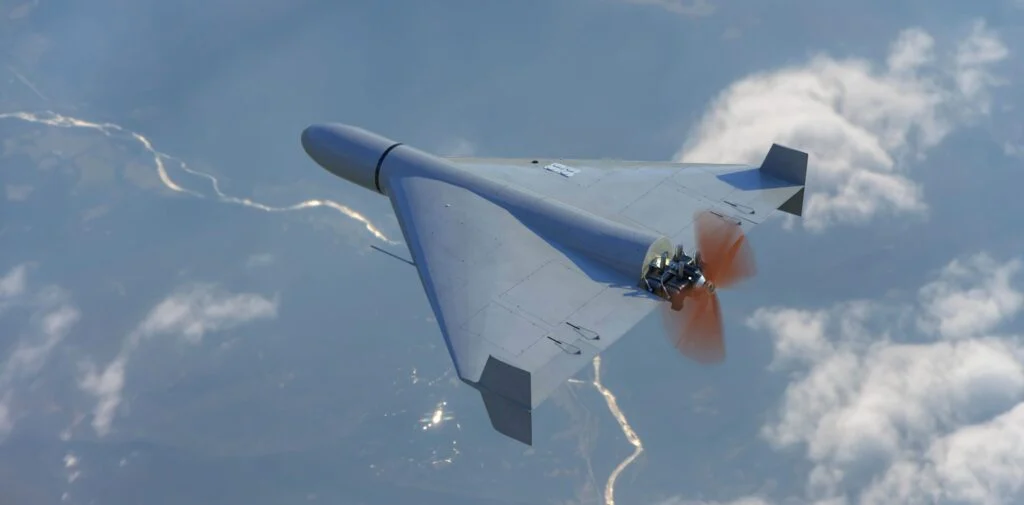
Long-range Shahed drones and other Russian UAVs regularly attack Ukrainian cities hundreds of kilometres from the front line. As a result, the distinctive sound of a drone, the anticipation of an explosion and the need to constantly monitor air raid alerts have become part of daily life for millions of civilians.
The Mental Health Coordination Centre emphasised that drones have become one of the most significant psychological factors in modern warfare, and that reactions to this constant threat require not stigmatisation, but timely recognition and professional support.
It is Ukraine that is now, in effect, becoming one of the first places where the consequences of the widespread use of combat drones can be observed not only in military contexts but also in psychiatric practice.