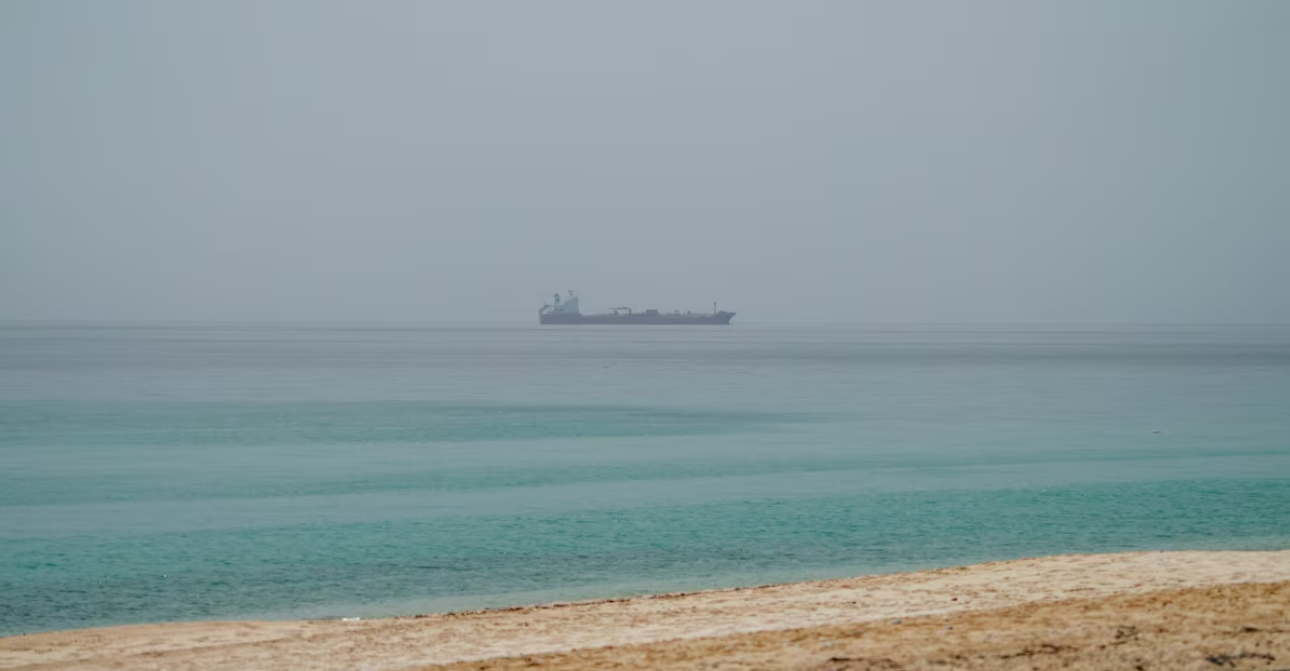
The United States carried out a series of air strikes on Iranian military targets in response to a drone attack on a civilian vessel in the Strait of Hormuz. The operation was part of Washington’s efforts to protect international shipping.
- The US carried out air strikes against Iran in response to an attack on a ship.
- Depots containing missiles, drones and radar systems have been destroyed.
- Iran has announced a retaliatory strike against US military installations.
- Israel and Lebanon have signed a ceasefire agreement.
- Oil markets are reacting to the situation in the Strait of Hormuz.
The US has responded to the attack in the Strait of Hormuz
On the night of 27 June, the United States carried out a series of air strikes on military targets in southern Iran. According to the US Central Command (CENTCOM), the operation was in response to an attack by an Iranian drone on a civilian cargo ship passing through the Strait of Hormuz near the coast of Oman.
The US military stated that the strikes targeted missile depots, drone bases and coastal radar systems used to monitor shipping. Following the completion of the operation CENTCOM has released a video showing explosions at one of the sites.
Officials in Washington emphasised that the attack was aimed at protecting international shipping and ensuring the safe passage of merchant vessels through one of the world’s most important maritime routes.
Iran has announced a retaliatory strike
Tehran has confirmed that an explosion took place near the port of Sirik in Hormozgan Province. At the same time, the Iranian authorities have reported that the port’s infrastructure has not been damaged and continues to operate as normal.
The Islamic Revolutionary Guard Corps has stated that, in response, the Iranian navy has carried out strikes on US military bases in the region. The specific targets or the extent of the damage have not been officially disclosed.
Tehran has also accused the US of breaching the agreements on ceasefire and threatened a more extensive response should the US strikes be repeated.
Washington: «Violence will be met with violence»
Vice President of the United States JD Vance stated that Washington is complying with the terms memorandum on a ceasefire, but will not leave attacks on international shipping unanswered.
According to him, if Iran has any concerns regarding the implementation of the agreements, these must be resolved through diplomatic channels, rather than by the use of force.
US Secretary of State Marco Rubio following talks with the Gulf states, he also called for the guarantee of free, unconditional and safe navigation through Strait of Hormuz without making any attempt to establish control over the international route.
Israel and Lebanon have taken a step towards ending hostilities
Amid the latest escalation between the US and Iran, there have also been some positive diplomatic signals. Israel and Lebanon have signed a preliminary agreement to cease hostilities between the Israeli army and the Iranian-backed group Hezbollah. The document provides for the gradual disarmament of Hezbollah and the withdrawal of Israeli troops from Lebanese territory. However, representatives of the group have already stated that they do not intend to comply with the terms of the agreement, so the mechanism for implementing the deal remains unclear.
The oil market is keeping a close eye on the situation
Despite the latest attacks, the world oil prices had shown a decline of approximately 3% the day before. The markets reacted positively to the resumption of oil tanker traffic through the Strait of Hormuz and the resumption of exports via Saudi Arabia’s largest oil terminal, Ras Tanura.
Experts point out that any further escalation of the conflict could once again pose risks to global supplies of oil and liquefied natural gas, as around one-fifth of global seaborne energy exports pass through the Strait of Hormuz.