Honey Spas, or Makoviy (officially — The Procession of the Holy Cross of the Lord or The Feast of the All-Merciful Saviour and the Most Holy Mother of God) — the first of three summer feasts in honour of the Saviour, which marks the beginning of the harvest season and the Dormition Fast.
The main change: when do we celebrate Honey Spas?
Due to the transition of the OCU and the UGCC to New Julian calendar, the date of the holiday has been brought forward by 13 days.
Important: According to the old calendar, Makoviya was celebrated on 14 August. Since the church reform, the official date of Honey Spas in Ukraine has been — 1 August.
The origins and spiritual significance of the festival
This day has three profound historical and religious strands that have merged into a single folk-Christian festival:
-
The Procession of the Cross of the Lord: The tradition originated in Constantinople in the 9th century. Due to the August heat, epidemics frequently broke out in the city. To purify the city and halt the spread of disease, a fragment of the cross on which Jesus was crucified was carried out of the Church of Saint Sophia and paraded through the streets, blessing the water as it went.
-
The Feast of the Seven Maccabean Martyrs: On this day, the Church honours the Old Testament martyrs — the seven Maccabean brothers, their mother Solomonia and their teacher Eleazar. In the 2nd century BC, they suffered a brutal death but did not renounce their faith. In folk tradition, the name Maccabees was transformed into a word with a similar sound «poppy».
-
The Christianisation of Rus’: According to some chronicle sources, it was in mid-August (according to the old calendar) that Prince Volodymyr baptised the people of Kyiv in the Dnipro, which is why the festival is also associated with the blessing of the water.
Traditions and rituals: what to bring to church
The main tradition of the day is attending a festive church service and having a special basket, commonly known as a «makoviychik», blessed.
What to put in the basket for blessing:
-
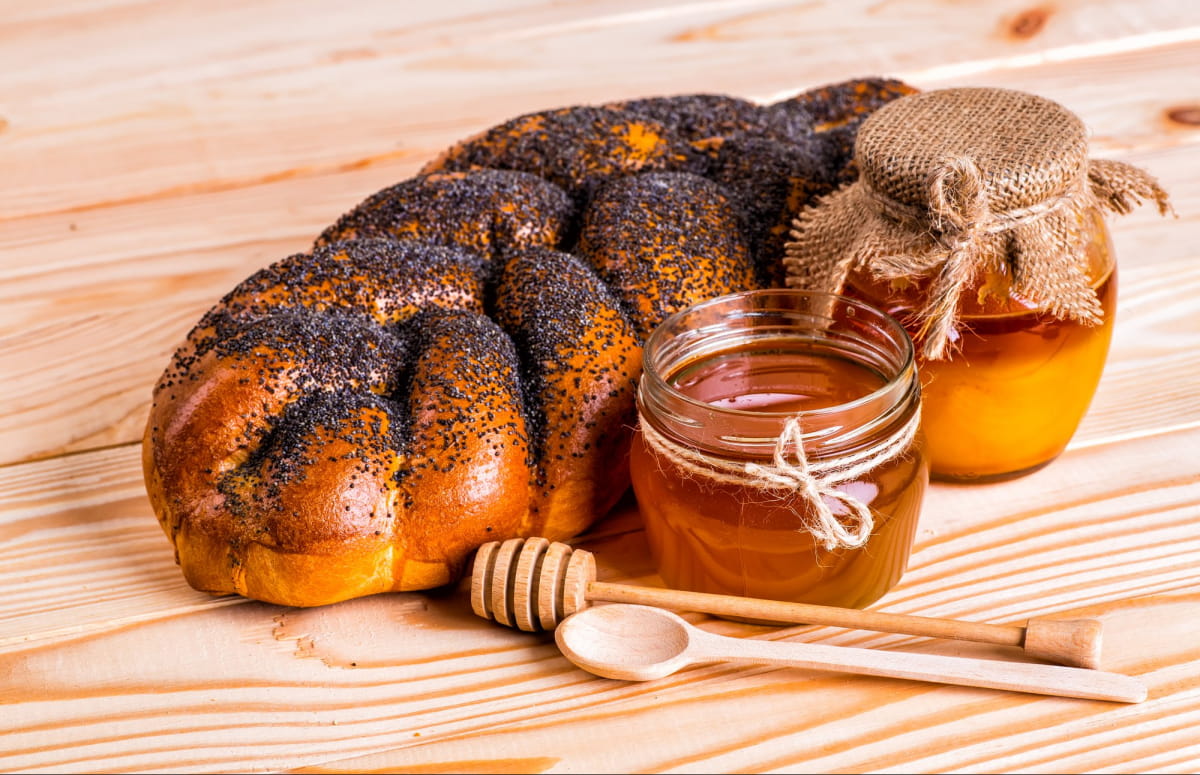
Honey and honeycombs: A symbol of the sweetness of God’s word and the new harvest. It was only after the consecration that it was permitted to eat the newly harvested honey.
-
Poppies and poppy heads: As a tribute to the memory of the Maccabean martyrs and as a talisman for the home.
-
Water: This is an essential element, as this Spas is also known as «Wet Spas» (or Spas on the Water).
-
A «poppy» bouquet: A special charm made from summer flowers and herbs. It must include ripe poppy heads, marigolds, dahlias, thyme, mint, wormwood, cornflowers and ears of wheat. After being blessed, the bouquet is dried and kept behind the icons all year round.
The start of the Dormition Fast
It begins on 1 August The Dormition Fast (Spasivka), which lasts for two weeks leading up to the Feast of the Dormition of the Most Holy Mother of God. It is quite strict: meat, dairy products, eggs and alcohol are completely excluded from the diet. The traditional dish on this day is «shuliki» — lean flatbreads, which are broken into pieces and drizzled with a honey sauce mixed with ground poppy seeds.
What you can and cannot do
To spend this day in keeping with tradition, it is worth following a few rules.
What is recommended:
-
To visit the church and pray for the health of my family and for peace.
-
Prepare Lenten dishes with poppy seeds and honey, and share them with your neighbours, children or those in need (they used to say: «Even a beggar gets to taste some honey on the first day of Spas»).
-
Clean out wells or natural springs — water blessed on this day is considered to have healing properties.
Strict prohibitions:
-
Hard work: It was forbidden to work in the fields or vegetable garden, to dig or build, or to sew, do the washing or tidy the house. People tried to finish all their household chores the day before.
-
Lively festivities: As Lent begins, people do not hold lavish feasts or parties, nor do they drink strong alcohol.
-
Conflicts and abusive language: You must not argue, wish ill on anyone or harbour a grudge. It is believed that all negativity will return to the person who emits it, three times as strongly.
-
A loud conversation whilst harvesting honey: Beekeepers believed that bees do not like noise, so on this day one should harvest honey and work in the apiary quietly and with a clear mind.
Folk traditions on Makoviya
Our ancestors used the weather on Honey Spas to predict what autumn and the following winter would be like:
-
Whatever the weather is like on the First Saviour’s Day, that’s how it will be on the Third (Nut) Saviour’s Day, which is celebrated at the end of August.
-
Rain on Makoviya Day — There will be few forest fires, and autumn will be warm.
-
A sweltering day — Autumn will be dry and warm, and winter will be mild.
-
After the Feast of the Honey-Saviour, the bees stop collecting honey, whilst birds (especially swallows) begin to gather in flocks and fly south, signalling the onset of autumn.
-
Consecrated poppy seeds, scattered by the doorstep, will protect the home from the evil eye and evil spirits for the whole year.