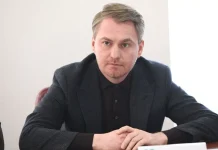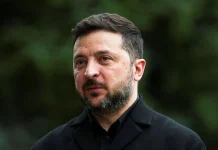

Against the backdrop of widespread disruptions to electricity, water supply and public transport in Kyiv, political expert Yevhen Prokopyshyn compared the approaches to governing the capital and frontline Kharkiv. In a post dated 9 October, he criticised the work of Kyiv’s city authorities, led by Vitali Klitschko, contrasting it with the social and infrastructure programmes being implemented by the team of Kharkiv’s mayor, Igor Terekhov. As examples, the expert cited free public transport, underground schools and hot meal centres for the public. At the same time, both cities are operating under Russian attacks, whilst their financial capabilities, the scale of their infrastructure and the nature of the threats they face differ significantly.
Briefly about the main points
- Expert Prokopyshyn compared the work of the mayors of Kyiv and Kharkiv.
- On 9 October, there were power and water cuts in the capital.
- Free public transport remains in operation in Kharkiv.
- There are underground schools and catering facilities operating in the city.
- Prokopyshyn spoke highly of Terekhov’s management approach.
- The problems facing both cities are linked to the consequences of the Russian attacks.
Prokopyshyn compared the administration of Kyiv and Kharkiv during the war
Political expert Yevhen Prokopyshyn compared the performance of Ukraine’s two largest cities against the backdrop of yet another escalation in the energy crisis.
According to Prokopishin, the difference between the approaches taken by the authorities in Kyiv and Kharkiv is particularly evident during crises. The expert pointed out that Kyiv had experienced disruptions to public transport, electricity and water supplies despite extensive preparations for the autumn and winter period. At the same time, he cited examples of municipal programmes that continue to operate in frontline Kharkiv.
«Kyiv and Kharkiv are excellent examples of how a city should and should not be run during a war,» wrote Prokopyshyn.
The expert believes that the effectiveness of local government should be assessed not only on the basis of funding levels or public statements by officials, but also on the basis of the accessibility of everyday services for residents.
There have been disruptions to electricity, water and transport services in Kyiv
Prokopishin’s criticism came against the backdrop of fresh problems with the capital’s energy supply. On the morning of 9 October, following Russian attacks on the right bank of Kyiv, measures were introduced emergency power cuts, whilst on the left-hand side, hourly timetables remained in force. Due to a power cut, some tram routes in the Obolon, Podil and Sviatoshyn districts were temporarily suspended.
The power cuts also affected water supply. According to Petr Panteleev, acting first deputy head of the Kyiv City State Administration, water was supplied at reduced pressure in the Solomyanskyi, Sviatoshynskyi, Holosiivskyi and Shevchenkivskyi districts.
At the same time, the city authorities reported that restoration work was under way. According to Panteleev, 700 generators have already been installed for the water and heating supply systems, and projects to provide additional backup power are also being implemented.
Free transport and underground schools: what the expert highlighted
Prokopyshyn cited Kharkiv as an example of a different approach to organising urban life. Despite proximity to the front line Despite the regular Russian shelling, the city continues to implement a range of support programmes for the local population.
One of them remains free travel on public transport. The metro, trams and trolleybuses in Kharkiv are operating free of charge for passengers, where safety and technical conditions permit. In June, the mayor Igor Terekhov He stated that the programme is funded from the local authority’s budget and that they plan to continue supporting it for as long as the town has the necessary resources.
Another example is the development of a network of underground schools. On 1 September 2026, Kharkiv’s tenth underground school opened in the Nemyshlyanskyi district, designed to accommodate up to 2,700 children on a rotating schedule. In total, at the start of the academic year, there were 24 safe educational venues operating in the city, including underground schools, metro stations and equipped shelters.
At the same time, there remains a significant need for such learning spaces. Some schoolchildren in Kharkiv are still studying remotely, and further construction of safe premises is required to expand face-to-face education.
Free food distribution points are operating in Kharkiv
Another point raised by Prokopishin was the social food distribution scheme organised by the Kharkiv authorities during the full-scale war.
There are municipal centres in the city providing free hot meals, most of which are based in school canteens. These are used by pensioners, low-income families, internally displaced persons and other residents in need of support.
In January 2026, Terekhov reported that the programme had been running for over three years and was providing people with hot meals every day. In particular, in the Osnovyanskyi district alone, over three thousand set meals were served each day during the summer.
According to Prokopishin, such social programmes demonstrate how local authorities can support residents’ daily lives even in the face of constant danger.
At the same time, it is important to bear in mind that food and free transport schemes serve different purposes to those of securing power supplies or restoring damaged power networks. Therefore, their existence is not a direct indicator of the readiness of the city’s entire infrastructure to withstand large-scale attacks.
Klitschko speaks of the possibility of a temporary evacuation, whilst Terekhov speaks of the residents’ return
In his post, the expert paid particular attention to the public statements made by the two mayors.
Against the backdrop of intensified Russian shelling, the Mayor of Kyiv, Vitali Klitschko, has advised residents who are able to do so to consider temporarily relocating to stay with relatives or friends outside the capital. He explained that this was due to the risks of further strikes, damage to critical infrastructure and possible prolonged disruptions to essential services. However, this did not amount to a declaration of a compulsory evacuation of the whole of Kyiv.
Igor Terekhov, for his part, has repeatedly stated that the need to create the conditions for a return residents of Kharkiv and the integration into the city of internally displaced persons and relocated businesses. He also advocates for additional state support for frontline communities, which are suffering significant security and economic losses.
It was precisely this difference in the mayors’ public statements that Prokopyshyn used for his comparison. However, a call to temporarily leave a dangerous area and a call to return to the city are not necessarily mutually exclusive positions: such recommendations depend on the current threat, the state of the infrastructure and the specific circumstances.
Is it possible to directly compare the performance of mayors?
Prokopyshyn acknowledged that Kyiv and Kharkiv differ in terms of size, budgets and infrastructure. At the same time, he is convinced that preparedness for emergencies and the ability to maintain essential services should be key criteria for assessing local authorities.
At the same time, Kyiv is Ukraine’s largest city, with an extensive electric transport system, large-scale centralised heating and water supply networks, and a complex energy infrastructure. Kharkiv, for its part, operates in close proximity to the front line, which presents a different set of threats and constraints.
A direct comparison of the effectiveness of the two administrations would require independent data on the extent of the damage, budgetary resources, the availability of backup power supplies, the duration of the restoration work and the actual results of the city’s programmes.
Prokopishin’s remarks constitute a political assessment rather than the result of a comprehensive audit of the work of the two city councils. At the same time, the examples he cited of social programmes in Kharkiv and disruptions to Kyiv’s infrastructure are supported by the facts.
The debate has arisen at a time when Ukrainian cities are preparing for the new heating season whilst facing the threat of renewed Russian attacks. For both communities, issues relating to backup power supplies, the uninterrupted operation of critical services, social protection and ensuring public safety remain pressing concerns.