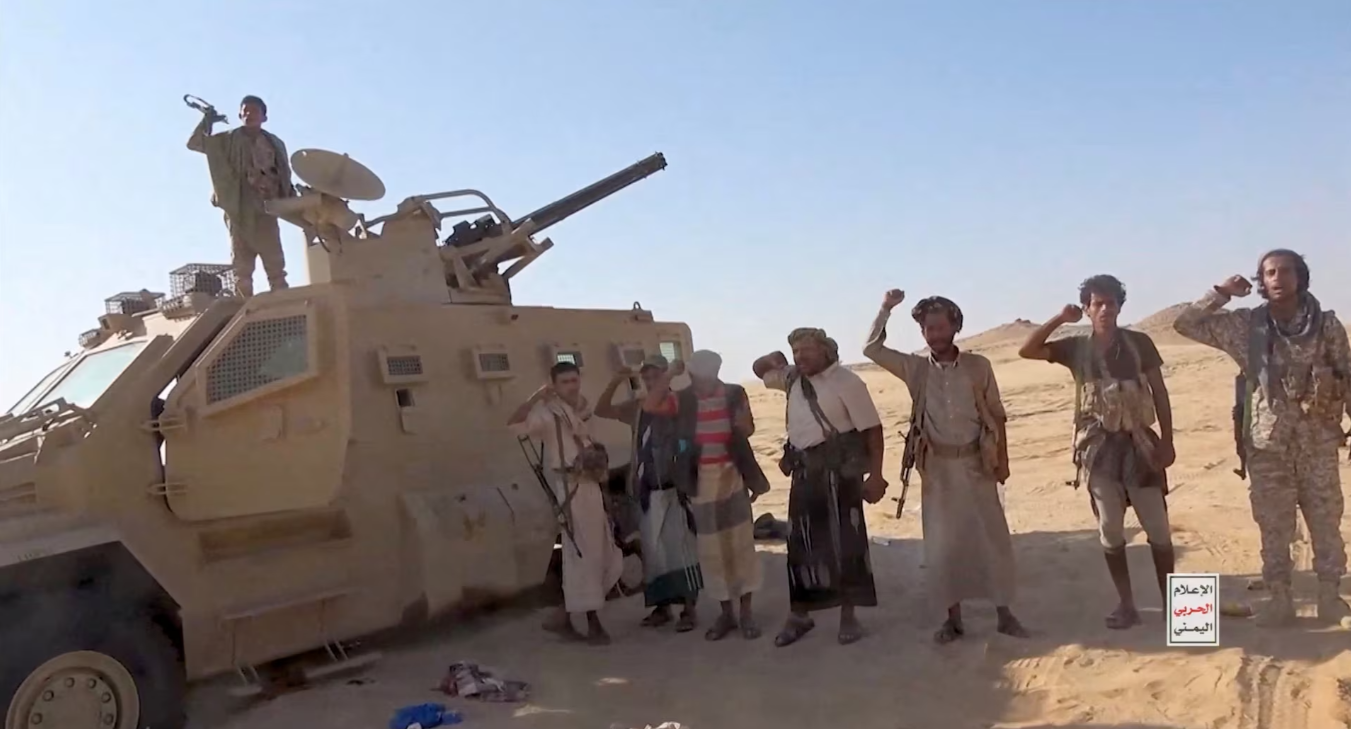
On Monday, the Houthis attempted to seize strategic high ground in the Yemeni provinces of Taiz and Lahij in order to cut off the Red Sea coast from the southern territories still held by forces loyal to the Saudi-backed government. Meanwhile, The New York Times reported that US President Donald Trump had called off planned air strikes against the group at the last minute.
Briefly about the main points
- Fighting is taking place for hilltop positions between the Red Sea and southern Yemen.
- Reuters was unable to independently verify the New York Times’ report that the US strikes had been called off.
- President Rashid al-Alimi asked Trump for military aid, but received no assurances.
- According to the UN, nearly 130,000 people have become internally displaced.
- The Houthis’ advance poses a threat to an alternative export route for Saudi oil.
Battles for strategic high ground between the coast and the south
Five Yemeni military sources have told Reuters that the Houthis are seeking to establish control over the Kahbub mountains in Ta’izz and Lahij. These high ground positions separate the Red Sea coast, which has been seized by the Houthis, from the government-controlled south of the country.
The fighting centred on the outskirts of the remote Al-Waziyah district in Ta’izz and Ras al-Ara on the Indian Ocean coast — between the strait Bab el-Mandeb and Aden, where the government is based. The Houthis have controlled Yemen’s capital since 2014, and this month their rapid advance drove government forces from the Red Sea coast.
According to the Houthis, Saudi Arabia has carried out hundreds of strikes on their positions in the highlands. Yemeni journalist and political analyst Mohammed al-Qadi said that following the loss of the Bab al-Mandab area, government forces have largely been on the defensive, whilst the Houthis are trying to maintain the momentum of their offensive despite the air strikes. In his view, control of the mountains will determine whether the group can consolidate its territorial gains or whether the government will hold its ground for a counter-offensive.
Washington has not confirmed reports of a cancelled operation
The New York Times reported that the administration Trump was preparing air strikes against the Houthis on Sunday following fresh requests from the Crown Prince of Saudi Arabia Mohammed bin Salman. According to the newspaper, the president called off the operation at the last minute, just as the military were loading the bombs onto the aircraft.
President of the internationally recognised government of Yemen Rashid al-Alimi, who is in Riyadh, telephoned Trump on Sunday to request military aid. Two of them — the Yemeni and Western sources — said that the US President had made no direct commitments regarding support. In early 2025, the US bombed the Houthis for two months, but Trump halted these strikes after achieving truce.
On Saturday, explosions were heard and smoke was seen near Riyadh Airport. The Houthis claimed to have fired rockets at the Saudi Arabian capital; the Saudi side has not commented on this.
According to the UN, nearly 700 people have been killed and thousands more injured as a result of the latest escalation in fighting. Inside Yemen, around 130,000 people have fled their homes, whilst over 3,000 have crossed the Red Sea by boat to reach Africa.
The Houthis’ advance is hampering Saudi oil exports
The Houthis’ seizure of the Red Sea coast poses a risk to the main alternative route that Saudi Arabia has been using to export oil, bypassing disruptions in the Strait of Hormuz. In response, Riyadh has stepped up shipments via the Strait of Hormuz, although only a few tankers are prepared to operate there given the military risks.
According to traders, such vessels charge up to a quarter of the cargo’s value and then tranship the oil onto other ships in the Indian Ocean for delivery to buyers in Asia and other regions. Saudi Arabia has sold 60 million barrels each to be loaded this month and next off the coast of Oman.
Satellite data show that deliveries via Strait of Hormuz In recent days, production has reached 2.9 million barrels per day, compared with 700,000 in August. This has helped to bring the global price of oil closer to $100 per barrel, after it had approached $110 last week. At the same time, prices for some petroleum products remain at record levels: the retail price of diesel in the US hit a new high on Monday.
New incidents in the Strait of Hormuz and a diplomatic stalemate
The UK Maritime Trade Operations (UKMTO) agency reported that a vessel at the entrance to the Strait of Hormuz was hit by a projectile, resulting in minor injuries to crew members. The agency also received information about an earlier attack on a gas tanker.
Diplomatic talks within the wider conflict had largely reached an impasse after the interim agreement between the US and Iran, concluded in June, collapsed within a few weeks. The President of Iran Masoud Pezeshkian is due to fly to New York on Tuesday for the UN General Assembly.