A referendum on the federal initiative «Preserving Swiss Neutrality» is taking place in Switzerland on 27 September. If approved, it could prevent the country from joining sanctions against warring states without a UN Security Council resolution – with the exception of measures to prevent the circumvention of sanctions – and limit defence cooperation with NATO in the absence of a direct threat of attack. No official results of the vote are available yet.
Briefly about the main points
- The initiative proposes enshrining permanent and armed neutrality in the Constitution.
- Sanctions against the parties to the conflict may be imposed by a decision of the UN Security Council, and also to prevent sanctions from being circumvented.
- Training and data-sharing with NATO may be subject to restrictions.
- The Federal Council and Parliament recommend that voters reject the proposal.
- Pre-election polls showed that those opposed to change were in the lead.
What rules are being proposed for inclusion in the Constitution?
The initiative sets out the country’s neutrality as a standing and armed force. It prohibits Switzerland from entering into military or defence alliances, and permits closer cooperation with such alliances only in the event of an attack on the country or the immediate preparation of such an attack.
Separately, the authors propose setting limits on sanctions policy. Switzerland should not impose restrictions on states involved in the war, apart from sanctions approved by the UN Security Council and measures to counter the circumvention of sanctions.
Sanctions against Russia have become a key focus of the political debate
Following Russia’s full-scale invasion of Ukraine, Bern largely aligned itself with sanctions the European Union’s stance against Moscow. Supporters of the initiative see this as a departure from the traditional model of Swiss neutrality.
One of the main political supporters of the proposal is the right-wing Swiss People’s Party, or SVP. Businessman and former minister Christoph Blocher, who supports the initiative, told Reuters that, following the sanctions, Moscow no longer regards Bern as a completely neutral party.
Which relations with NATO might be reviewed?
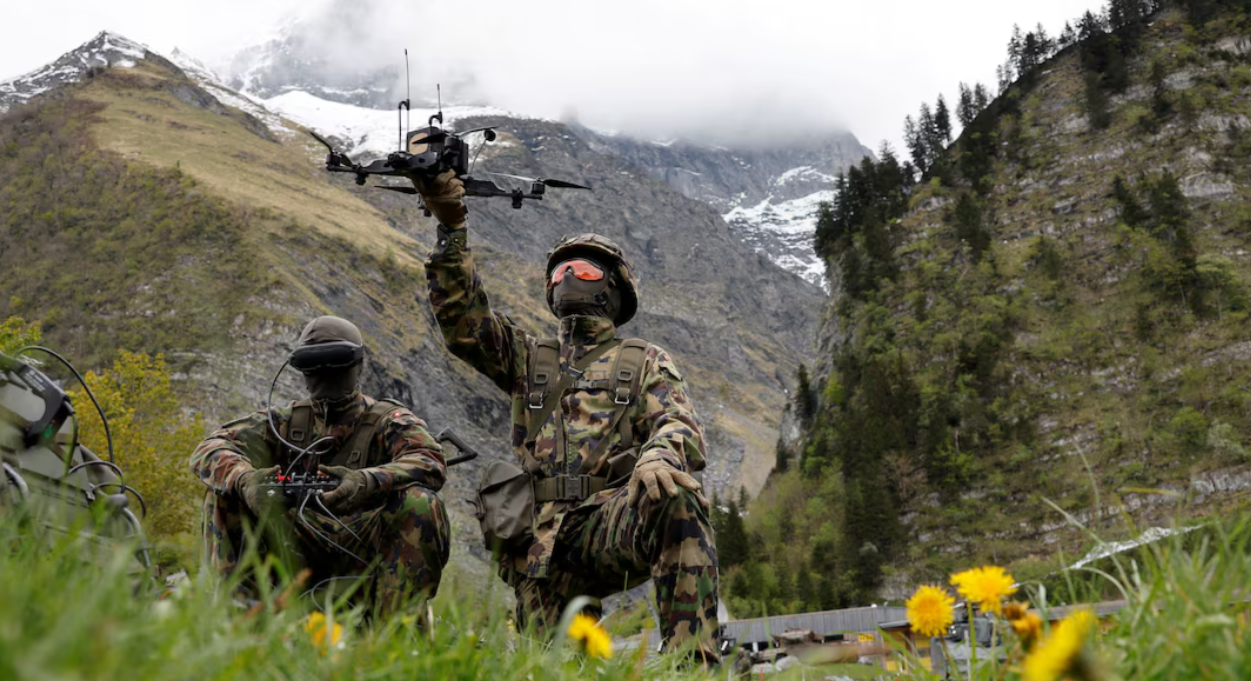
Switzerland is not a member of NATO, but it takes part in exercises, exchanges information with the Alliance and cooperates within the framework of security programmes. The text of the initiative does not contain an exhaustive list of the formats that will be subject to restrictions.
The Federal Department of Foreign Affairs notes that existing ties with NATO will have to be scaled back if voters back the changes. This could affect joint exercises and the exchange of data.
The government insists on maintaining flexibility in its foreign policy
The Federal Council and Parliament have recommended that citizens reject the initiative. The Government points out that the country already has the status of a permanently neutral state, does not belong to any military alliances and does not take part in wars between other countries.
In the Federal Council’s view, detailed constitutional regulation would deprive Bern of some of its flexibility in foreign policy. The government also warns that the requirement to wait for an actual attack before stepping up defence cooperation could limit the ability to prepare for threats in good time. Supporters of the initiative, on the other hand, consider the current freedom of interpretation regarding neutrality to be excessive.
The polls favoured the opposition; the result will be determined by the vote count
About a week and a half before the referendum, a Tamedia/20 Minuten poll showed 68% opponents of the initiative and 31% supporters. A survey by GFS Bern recorded 63% people who were opposed to the changes. These are pre-vote figures, not the result of the vote.
International recognition of Switzerland’s permanent neutrality dates back to 1815. The current referendum does not call into question the country’s neutral status itself, but rather defines the limits of its application. The official result is due to be announced following the count on 27 September.