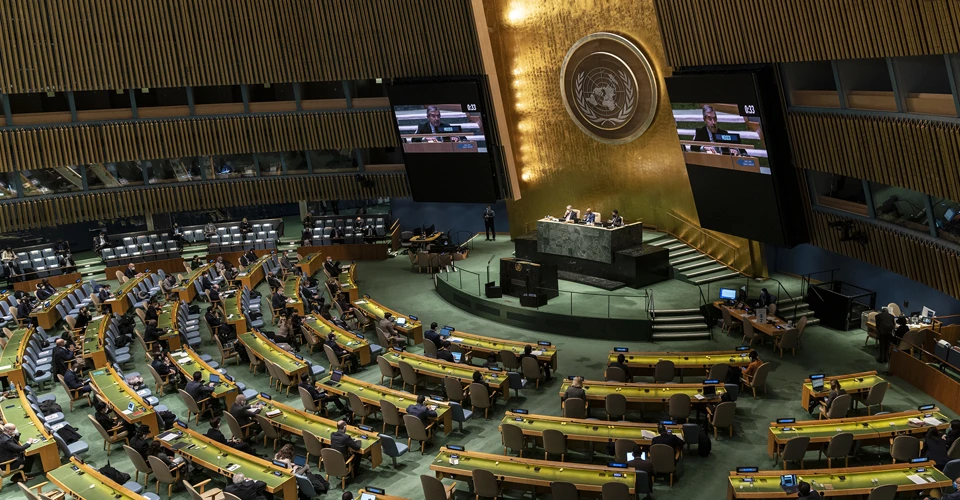
The high-level week of the 81st session of the UN General Assembly in New York did not bring about a breakthrough in major international conflicts, but it did provide several indications as to the direction of future negotiations. For Ukraine, the key developments were attempts to agree on a limited ceasefire regarding attacks on the energy sector and the safe navigation of ships in the Black Sea. The US and Iran resumed indirect contacts, whilst the risks posed by artificial intelligence became one of the central themes of the diplomatic week for the first time.
Briefly about the main points
- Ukraine and the Russian Federation are discussing a possible limited ceasefire.
- The US and Iran have resumed indirect talks.
- The risks associated with AI have become one of the main topics of the week.
- Venezuela has begun negotiations on debt and investment.
- Visa disputes affected the participation of several delegations.
- The UN is preparing for a change of Secretary-General.
1. Ukraine: energy and the Black Sea have become the basis for a possible ceasefire
One of the most notable outcomes of the diplomatic talks on Ukraine was the emergence of a more concrete framework limited ceasefire, which may relate to energy infrastructure and food exports.
23 September, the US Secretary of State Marco Rubio following talks with the Russian Foreign Minister Sergey Lavrov said. Both Ukraine and Russia have expressed an interest in limited agreements concerning grain and energy facilities. At the same time, Reuters emphasised that there were no signs of a shift in Moscow’s broader stance, whilst Lavrov himself publicly rejected the idea a general ceasefire.
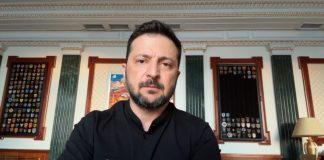
For Kyiv, this issue is particularly pressing as winter approaches. Ukraine is seeking agreements that would reduce the risk of large-scale attacks on power stations, substations and heating systems. The President Volodymyr Zelenskyy stated in New York that, in the absence of an agreement, Ukraine will continue to retaliate on Russian targets.
A separate area is — Black Sea. During Zelenskyy’s meeting with the President of Turkey Recep Tayyip Erdogan The parties discussed the resumption of full-scale operations along the maritime export corridor. According to Zelenskyy, an end to Russian attacks on Ukrainian infrastructure would allow Ukraine to reciprocally halt its long-range strikes.
In other words, there were in fact two interrelated areas on the table: an energy truce and safe navigation. However, by the end of the diplomatic week, no agreement had been reached on these matters. Reuters described the situation as negotiations progressing cautiously, rather than a ceasefire having been agreed.
2. The US and Iran have resumed indirect talks
The second notable development was the establishment of contacts between Washington and Tehran.
On the sidelines of the General Assembly, Iran’s Minister for Foreign Affairs Abbas Araghchi and American representatives Steve Witkoff and Jared Kushner exchanged messages via intermediaries. These were the first such shuttle negotiations since the ceasefire broke down in July.
One of the key issues was Strait of Hormuz, which is of critical importance to global trade in oil and liquefied gas.
The Iranian side proposed restoration of full access through the strait in exchange for a reduction in US military pressure and the lifting of the naval blockade of Iranian ports. Tehran has stated that it is considering Washington’s response to its proposals.
Despite the resumption of talks, the parties’ positions remained far apart. An Iranian official told Reuters that diplomatic talks were continuing, but that many differences remained between Washington and Tehran. Marco Rubio also warned that reaching an agreement would require a great deal of work.
Thus, the diplomatic week reopened the channel of negotiations, but did not result in a new peace agreement or a new ceasefire.
3. Artificial intelligence has overtaken climate change as one of the UN’s key issues
Another notable outcome of the week was the sharp rise in the role of artificial intelligence in global diplomacy. Topic AI has partly pushed the climate agenda into the background, an agenda which had taken up a significant portion of world leaders’ meetings in previous years.
The UN Security Council held a special meeting on the impact of AI on international security. The discussion was attended by the heads of leading AI companies, including the CEO of OpenAI Sam Altman and the head of Anthropic Dario Amodei. Representatives from Chinese AI companies were also invited to take part in the discussion.
UN Secretary-General Antonio Guterres called on states to establish Common risk control mechanisms in cutting-edge AI systems. According to him, the countries leading the technological revolution should share information on new threats, coordinate the testing of models and work on common safeguards. He also proposed moving towards a multilateral system for managing AI risks, with independent oversight.
At the same time, there is no consensus.
The US administration is opposed to an international mechanism that could significantly restrict the pace of development of US AI companies. European technology companies are also critical of certain proposals to slow down the development of models, believing that they could reinforce the dominance of the largest US players.
So, the issue now extends far beyond the technology sector: AI is gradually becoming a matter of international security and diplomacy.
4. Venezuela is returning to international financial talks
One of the most high-profile figures to appear in New York was Venezuela’s interim president Delcy Rodriguez.
On 22 September, she held her first face-to-face meeting with the US President Donald Trump after US forces in January captured Nicolas Maduro. A brief conversation took place during a reception organised by the US President on the sidelines of the General Assembly.
The following day, Marco Rubio announced that one of the main topics had been restructuring of Venezuela’s sovereign debt. The country’s government and the state-owned oil company PDVSA have around $60 billion in overdue bonds, whilst analysts estimate Venezuela’s total liabilities at approximately $150–200 billion.
At the same time, the Rodríguez delegation held meetings with senior officials the Inter-American Development Bank, the IMF and the World Bank, and also discussed energy, resource extraction and the resumption of international funding.
Rubio also stated that Washington had raised a political issue — the US believes that the process of change in Venezuela must ultimately culminate in free and fair elections. Critics of US policy, quoted by Reuters, believe that Washington has simultaneously shifted its focus from the Venezuelan opposition to economic cooperation with the interim government.
5. Visa disputes have affected the composition of the delegations
Not all the leaders who had planned to travel to New York were able to do so in person.
Chief of the Sudanese Army Abdel Fattah al-Burhan did not receive a US visa. According to Reuters sources, the decision was linked to a dispute over the US-proposed 90-day ceasefire in Sudan, to which the Sudanese army had expressed objections. The State Department has not publicly confirmed this causal link.
The UN Secretariat stated that it had raised the issue with the US authorities, whilst Mr Guterres expressed concern over the lack of a visa. As the host country of the UN headquarters, the US has specific obligations regarding access for representatives of Member States.
A separate visa dispute concerned the Palestinian delegation.
17 September: the General Assembly 152 votes in favour, three against and four abstentions allowed Palestine to submit a pre-recorded address by President Mahmoud Abbas for broadcast in the General Assembly Hall. The decision was taken following US restrictions which prevented Abbas from attending the debate in person.
As a result, the Palestinian leader addressed the delegates remotely.
6. The UN is preparing for a new leader — and a new phase of the crisis
Diplomatic Week marked António Guterres’s final General Assembly session as Secretary-General.
His second five-year term is coming to an end 31 December 2026, and the new UN Secretary-General is due to take up the post on 1 January 2027. The selection process is already officially underway: the Security Council is considering the candidates, after which it will recommend one candidate to the General Assembly.
According to Reuters, following several informal votes in the Security Council, the former Vice-President of Costa Rica is among the leading candidates Rebecca Greenspan and Guyana’s representative to the UN Carolyn Rodriguez-Birkett. At the same time, no final candidate has yet been nominated, and the stance of the five permanent members of the Security Council will be decisive.
The new Secretary-General will have to lead the organisation at a time of financial pressure and acute disagreements between the major powers.
In his latest address to the General Assembly, Guterres acknowledged that the mechanisms for collective international action are under increasing pressure, and that some global institutions still reflect the balance of power of a bygone era. He called for reform of the UN system, whilst strengthening its role in resolving conflicts, regulating AI and tackling climate change.
There has been no breakthrough, but specific topics for further talks have emerged
The main takeaway from the diplomatic week is — none of the major crises has been resolved through a swift political solution.
Russia’s war against Ukraine continues, but the parties are discussing limited agreements on energy and grain through the US. Washington and Tehran have resumed indirect talks, although their positions remain far apart. At the same time, AI has become a major issue in international security, whilst the UN itself is entering a period of leadership transition.
The general debate of the 81st session of the General Assembly is taking place 22–26 September, continuing on 28 September. The official theme of the session is rebuilding trust and adaptation UN towards global change.