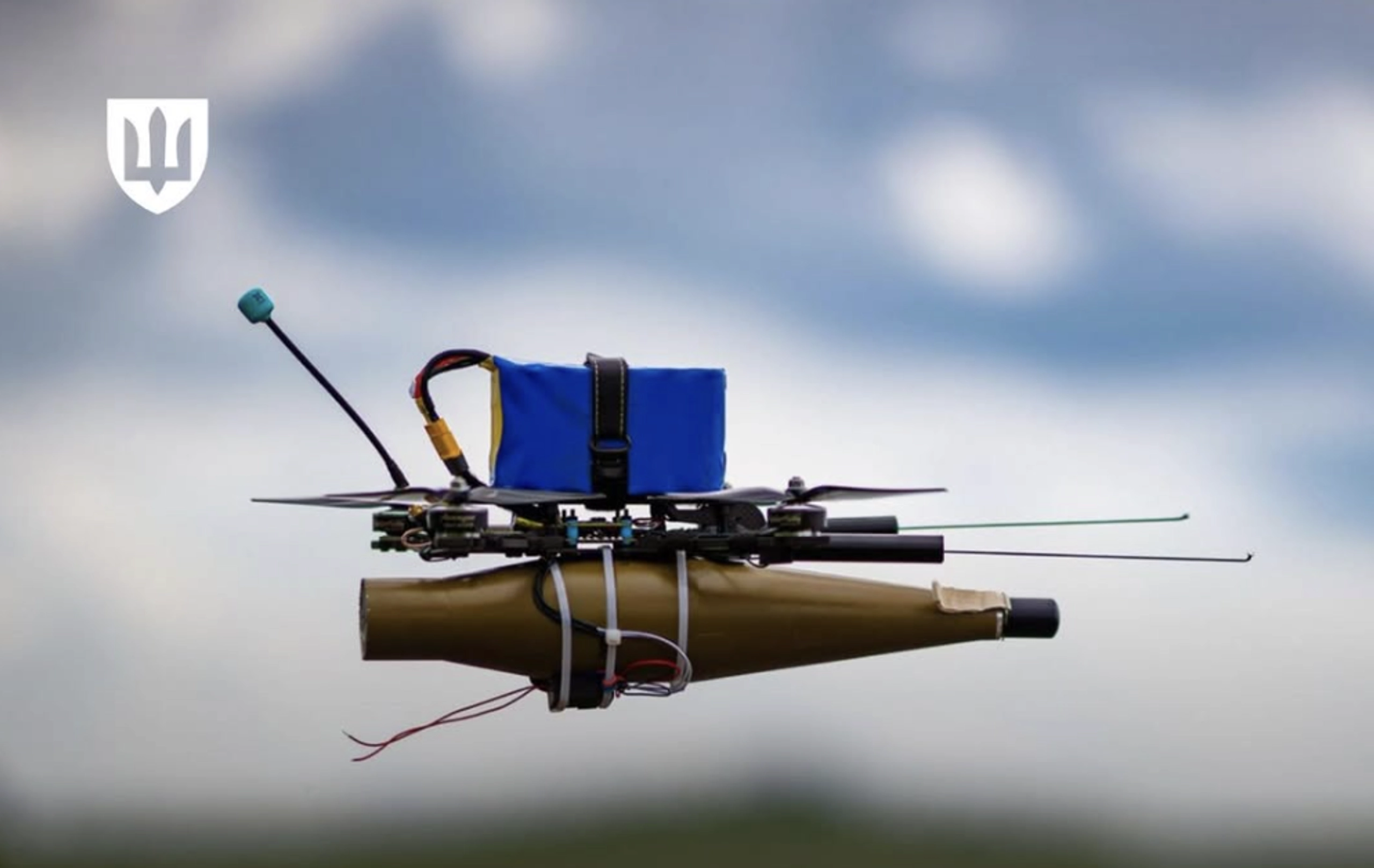
The war in Ukraine is shifting towards a new technological paradigm, in which automation and the speed of decision-making are becoming key factors. Recent months have been marked by the start of a large-scale «mid-range strike campaign», in which the Ukrainian Defence Forces are deploying drones equipped with artificial intelligence on a massive scale.
These systems are radically are changing logistics in the occupied territories, focusing on disrupting the enemy’s supply lines up to 150–200 kilometres behind the front line.
A technological breakthrough: how the «last mile» of AI works
The main problem with conventional long-range UAVs is their vulnerability to electronic warfare measures (REB). Over distances of more than 50 km, Russian systems jam or spoof the GPS signal, which has often resulted in a loss of contact with the operator.
Modern Ukrainian drone models (such as Hornet, Darts and new high-speed interceptors LITAVR) tackle this problem using integrated on-board computers and AI algorithms.
Visual navigation (DSMAC) without GPS
When satellite navigation is switched off, the on-board AI continuously scans the terrain below using optical cameras. A real-time algorithm compares the contours of roads, rivers and landscape features with high-precision satellite images stored in its memory. This allows the UAV to autonomously calculate its trajectory and maintain its course in conditions of complete radio silence.
Terminal guidance for the «last mile»
The operator no longer needs to guide the drone right up to the moment of detonation. Once the drone enters the designated area, the artificial intelligence analyses the video feed automatically. Based on the engines’ geometric parameters, texture and thermal radiation, the system automatically:
-
Identifies targets (refuelling vehicles, radars, air defence launchers, command posts).
-
It eliminates decoys and false targets that the enemy uses to mislead us.
-
It locks onto the target and adjusts the controls to ensure precise targeting.
Information from the Ministry of Defence: If the target is an air defence position, the AI clearly distinguishes between the radar and the launcher, independently selects the highest-priority target for attack, and adjusts the angle of attack even when local jammers are operating intensively.
Results on the battlefield: logistical isolation
Instead of exhausting frontal assaults on fortified positions, the Ukrainian command has shifted its focus to «cutting off supply lines». Massive waves of kamikaze drones are attacking logistics corridors in the south Ukraine, connecting the mainland with Crimea.
According to analysis According to Bloomberg, based on reports from the Ukrainian Ministry of Defence, the deployment of autonomous systems had an immediate impact:
-
+40% — an increase in the number of Russian petrol tankers and refuelling vehicles destroyed in May compared with the previous month.
-
twice as much — The number of enemy air defence launchers destroyed has increased, creating «gaps» in Russia’s rear defences.
-
Cascading losses — Drones are destroying not only the main vehicles in the convoys, but also the recovery vehicles that arrive to repair or tow them.
The offensive has already caused serious damage to critical logistics hubs. A series of attacks has completely disabled the Chongar Bridge and blocked traffic across the crossing between Henichesk and the Arabat Spit. This is forcing the occupying forces to reroute fuel and ammunition supplies via longer and less secure routes, under constant surveillance by Ukrainian aerial reconnaissance.
The transition to a unified ecosystem
The technological race goes beyond individual drones. Ukraine’s strategic goal is to integrate AI platforms into a single battle management network.
According to the Ministry of Defence’s AI Centre, a global operational system is being developed that is capable of gathering data from the entire 1,200-kilometre front line. It will process information from satellites, radars, radio interception equipment and UAV cameras, offering optimal solutions and routes for human command. AI is already being utilised at the mission planning stage: algorithms calculate the «blind spots» of enemy radars, take terrain into account and plot complex zigzag routes to evade air defences.
At the same time, analysts (notably from the Institute for the Study of War) point out that the enemy is also adapting. Russian troops are attempting to counter AI drones by applying camouflage patterns to trucks, installing anti-drone nets deep in the rear, and dispersing large ammunition depots into smaller units. However scaling up production (In 2026, government orders for medium-range drones increased fivefold), enabling Ukraine to maintain a high tempo of strikes and retain the initiative in counter-battery and anti-logistics operations.