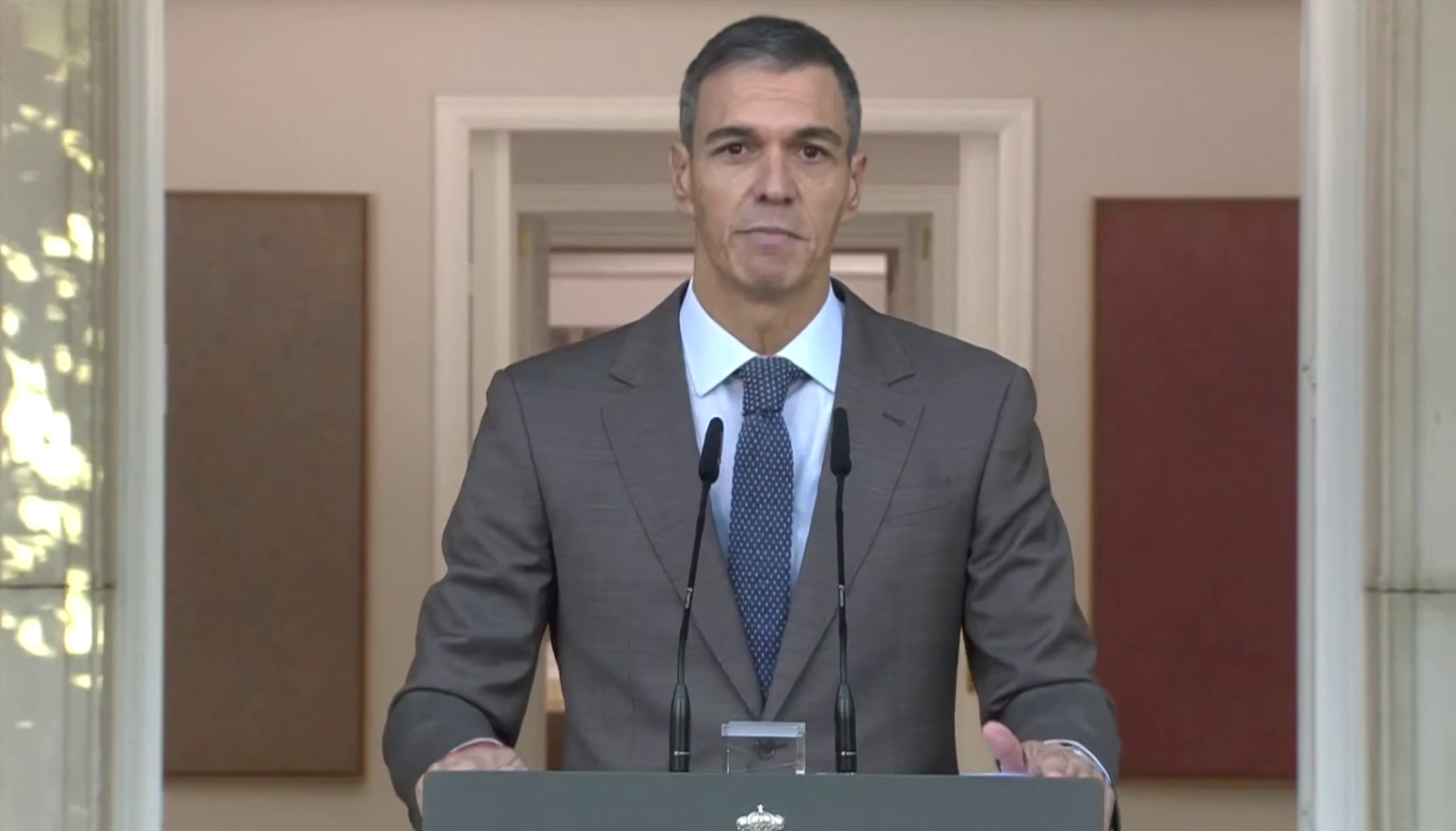
On 5 October, Spanish Prime Minister Pedro Sánchez announced that a snap general election would be held on 29 November 2026. According to the Spanish government, prior to making the announcement, he informed King Felipe VI and convened an extraordinary meeting of the Council of Ministers to initiate the procedure for dissolving the Cortes Generales and scheduling the election.
Briefly about the main points
- The Spanish general election is scheduled for Sunday, 29 November 2026.
- Sánchez convened the government to finalise the procedure for dissolving the Cortes Generales.
- On 2 October, Congress did not approve two government decrees on housing.
- Sánchez stated that there was a need to renew and broaden support amongst voters.
The dissolution of parliament has yet to be formalised
Sánchez announced his intention to bring the current parliamentary term to an early close after informing the Head of State. An extraordinary meeting of the Council of Ministers is due to initiate the procedure, as provided for by law, for the dissolution of the Cortes Generales and the calling of an election.
At the time of the Prime Minister’s announcement, the legal formalities for the dissolution of parliament had not yet been finalised. The next general election was due to take place in 2027, so the vote will take place approximately eight to nine months earlier than planned.
Prior to the announcement, Congress rejected the housing decrees
On 2 October, the Congress of Deputies did not approve two government decree-laws, … relating to affordable housing, the social function of housing and the stability of tenancy agreements. The initiatives also included measures to combat abuses in seasonal and room-by-room lettings.
The conservative People’s Party, Vox and the Catalan party Junts voted against both decrees. This vote provided the immediate political backdrop to the decision to call an election, although Sánchez did not cite it as the sole reason for his move.
The minority government is seeking a broader mandate
Since 2023, Sánchez has led a coalition government comprising the Socialists and the left-wing Sumar party. He does not have a majority of his own in Congress and relies on the support of other parliamentary and regional parties when passing legislation.
In his address, Sánchez acknowledged the government’s mistakes and stated the need to renew and broaden support amongst the public in order to secure a broader progressive majority. Against the backdrop of protests over housing affordability and the failure of housing policy decrees, housing is likely to become one of the key issues of the election campaign.