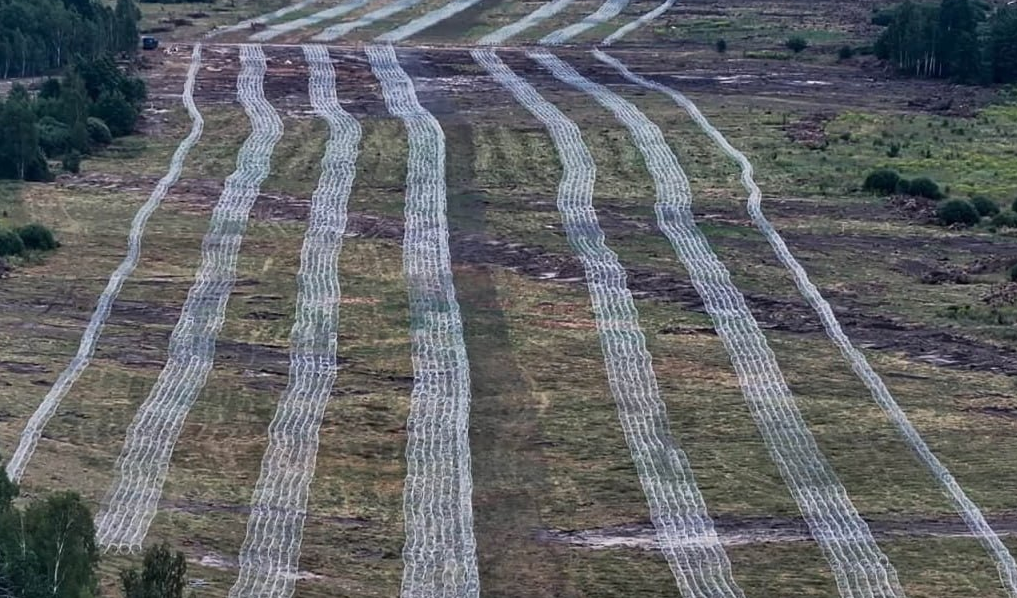
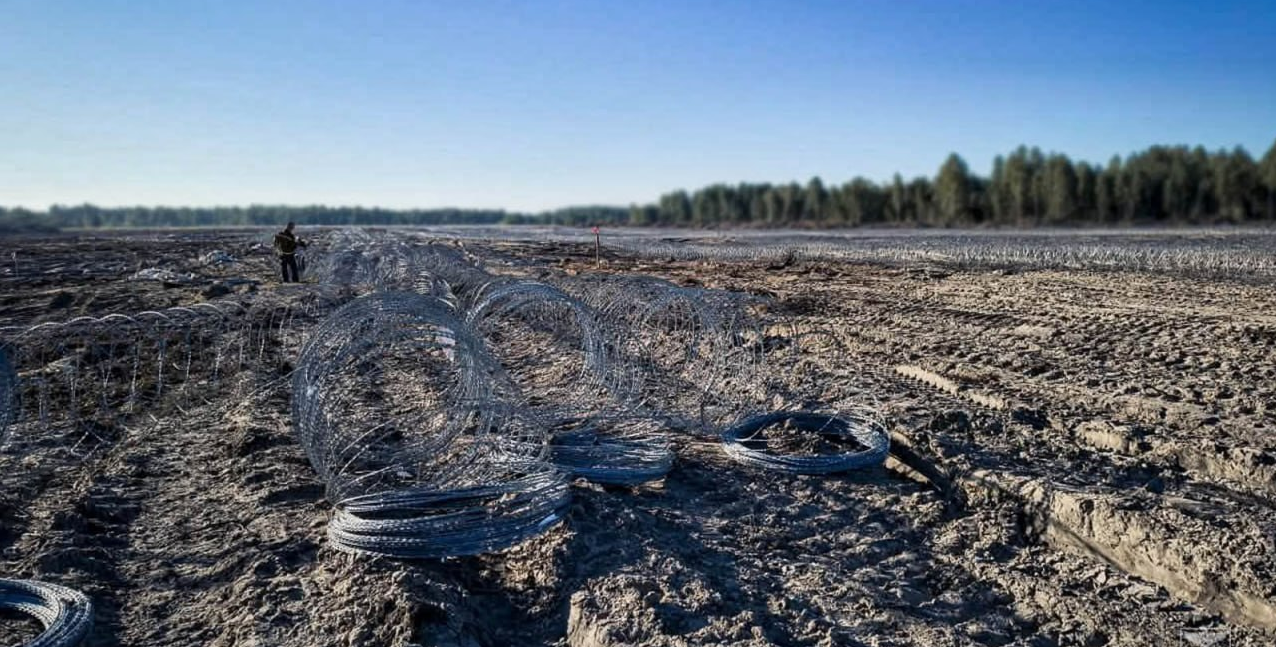
In the north of the Kyiv region, work is continuing on the development of a multi-tiered system of defensive lines in the event of a potential threat from Russia and Belarus. French OSINT analyst Clément Molin stated that satellite images show large-scale anti-personnel barriers near the Chernobyl exclusion zone, and in some areas the number of rows of barbed-wire barriers can reach several dozen.
What an OSINT analyst saw near Chernobyl
Clément Molin has been analysing Ukrainian fortifications using satellite imagery for some time now. According to his observations, between 2025 and 2026, Ukraine significantly altered its approach to constructing defensive lines. Instead of large, open trench systems, the main emphasis is increasingly being placed on complex obstacles: anti-tank ditches, concrete barriers, barbed wire and low-profile wire systems.
The analyst had previously noted the expansion of such defences not only in the Donbas, but also in the Kyiv, Chernihiv, Sumy and Kharkiv regions. He described the Chernobyl area as one of the regions where defensive structures are constantly being upgraded. According to Molin’s latest assessment, particularly dense anti-personnel barriers have been erected in certain sections near the Chernobyl exclusion zone. It is currently impossible to independently verify his claim of up to 35 rows of barbed wire.
The Chernobyl exclusion zone is officially being used for defence purposes
In July 2026, the Cabinet of Ministers authorised the transfer of part of the land within the Chernobyl Radiation and Ecological Biosphere Reserve for the purpose of developing fortifications and the development of border infrastructure.
The Kyiv region has approximately 34 km of state border with Belarus directly within the Chernobyl exclusion zone.
The Ministry of Defence has also officially reported that fortification work is continuing in the Kyiv region, as well as in the Chernihiv, Sumy and Kharkiv regions and other areas.
As of early 2026, the State Special Transport Service reported that there were thousands of kilometres of anti-tank trenches, wire obstacles and other engineering barriers across Ukraine.
Ukraine is preparing for a potential threat from the north
Back in May, the President Volodymyr Zelenskyy stated that it was necessary to strengthen the northern front in light of intelligence reports regarding possible Russian scenarios.
The Ukrainian command was considering the possibility of future operations Russia in the north, although at that time no direct movements of a large Russian force in preparation for a new offensive had been recorded.
Over the summer, Ukraine continued to strengthen its border with Belarus. Anti-tank obstacles, «dragon’s teeth», barbed wire and surveillance systems were being installed there. However, the Associated Press noted in July that there were no signs at that time of a build-up of Russian troops in Belarus for a new ground invasion.
In other words, the current works should be regarded first and foremost as advance reinforcement of defences, rather than as a sign that a new offensive on Kyiv is already being prepared at this very moment.
At the same time, Russia is stepping up its attacks on Kyiv
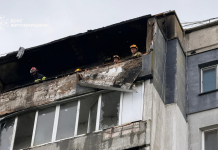
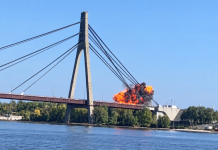
In recent days, the Russian Federation has repeatedly attacked the bridges in Kyiv. The strikes damaged the road surface and caused serious transport problems. The Russian Ministry of Defence even publicly confirmed the strike on the Northern Bridge, describing it as a military-logistical target.
On 3 October, the Russian Foreign Ministry also called on foreigners and diplomats to leave Kyiv and announced its intention to continue large-scale strikes on the Ukrainian capital.
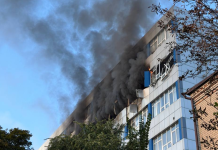
Zelenskyy said that Ukrainian intelligence had obtained documents concerning a new Russian approach as part of the air campaign. According to him, potential targets include logistics facilities, roads, schools, hospitals and other urban infrastructure, and Kyiv believes the aim of such actions is to put pressure on the population of major cities.
Against this backdrop, strengthening the northern frontier effectively creates a further layer of defence for the capital — this time against a potential ground-based threat in the long term.